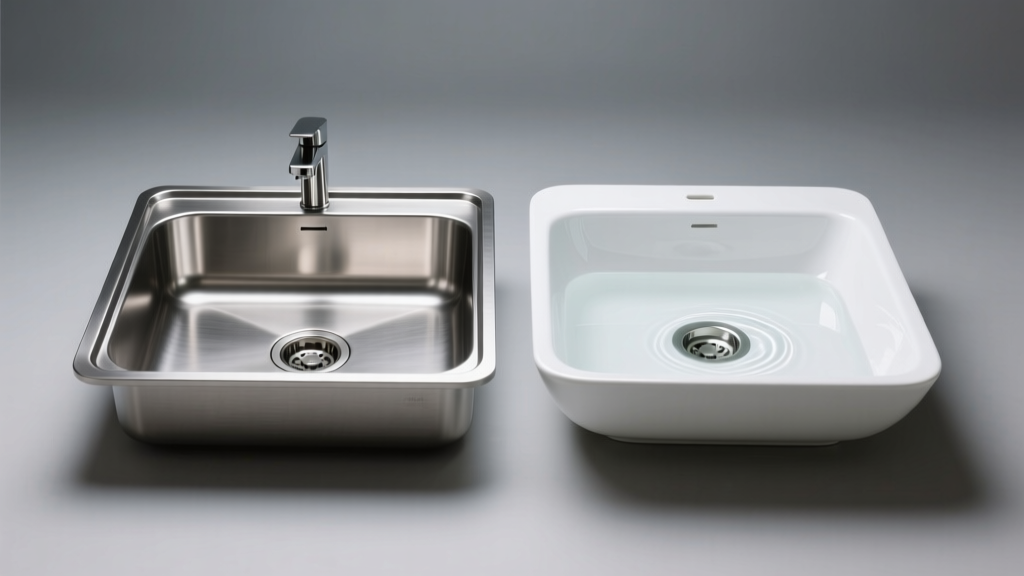
Choosing between a stainless steel sink and a porcelain sink isn’t just about looks—it’s about how you cook, clean, and live. One scratches easily but handles heavy pots; the other resists stains but chips under impact. Your dishwasher frequency, water hardness, and whether you drop cast-iron skillets daily all tilt the balance.
Quick Verdict
Stainless steel wins for durability, versatility, and resale value in most modern kitchens—especially where noise, heat resistance, and compatibility with garbage disposals matter. Porcelain excels in classic aesthetics and stain resistance but demands careful handling and older home compatibility. Neither is universally ‘better’—it hinges on your priorities: function-first (stainless) or form-forward (porcelain).
Side-by-Side Comparison
| Feature | Stainless Steel Sink | Porcelain Sink |
|---|---|---|
| Material Composition | 16–18-gauge alloy (typically 304 grade) | Cast iron or steel base coated with vitreous enamel |
| Average Lifespan | 20–30 years with proper care | 15–25 years; enamel can chip or craze over time |
| Noise Level | Moderate to high (reduced with rubber dampening pads) | Low—dense base absorbs sound well |
| Heat Resistance | Withstands boiling water and hot pans directly | Enamel can crack if exposed to sudden thermal shock |
| Scratch & Dent Resistance | Shows fine scratches; dents only under extreme impact | Highly scratch-resistant surface—but chips irreversibly if struck |
| Stain & Rust Resistance | Rust-resistant alloy; may show water spots or mineral deposits | Non-porous enamel resists stains; rust possible if base metal exposed |
Deep Dive on Stainless Steel Sink
Stainless steel remains the top seller in U.S. kitchens for good reason: it’s lightweight, recyclable, and compatible with nearly every countertop type—from quartz to butcher block. Its 304-grade alloy contains 18% chromium and 8% nickel, delivering strong corrosion resistance (per ASTM A240-22 standards). Most models now include sound-dampening pads—cutting clatter by up to 70% compared to bare metal.
- Pros: Dishwasher-safe utensils won’t mar the surface; easy to sanitize; available in undermount, top-mount, and integrated styles; ideal for farmhouse or modern kitchens
- Cons: Shows water spots and fingerprints without regular wiping; lower-gauge (thicker) sinks cost more; cheaper grades (<18-gauge) dent more easily
- Ideal for: Busy households, rental properties, open-concept spaces, and homes with hard water (no etching risk like porcelain)
Deep Dive on Porcelain Sink
Porcelain sinks deliver timeless elegance—think vintage-inspired apron-fronts or glossy white pedestal basins. The enamel coating is fired at over 1,400°F, creating a glass-like surface that repels coffee stains, tomato sauce, and ink. But that same hardness makes it brittle: a dropped can opener or hammer can fracture the glaze, exposing the cast-iron base to moisture and eventual rust.
- Pros: Exceptional color retention; smooth, non-porous surface; quieter than bare stainless; excellent for period-accurate renovations
- Cons: Heavy (300+ lbs for large farmhouse models); requires reinforced cabinetry; vulnerable to chipping near drain edges; limited color options beyond whites and creams
- Ideal for: Traditional or transitional kitchens, historic home restorations, and low-impact usage (e.g., powder rooms or guest baths)
When to Choose Stainless Steel vs Porcelain
Opt for stainless steel if you run a high-volume kitchen—think meal prepping for four, nightly dishwashing, or frequent use of cast-iron cookware. It also pairs better with undermount sink installation, especially on solid surface countertops. Choose porcelain when aesthetics drive the decision: you want a seamless apron-front look, prioritize quiet operation, or are matching a vintage faucet suite. According to the National Kitchen & Bath Association’s 2023 trend report, stainless still holds 62% market share in new construction—but porcelain leads in renovation projects targeting pre-1950 homes.
"Porcelain’s biggest vulnerability isn’t wear—it’s impact. One dropped Le Creuset can compromise decades of beauty." — Sarah Lin, NKBA-certified kitchen designer, 2023
Alternatives to Consider
If neither stainless nor porcelain fits your needs, explore these rising options:
- Quartz composite sinks: Non-porous, heat- and scratch-resistant, available in 20+ colors—but heavier than stainless and pricier than mid-tier porcelain
- Copper sinks: Antimicrobial and patina-friendly, but require regular oiling and aren’t suited for acidic cleaners
- Fireclay sinks: A ceramic cousin to porcelain, thicker and more chip-resistant—but even heavier and harder to install
Do stainless steel sinks stain or rust?
True 304 stainless won’t rust, but iron particles from tools or steel wool can embed and oxidize—causing rust-like specks. Wipe dry after use and avoid abrasive pads. The U.S. EPA estimates that 14% of household water usage is from leaks—including those caused by corroded sink fittings—not material failure.
Can you repair a chipped porcelain sink?
Small chips can be touched up with epoxy-based porcelain repair kits (like Devcon Ceramic Weld), but color matching is rarely perfect. Large chips or cracks near the drain often require full replacement—especially if rust has started forming underneath.
Which sink is easier to clean?
Both are non-porous and wipe clean easily, but stainless shows water spots faster in hard water areas, while porcelain hides them until mineral buildup forms. Use vinegar-and-water solutions weekly on both—but never bleach on stainless (it degrades the passive oxide layer).
Are porcelain sinks outdated?
No—but their application has narrowed. They’re less common in new-build condos or minimalist kitchens but remain dominant in Craftsman bungalows and Colonial revivals. Houzz’s 2024 Design Trends Study found porcelain sinks selected in 38% of historic renovation projects, versus just 9% in new contemporary builds.
How much do they cost?
Mid-range stainless sinks run $250–$600; premium gauge + soundproofing pushes past $1,000. Porcelain farmhouse sinks start at $450 and climb to $1,800+ for hand-glazed, custom-sized units. Installation labor for porcelain averages $150–$300 more due to weight and support requirements.
Do stainless sinks get noisy?
Yes—unless insulated. Look for sinks with factory-applied rubberized undercoating (e.g., Kraus KBU22 or BLANCO PRESTO). Independent testing by Consumer Reports (2023) showed fully padded stainless sinks reduced decibel levels by 12–18 dB during dishwashing—comparable to a quiet library.
Your sink sees more daily contact than almost any other fixture—so choose based on real habits, not just showroom shine. If you rinse pasta twice a day and stack dishes while cooking, stainless gives you margin for error. If you light candles at dinner and prefer quiet mornings, porcelain’s hush and heritage might be worth the extra care. Either way, pair your pick with a quality faucet for hard water to extend its life.