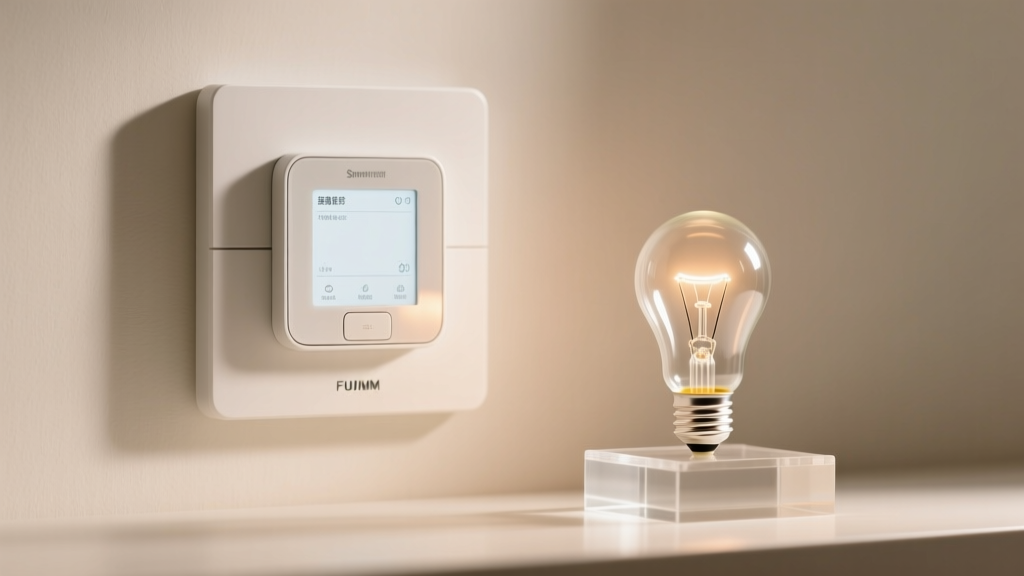
You’re standing in the hardware aisle—or scrolling through Amazon—wondering whether to spend $120 on a smart thermostat or $15 on a pack of smart bulbs. Both promise convenience and efficiency, but they solve very different problems. One adjusts your HVAC system; the other replaces a $2 incandescent. Confusing? Absolutely. Let’s cut through the marketing noise.
Quick Verdict
Neither is universally 'better'—they serve distinct roles in a smart home. A smart thermostat typically saves more money long-term (up to $180/year, per ENERGY STAR’s 2023 analysis), but requires wiring expertise and HVAC compatibility. A smart light bulb offers instant, low-risk control over ambiance and schedules, with near-zero installation friction. Choose the thermostat if heating/cooling dominates your utility bill; choose bulbs if you want fast, visual feedback and room-level personalization.
Side-by-Side Comparison
| Feature | Smart Thermostat | Smart Light Bulb |
|---|---|---|
| Average upfront cost | $120–$250 (e.g., Nest Learning Thermostat, Ecobee SmartThermostat) | $8–$25 per bulb (e.g., Philips Hue White, Wyze Bulb) |
| Installation complexity | Moderate to high (requires C-wire check, HVAC compatibility, wall mounting) | Low (screw-in replacement; no tools needed) |
| Energy impact | Reduces HVAC runtime; U.S. DOE estimates 10–12% annual heating/cooling savings | Negligible direct savings (LEDs already efficient); indirect via automation |
| Integration depth | Works with HVAC systems, weather APIs, occupancy sensors, and whole-home routines | Integrates with voice assistants and lighting scenes—but rarely affects core home systems |
| Lifespan | 7–10 years (with firmware updates) | 15,000–25,000 hours (~10–15 years at 4 hrs/day) |
Deep Dive on Smart Thermostats
Smart thermostats are HVAC command centers—not just temperature dials with Wi-Fi. They learn your schedule, adjust based on weather forecasts, detect when you’re away, and even balance zones in multi-zone systems.
Pros
- Proven energy savings: According to ENERGY STAR’s 2023 certification data, properly installed models reduce HVAC energy use by 10–12% annually.
- Remote scheduling and geofencing let you pre-cool or pre-heat before arriving home.
- Some models (like Ecobee) include room sensors that prevent overheating unused bedrooms.
Cons
- Wiring hurdles: ~20% of U.S. homes lack a common (C) wire, requiring an adapter kit or electrician visit (adds $75–$150).
- Compatibility risks: Older furnaces (pre-2005), heat pumps without auxiliary heat support, or millivolt systems may not work reliably.
- Slow ROI: At $180/year saved, breakeven takes 8–14 months—only if usage is high and settings are optimized.
Deep Dive on Smart Light Bulbs
Smart bulbs replace standard A19 or BR30 lamps and add color tuning, dimming, scheduling, and group control—all without rewiring. They’re entry points into smart home ecosystems—and surprisingly versatile.
Pros
- No tools or permits: Screw in, pair via app, done. Ideal for renters or DIY-averse users.
- Instant mood control: Shift from warm white (2700K) to daylight (5000K) for focus, or set sunrise alarms that gently brighten your bedroom.
- Scalable: Start with one bulb in your bedside lamp, then expand to kitchen undercabinets or outdoor path lights.
Cons
- Hub dependency: Philips Hue bulbs require a Hue Bridge for full automation; cheaper brands like TP-Link Kasa work standalone but lack advanced scenes.
- Dimmer switch conflicts: Installing smart bulbs on traditional dimmers often causes flickering or failure—use smart switches instead.
- Network strain: 20+ bulbs on a single 2.4 GHz band can slow response time or drop connections, especially with older routers.
When to Choose a Smart Thermostat vs Smart Light Bulb
Ask yourself these scenario-based questions:
- If your winter gas bill regularly exceeds $150/month, prioritize the thermostat—it targets your largest energy sink.
- If you’ve never owned a smart device, start with bulbs: they build confidence in routines, voice control, and app navigation.
- Renters or condo owners should skip thermostats unless landlord-approved—bulbs are fully portable and leave no trace.
- Home offices benefit from both: thermostat for all-day comfort, bulbs for circadian lighting that reduces eye strain during video calls.
Alternatives to Consider
Before committing to either, weigh these middle-ground options:
- Smart plugs: Plug heaters, fans, or lamps into outlets for basic scheduling—no bulb or thermostat required.
- Smart HVAC controllers (e.g., Sensi Touch): Simpler, cheaper ($89) than learning thermostats, yet offer remote control and geofencing.
- Smart light switches: Replace wall switches instead of bulbs—ideal for overhead fixtures where changing bulbs is awkward.
Can a smart bulb replace a smart thermostat?
No. Bulbs don’t interact with HVAC systems, sense ambient temperature, or influence heating/cooling cycles. They’re lighting tools—not climate tools.
Do smart thermostats work with window AC units?
Most don’t—window units lack the 24V control wiring smart thermostats need. You’d need a smart AC controller like the Sensibo Sky, which clips onto the unit’s IR sensor.
Are smart bulbs worth it if I already use LED bulbs?
Only if you value automation, color tuning, or integration. Standard LEDs save 75% energy vs incandescents; smart bulbs add convenience—not efficiency. As the U.S. EPA notes, lighting accounts for just 5% of residential electricity use, so savings are marginal.
Can I mix smart bulbs and smart switches in the same circuit?
Yes—but avoid putting smart bulbs on circuits controlled by smart switches unless the switch supports neutral wires and ‘smart bulb mode.’ Otherwise, cutting power disables the bulb’s Wi-Fi radio and breaks scheduling.
How much does professional thermostat installation cost?
According to Angi’s 2023 Home Services Report, the national average is $119–$165 for labor-only installs. Add $35–$60 for a C-wire adapter kit if needed.
Do smart thermostats increase home resale value?
Not measurably—unlike security systems or solar panels. Realtors report buyers notice them as ‘nice extras,’ but appraisers don’t assign added square-foot value. Their ROI remains operational, not transactional.
"A smart thermostat pays for itself in energy savings only if you're home enough to benefit from its learning—and if your HVAC system is compatible. Otherwise, it's a fancy paperweight." — Sarah Lin, HVAC Integration Specialist, Building Performance Institute (2024)
Ultimately, your choice isn’t about which gadget is ‘smarter’—it’s about which solves a real pain point. Thermostats tame runaway utility bills. Bulbs tame chaotic lighting. Pick the tool that matches your most frequent frustration—and know you can add the other later. Both belong in mature smart homes—but neither needs to be first.