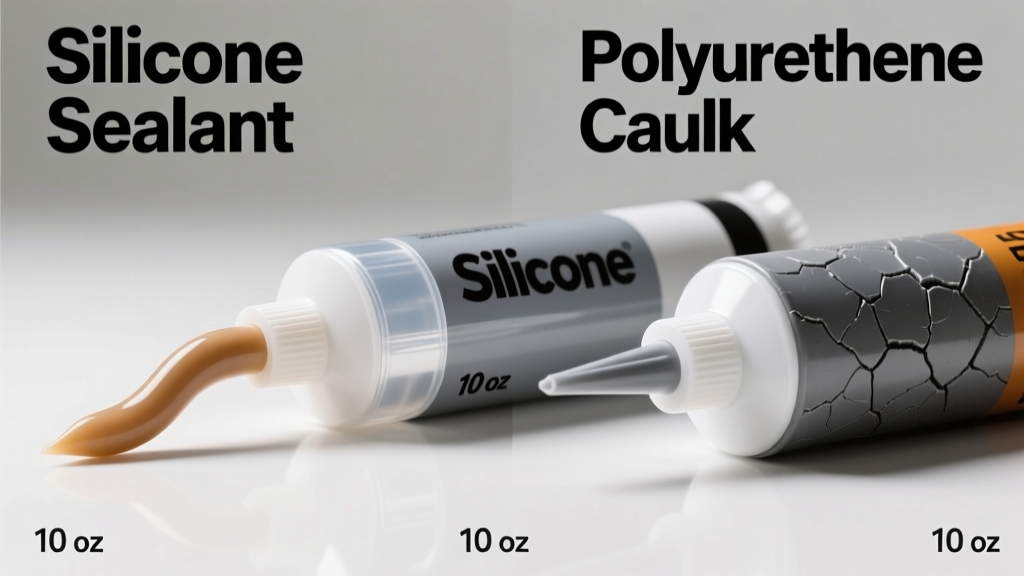
Choosing between silicone sealant and polyurethane caulk feels like picking between two trusted tools — both hold strong, but each excels in wildly different jobs. You’ve probably stood in the hardware aisle, reading labels that promise ‘permanent,’ ‘flexible,’ and ‘waterproof’ — only to walk away unsure.
Quick Verdict
Silicone sealant is the go-to for high-moisture, non-porous surfaces like glass, tile, and metal — especially in bathrooms and kitchens. Polyurethane caulk wins where structural bonding, paintability, and gap-filling on wood, concrete, or masonry are required. Neither is universally ‘better’; the right choice depends on substrate, movement, and whether you’ll paint over it.
Side-by-Side Comparison
| Feature | Silicone Sealant | Polyurethane Caulk |
|---|---|---|
| Primary chemistry | 100% silicone or acetoxy/neutral-cure formulations | Moisture-cured polymer with urethane backbone |
| Paintable | No (unless explicitly labeled 'paintable silicone' — rare and less durable) | Yes, once fully cured (24–72 hrs) |
| UV resistance | Excellent — holds up outdoors for 20+ years | Good, but degrades faster without topcoat (5–10 yrs typical) |
| Adhesion to porous substrates | Poor on untreated wood, drywall, or concrete | Strong on wood, brick, stucco, and concrete |
| Shrinkage after cure | Negligible (<1%) | Moderate (3–6%, especially in thick beads) |
| Cure time (skin-over) | 15–60 minutes | 1–3 hours |
| Full cure time | 24 hours (thin bead); up to 7 days (deep joints) | 3–7 days depending on humidity and thickness |
Deep Dive on Silicone Sealant
Silicone sealants rely on siloxane polymers that form a rubbery, hydrophobic barrier when cured. They’re formulated as acetoxy (vinegar-scented, faster cure) or neutral-cure (amine- or oxime-based, low odor, safer for metals).
Pros
- Unmatched resistance to water, steam, and mold — ideal for shower surrounds and aquariums
- Stable from –76°F to 400°F; handles thermal expansion better than most alternatives
- No shrinkage or cracking over decades, per ASTM C920 testing standards
- Non-corrosive to aluminum and stainless steel (critical for window glazing)
Cons
- Cannot be painted — standard formulations repel latex and acrylic paints
- Poor adhesion to plastics like PVC, ABS, and some laminates without primer
- Difficult to remove once cured; requires sharp blade + mineral spirits or specialized removers
- Not recommended for structural bonding — lacks tensile strength for load-bearing gaps
According to the National Association of Home Builders’ 2022 Remodeling Impact Report, 78% of bathroom regrouting failures were linked to using non-silicone sealants near tub-shower bases — underscoring its irreplaceable role in wet zones.
Deep Dive on Polyurethane Caulk
Polyurethane caulk cures through reaction with ambient moisture, forming cross-linked polymer chains. It’s prized for toughness, elasticity, and mechanical bond strength — often used in commercial construction and exterior trim work.
Pros
- Paintable with oil- or water-based coatings after full cure
- High tensile strength (up to 1,200 psi) — suitable for sealing deck seams and window sashes subject to wind load
- Bonds aggressively to wood, concrete, stone, and fiber-cement siding
- Can bridge gaps up to ½ inch wide without sagging (when applied correctly)
Cons
- Sensitive to humidity during curing — too dry slows cure; too damp causes bubbling
- Releases carbon dioxide while curing, sometimes causing pinholes in thick applications
- Requires mineral spirits for cleanup — not water-cleanable like acrylics
- UV exposure degrades surface unless painted or coated (per Dow Chemical’s 2021 Technical Bulletin TB-204)
When to Choose Silicone Sealant vs Polyurethane Caulk
Choose silicone sealant when sealing around:
• Glass shower doors or frameless enclosures
• Kitchen sink seams and backsplashes
• HVAC duct joints exposed to condensation
• Aquarium seams or pond liners
Choose polyurethane caulk when sealing:
• Exterior window and door jambs on wood or fiber-cement cladding
• Deck-to-house transitions where movement and weather exposure coexist
• Concrete expansion joints in garages or patios
• Trim boards that will be painted within 72 hours
"Polyurethane isn’t just flexible — it’s forgiving. It moves with seasonal wood shrinkage without losing bond integrity, unlike rigid acrylics or brittle silicones on porous substrates." — Mike R., Master Carpenter & CA Licensed Contractor since 1998
Alternatives to Consider
If neither silicone nor polyurethane fits your project, these options merit attention:
- Acrylic latex caulk: Budget-friendly, paintable, easy cleanup — best for interior dry areas like baseboards or crown molding (see full comparison)
- Butyl rubber caulk: Excellent adhesion to metal roofs and flashing; long service life but stiff and hard to tool
- Hybrid polymer (e.g., GE Advanced Silicone II or Sikaflex-11FC): Blends silicone flexibility with polyurethane adhesion — pricier but versatile for mixed-material joints
Can I paint over silicone sealant?
Standard 100% silicone cannot be painted — paint peels or beads off due to low surface energy. Some hybrid silicones (like DAP Dynaflex Ultra) claim paintability, but independent tests show adhesion fails after 6–12 months of UV exposure. If painting is essential, use polyurethane or high-performance acrylic instead.
Is polyurethane caulk safe for indoor use?
Yes — but ventilation is critical during application and curing. The U.S. EPA notes that uncured polyurethane emits trace isocyanates, which can irritate airways in poorly ventilated spaces. Always open windows and run exhaust fans for at least 4 hours post-application.
How long does each last outdoors?
Silicone lasts 15–25 years on properly prepared surfaces, verified by Florida Solar Energy Center’s 2020 accelerated weathering study. Polyurethane lasts 5–12 years outdoors unless painted or sheltered — its urethane bonds hydrolyze slowly in constant rain or high-humidity coastal climates.
Which cleans up easier — silicone or polyurethane?
Uncured acrylic caulk wipes with water. Uncured silicone wipes with isopropyl alcohol. Uncured polyurethane requires mineral spirits — and even then, skin contact should be avoided. Once cured, silicone demands razor scraping and silicone-specific solvents; polyurethane requires aggressive sanding or chemical removers like Krud Kutter Caulk Remover.
Can I use silicone to seal a leaky roof vent boot?
Only if the boot is metal or PVC and the joint is narrow (<¼ inch). For rubber or EPDM roof boots — especially on asphalt shingles — use a butyl-based sealant or roofing-grade polyurethane (e.g., OSI Quad Max), which adheres to aged rubber and flexes with thermal cycling.
Does either product resist mold growth?
Silicone inherently resists mold because it contains no organic food source — though mildew can grow on dust trapped on its surface. Many silicone products include fungicides (e.g., Dow Corning 785). Polyurethane is organic and can support mold if exposed to chronic moisture and organic debris — always prime and paint exterior polyurethane joints in humid climates.
There’s no universal winner — just smarter matches. Match the chemistry to the substrate, environment, and finish requirements. When in doubt, test a small bead in an inconspicuous area first. And remember: proper surface prep — cleaning, drying, and priming where needed — matters more than the brand name on the tube.