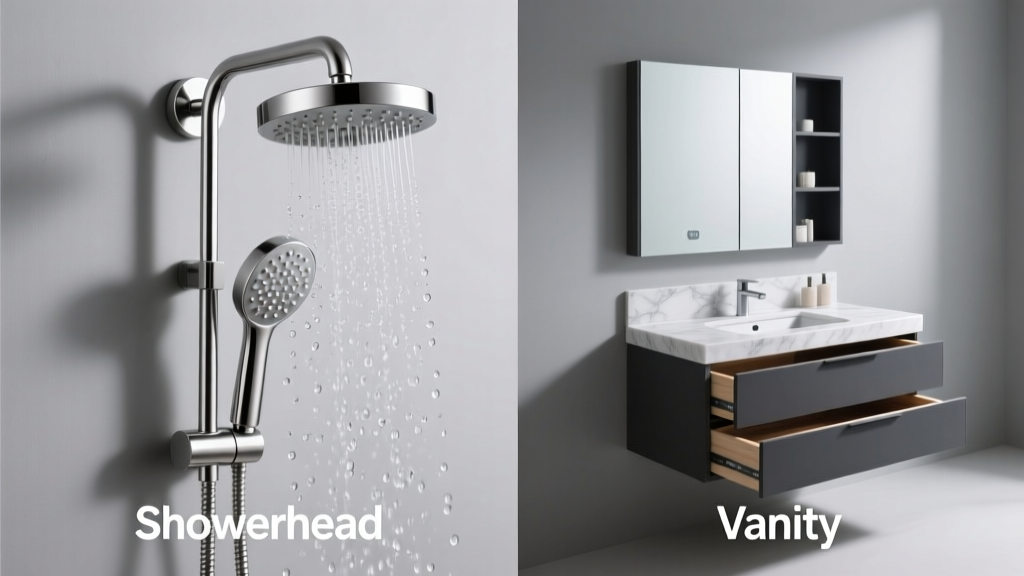
You’re renovating or upgrading your bathroom—and suddenly, you’re stuck comparing two items that serve completely different functions: a showerhead and a vanity. It’s not apples to oranges; it’s apples to shelving units with sinks. Yet people ask this question because both are visible, high-touch elements that impact daily use, aesthetics, and resale value.
Quick Verdict
Neither is "better"—they solve different problems. A new showerhead improves water pressure, spray experience, and efficiency (some save up to 30% on water use, per EPA WaterSense 2022 data). A vanity upgrades storage, counter space, lighting integration, and overall bathroom cohesion—but costs 5–10× more and requires plumbing and electrical work. Choose based on whether your priority is sensory comfort or functional organization.
Side-by-Side Comparison
| Feature | Showerhead | Vanity |
|---|---|---|
| Avg. cost (mid-tier) | $45–$180 | $450–$2,200 |
| Installation time | 15–45 minutes (DIY-friendly) | 1–3 days (often requires pro) |
| Water efficiency impact | Yes—up to 2.0 GPM models cut usage by 20–30% | No direct impact (but can support low-flow faucets) |
| Storage added | None | 12–48+ cubic feet (varies by size & configuration) |
| Lifespan | 5–12 years (depends on water hardness) | 15–30 years (solid wood or plywood boxes) |
Deep Dive on Showerhead
Modern showerheads go far beyond basic spray patterns. You’ll find options with magnetic docking, pause buttons, temperature memory, and even Bluetooth speakers—but most homeowners benefit from simpler upgrades: pressure-compensating nozzles for inconsistent municipal supply, or dual-function models (e.g., rain + massage) that adapt to changing needs.
Pros
- Immediate tactile improvement—noticeable in first use
- Low barrier to entry: no permits, no drywall repair, no cabinet removal
- Strong ROI on water bills: the U.S. EPA estimates households save $145 annually switching to WaterSense-labeled models
Cons
- No storage, counter space, or aesthetic overhaul
- Hard water buildup requires quarterly descaling—especially with chrome finishes
- Doesn’t address underlying issues like poor drainage or outdated tile
Deep Dive on Vanity
A well-chosen vanity transforms how you use your bathroom—not just how it looks. Standard 30"–36" single-sink units fit most powder rooms; 60" double-sink vanities work best in master suites over 50 sq ft. Materials matter: solid oak holds up to humidity better than MDF, and soft-close drawers prevent slamming in shared bathrooms.
Pros
- Doubles as furniture—supports decor theme, lighting placement, and mirror sizing
- Addresses chronic clutter: toiletries, towels, cleaning supplies all gain dedicated zones
- Can integrate smart features: built-in USB charging, LED-lit mirrors, or touchless faucet controls
Cons
- Requires precise measurements—plumbing rough-ins rarely match off-the-shelf dimensions
- Heavy (200–400 lbs): moving one often cracks tile or stresses subfloor if not reinforced
- Matching finish to existing hardware (towel bars, light fixtures) adds complexity and cost
When to Choose Showerhead vs Vanity
Opt for a new showerhead if your current one sputters, leaks at the connection, or delivers weak spray—even with good water pressure. It’s also the right call before listing a home: buyers notice fresh, modern fixtures but rarely inspect cabinet joinery. Choose a vanity when drawers won’t close, the countertop is stained or cracked, or you’ve outgrown storage (e.g., teens using shared bath, or adding skincare regimens).
According to the National Kitchen & Bath Association’s 2023 Remodeling Impact Report, 78% of realtors say updated vanities increase buyer interest—but only 42% said the same for showerheads, underscoring their differing weight in perceived value.
"A showerhead is the espresso shot of bathroom upgrades—quick, energizing, and focused. A vanity is the full meal: nourishing, structural, and harder to rush." — Maya Tran, NKBA-certified designer since 2011
Alternatives to Consider
Before committing to either, weigh these middle-ground options:
- Full shower remodel: Re-tile, re-slope, add niche shelves, and upgrade the valve—ideal if grout is moldy or walls leak
- LED vanity lighting: Adds function and ambiance without cabinetry changes; pairs well with existing vanities
- Bathroom faucet replacement: Less costly than a vanity, more impactful than a showerhead alone—especially with pull-down sprayers or touch tech
Can I install a new showerhead without tools?
Yes—most use standard ½" NPT threading and tighten by hand. Use plumber’s tape on threads to prevent leaks, then give a final quarter-turn with adjustable pliers (don’t overtighten; brass fittings crack easily).
Do vanities need floor reinforcement?
Not always—but if yours weighs over 300 lbs or sits on engineered hardwood or vinyl plank, check joist spacing. The International Residential Code requires 16" o.c. framing for cabinets over 250 lbs. Older homes may have 24" spacing, requiring blocking or sistered joists.
Will a luxury showerhead increase home value?
Marginally—if bundled with other updates. Zillow’s 2023 Home Value Report found that premium fixtures contributed <0.3% to sale price, versus 2.1% for full vanity replacements in primary baths.
How long does vanity installation take?
For a DIYer with plumbing experience: 6–10 hours across two days (demo, rough-in check, leveling, hookups, caulk, cleanup). For a contractor: typically one full day, plus 1–2 days for countertop templating if stone is involved.
Are there hybrid options—like vanities with built-in shower controls?
No—plumbing codes separate wet and dry zones strictly. Shower valves must be inside the shower enclosure or in an adjacent service cavity, never inside vanity cabinets. However, some smart vanities include Bluetooth apps that sync with compatible shower systems (e.g., Moen U by Moen + Kohler Numi 2.0), offering remote presets.
What’s the biggest mistake people make replacing either?
Assuming compatibility. Showerheads require matching thread type (NPT vs BSP) and flow rate tolerance—especially with tankless water heaters. Vanities demand exact sink cutout dimensions and faucet hole counts (4” spread vs. widespread vs. single-hole). Always measure twice and verify specs against manufacturer drawings—not product photos.
If your shower feels lackluster but your vanity still functions and fits your style, start with the showerhead. If mornings feel chaotic, counter space is buried under products, or the unit shows wear at seams and hinges, prioritize the vanity. Both are worthwhile—but timing, budget, and pain points should steer the choice, not trends.