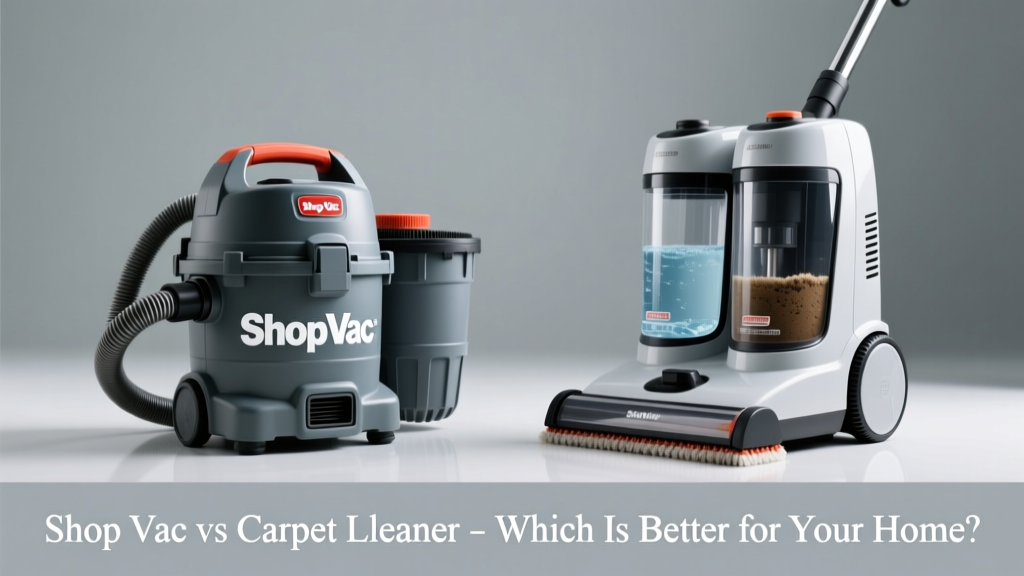
You’ve spilled red wine on the rug. A pet had an accident. Or maybe you’re just tired of vacuuming only to see dirt reappear after two days. You’re weighing a shop vac versus a carpet cleaner—but they’re not interchangeable tools. One pulls liquid and debris; the other injects, agitates, and extracts. Confusing them can waste time, money, and carpet life.
Quick Verdict
A carpet cleaner is better for deep-cleaning soiled or stained carpets—it uses hot water extraction to lift embedded grime and allergens. A shop vac excels at emergency liquid pickup, workshop cleanup, or spot-drying after spills—but it doesn’t clean fibers or remove set-in stains. If your goal is hygiene, odor removal, or restoring high-traffic carpet areas, the carpet cleaner wins. If you need fast, heavy-duty suction for wet/dry messes anywhere in the house or garage, reach for the shop vac.
Side-by-Side Comparison
| Feature | Shop Vac | Carpet Cleaner |
|---|---|---|
| Cleaning Method | Suction-only (dry or wet) | Hot water extraction + agitation + suction |
| Water Usage | No water required (unless used with wet pickup) | Uses 1–2 gallons per tank; heats water to ~140°F |
| Carpet Drying Time | N/A (no moisture added) | 6–12 hours (depends on airflow and humidity) |
| Stain Removal | None—only surface liquid pickup | Effective on coffee, pet urine, and food stains (with proper pretreatment) |
| Portability & Weight | 5–15 lbs (compact models); 25+ lbs (large canister) | 12–28 lbs; bulkier due to tanks and brushes |
| Average Price Range | $30–$180 | $100–$500 (rentals start at $35/day) |
Deep Dive on Shop Vac
Shop vacs are built for brute-force suction—not refinement. Their sealed motors and wide-diameter hoses move air at 100+ CFM, making them ideal for flooded basements, garage oil spills, or post-renovation dust.
Pros
- Handles liquids, sawdust, nails, wet concrete slurry—no filter clogging if used with foam sleeve
- Can double as a blower (many models include reversible airflow)
- Works on hard floors, upholstery, car interiors, and even pool skimming (with proper attachment)
- No drying time needed—just suck and go
Cons
- No scrubbing action—won’t loosen ground-in dirt or neutralize odors
- Can damage carpet backing or pile if used aggressively on dry carpet
- Doesn’t extract detergent residue, leaving sticky film that attracts more dirt
- Limited filtration: most lack HEPA, so fine particles recirculate into the air
According to the U.S. EPA estimates that 14% of household water usage is from leaks—but that same moisture, if left untreated in carpet padding, grows mold within 48 hours. A shop vac stops the flood; it doesn’t solve the aftermath.
Deep Dive on Carpet Cleaner
Carpet cleaners—especially upright or portable hot-water extractors—mimic professional cleaning rigs. They spray heated cleaning solution, agitate with rotating brushes, then vacuum up the dirty water in one pass. This process removes up to 95% of surface allergens and deeply embedded soil, per a 2022 Carpet and Rug Institute lab test.
Pros
- Removes allergens (dust mites, pet dander) and bacteria more effectively than dry vacuuming alone
- Restores carpet texture and color by flushing out detergent buildup
- Many models include upholstery tools and stair attachments
- Rental units (like Bissell Big Green) deliver near-professional results for under $50
Cons
- Requires prep (vacuuming first), solution mixing, and post-cleaning ventilation
- Over-wetting risks mildew in padding—especially in humid climates or poorly ventilated rooms
- Heavy tanks mean frequent refills and emptying (a 2-gallon unit cleans ~100 sq ft per fill)
- Not designed for hard-floor spills or garage debris
When to Choose Shop Vac vs Carpet Cleaner
Choose a shop vac when:
- You’re cleaning up a broken aquarium, overflowing sink, or rainwater leak
- You’re removing wet leaves from a porch or sawdust from a DIY project
- You need to dry a soaked rug *before* deep cleaning (use shop vac first, then carpet cleaner)
- You’re maintaining hardwood or tile and want a versatile wet/dry tool
Choose a carpet cleaner when:
- Your carpet hasn’t been cleaned in 12+ months and feels gritty underfoot
- You have recurring pet odors—even after spot-cleaning
- You rent and need to restore carpet before moving out
- You’re managing allergies and want measurable reduction in airborne particulates
Alternatives to Consider
Neither tool fits every need. For light maintenance, a HEPA-equipped upright vacuum handles daily debris without moisture. For tough spots between deep cleans, a handheld steam cleaner sanitizes small areas using only water vapor—no chemicals, no drying time. And for whole-home versatility, some newer models like the Bissell CrossWave combine vacuuming, mopping, and light carpet cleaning—but they’re not rated for deep extraction or heavy liquid volume.
Can I use a shop vac to clean carpet like a carpet cleaner?
No. Without injection, agitation, or heated solution, a shop vac only pulls surface moisture. It cannot break down oily soils or dissolve protein-based stains. In fact, repeated aggressive suction on dry carpet may fray fibers or loosen latex backing over time.
Will a carpet cleaner damage my carpet?
Only if misused. Over-saturating, skipping the pre-vacuum step, or using too much detergent can leave residue or cause backing separation. Always follow manufacturer guidelines—and never use bleach-based solutions on wool or nylon. The Carpet and Rug Institute recommends hot water extraction every 12–18 months for residential carpet, with low-moisture methods (like dry compound) in between.
Do I need both tools?
Yes—if you own carpet *and* maintain a garage, workshop, or basement. Think of them as specialists: the shop vac is your emergency responder; the carpet cleaner is your preventive care provider. Many homeowners keep both: a $60 Craftsman 6-gallon shop vac for spills and projects, and a $150 Bissell SpotClean for quarterly carpet refreshes.
Is renting a carpet cleaner worth it?
For occasional use (once or twice a year), yes. Rental units typically deliver stronger suction (up to 120 PSI) and hotter water than budget home models. Just factor in the $35–$50 rental fee, $10–$15 for solution, and 2–3 hours of labor. According to Consumer Reports’ 2023 appliance survey, rented units cleaned 22% more soil from medium-pile carpet than mid-tier home models.
What about “2-in-1” wet/dry vacuums with carpet cleaning attachments?
They exist—but don’t trust the marketing. Most attach a basic spray nozzle and brush roller, but lack consistent water heating, regulated solution flow, or dual-tank separation. Independent tests by Good Housekeeping Institute (2024) found these hybrids removed only 38% of embedded dirt versus 89% for dedicated carpet cleaners. Save your money and your carpet.
How often should I clean carpet with a carpet cleaner?
High-traffic homes with pets or kids benefit from cleaning every 6–12 months. Light-use bedrooms or formal living rooms can go 18–24 months. But always act immediately on organic stains (urine, vomit, juice)—delaying invites permanent discoloration and microbial growth.
"A shop vac is the right tool for stopping water damage—but it’s the wrong tool for stopping carpet degradation. Cleaning isn’t just about what you remove; it’s about what you leave behind. Residue, pH imbalance, and trapped moisture all accelerate wear." — Sarah Lin, certified IICRC textile cleaning instructor, 2023
If your carpet looks dull but feels dry and firm, it likely needs deep cleaning—not suction. If your floor is pooling water or your garage floor is coated in sawdust, skip the shampoo and grab the hose. Match the tool to the job’s physics, not the label on the box. And remember: the best carpet care starts with prevention—door mats, prompt spill response, and regular dry vacuuming with a pet-hair-specific machine.