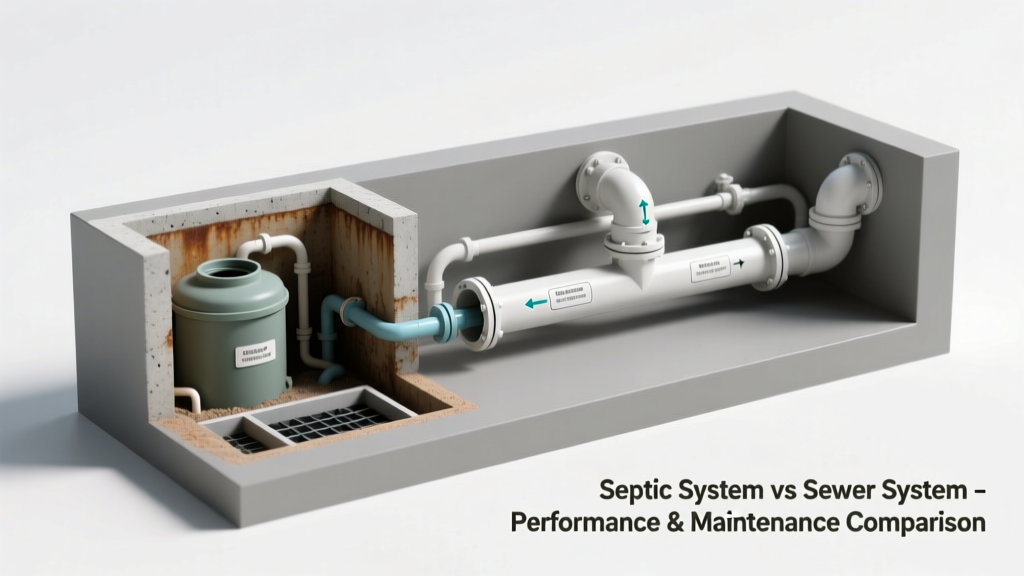
Finding yourself weighing septic system versus sewer system? You’re not alone — especially if you’re buying rural land, building a new home, or facing a failing drain field. The choice isn’t just about pipes and permits; it affects your monthly bills, property value, and how much time you’ll spend troubleshooting backups at 2 a.m.
Quick Verdict
There’s no universal ‘better’ option — only the better fit for your situation. Sewer systems offer hands-off convenience and strong resale appeal in developed areas, while septic systems provide independence and lower long-term utility costs where municipal lines aren’t available. According to the U.S. EPA, roughly 20% of U.S. homes rely on septic systems — most in rural or low-density regions (2022 National Onsite Wastewater Recycling Association report).
Side-by-Side Comparison
| Feature | Septic System | Sewer System |
|---|---|---|
| Upfront installation cost | $3,000–$15,000 (varies by soil, tank size, and local permitting) | $0–$5,000 (often included in lot development or connection fee) |
| Monthly cost | $0 (except for occasional pumping) | $30–$80 (utility bill, often bundled with water) |
| Lifespan | 20–40 years (tank), 15–30 years (drain field) | 50+ years (municipal infrastructure, though laterals may need repair) |
| Maintenance responsibility | Homeowner (pumping every 3–5 years, inspections) | Municipality (though homeowner maintains lateral from house to main) |
| Environmental impact | Lower carbon footprint if properly maintained; localized treatment | Centralized treatment plants use more energy but meet strict EPA discharge standards |
Deep Dive on Septic Systems
Septic systems treat wastewater on-site using a watertight tank and underground drain field. Wastewater separates into scum, effluent, and sludge; microbes break down solids, and the soil filters effluent before it reenters groundwater.
Pros
- No monthly utility fees — just occasional pumping and inspection costs
- Greater control over maintenance timing and service providers
- Well-suited for rural properties, hillside lots, or areas with low population density
- Can be paired with advanced treatment units (ATUs) for sensitive environments like near lakes or wetlands
Cons
- Requires regular pumping (every 3–5 years) and professional inspections — neglect leads to costly repairs or replacement
- Soil percolation tests and setbacks (e.g., 100 ft from wells, property lines) limit placement options
- Drain field failure is common in clay soils or high-water-table areas — remediation can cost $10,000+
- May complicate future remodeling (e.g., adding bathrooms) without system upgrades
Deep Dive on Sewer Systems
Sewer systems route wastewater through underground pipes to a centralized municipal treatment plant. Homeowners connect via a lateral line to the main, and the municipality handles collection, treatment, and regulatory compliance.
Pros
- No routine maintenance beyond keeping drains clear and watching for lateral blockages
- Highly reliable during normal operation — no risk of on-site overflow or drain field saturation
- Supports high water-use households (e.g., multi-bathroom homes, irrigation, hot tubs) without capacity concerns
- Generally increases property value and broadens buyer pool in suburban neighborhoods
Cons
- Monthly fees add up — over $500/year in many metro areas, with rate hikes averaging 3.7% annually (American Water Works Association, 2023)
- Homeowners are liable for repairs to the lateral line from house to main — often buried under driveways or landscaping
- Dependent on municipal infrastructure: outages, main breaks, or capacity limits can cause backups or surcharges
- Not available outside service boundaries — expansion can take years and require special assessments
When to Choose Septic vs Sewer
Choose septic if you’re building on rural land without nearby sewer mains, have suitable soil and space, and prefer predictable long-term costs over recurring bills. Choose sewer if you’re in an established subdivision with existing infrastructure, plan to sell within 10 years, or prioritize zero-maintenance wastewater handling.
According to the Insurance Institute for Business & Home Safety's 2023 report, homes with failed septic systems see a 12–18% reduction in appraised value — underscoring why due diligence matters whether you’re buying or installing.
"A well-maintained septic system can last decades — but skipping one pump-out every five years increases failure risk by 300%, based on University of Rhode Island’s 2021 field study of 1,200 systems."
Alternatives to Consider
Neither option fits every site. Consider these alternatives when standard septic or sewer isn’t viable:
- Aerobic treatment units (ATUs): Use oxygen to speed decomposition; required in some coastal or high-water-table areas
- Cluster systems: Shared septic or small-scale treatment serving multiple homes — common in planned rural developments
- Composting toilets + greywater systems: Reduce or eliminate blackwater volume; legal in some states with permits (e.g., Washington, Vermont)
- Constructed wetlands: Natural filtration for effluent — used in eco-homes and remote cabins where space allows
How much does septic system installation really cost?
Base costs range from $3,000 for a conventional 1,000-gallon tank in sandy soil to $15,000+ for engineered systems (e.g., drip distribution, mound systems) in challenging terrain. Permitting, perc testing ($200–$600), and excavation add 20–40%. Compare that to sewer connection fees, which run $1,500–$5,000 in most municipalities — but rarely exceed $7,500 even with trenching through rock.
Can I switch from septic to sewer later?
Yes — but only if the municipal line reaches your street and your property qualifies for a tap. You’ll pay connection fees plus the cost to abandon the septic tank (usually $500–$1,200 for decommissioning and fill). Some towns offer grants or phased payment plans for low-income homeowners, like those administered by USDA Rural Development (2022 program data).
Do septic systems contaminate wells?
Properly sited and maintained systems pose minimal risk. The EPA requires 50–100 ft separation between septic tanks/drain fields and private wells — and mandates 100 ft minimum for new installations. However, poorly designed or failing systems in fractured bedrock or shallow aquifers have been linked to nitrate contamination in 11% of rural well samples (USGS National Water-Quality Assessment, 2021).
What happens during a sewer main break?
You may experience slow drains, gurgling sounds, sewage odors, or even basement backups. Municipalities typically respond within 24–72 hours for major breaks, but lateral damage (your portion of pipe) is your responsibility — and emergency repairs average $2,200 (ServiceTitan 2023 plumbing repair database). Homeowners insurance rarely covers sewer lateral damage unless you’ve added a specific endorsement.
How often should I pump my septic tank?
Every 3–5 years for a typical 3-bedroom home with 4 occupants — but frequency depends on tank size, usage, and whether you use a garbage disposal (adds 50% more solids). A 1,000-gallon tank serving two people may go 7 years; the same tank with six people needs pumping every 2 years. Keep records — many counties require proof of pumping for property transfers.
Does having sewer increase home value more than septic?
In most suburban markets, yes — typically 3–5% higher sale price, per the National Association of Realtors’ 2022 Comparable Sales Analysis. But in rural areas with reliable, well-documented septic systems, buyers often value the independence and lower operating costs equally — especially if the system is less than 10 years old and has recent inspection reports.
If you're evaluating a property with an aging septic system, always request a full inspection — not just a dye test. And if you're comparing new construction options, ask the developer whether sewer taps are pre-paid or deferred. Either way, factor in both immediate costs and 20-year ownership math — because this decision echoes long after the first mortgage payment.