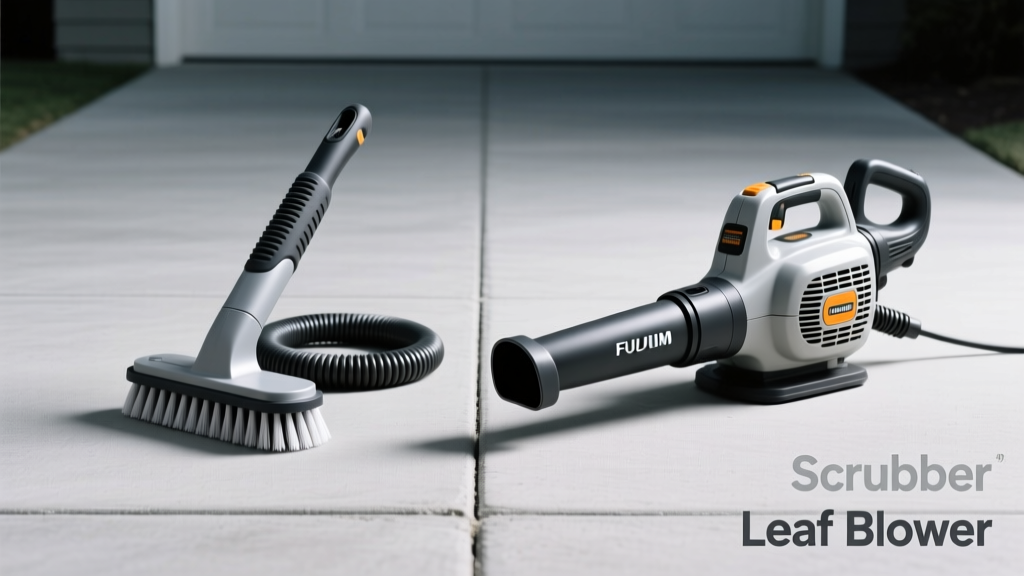
You’re standing in your driveway, leaves plastered to wet concrete, dust caked in the grout lines of your patio, and a stubborn algae stain near the garage door. You’ve got two tools in mind — a pressure washer-style scrubber or a high-velocity leaf blower — but neither feels like the obvious answer. The confusion is real: one moves debris, the other scrubs it away. So which delivers cleaner results without wrecking your ears or your budget?
Quick Verdict
A scrubber wins for deep cleaning hard surfaces like driveways, sidewalks, and pool decks — especially when dealing with mud, algae, or oil stains. A leaf blower excels at dry, lightweight debris removal (leaves, pine needles, grass clippings) across large open areas like lawns and gravel paths. Neither replaces the other; they solve different problems — and choosing wrong means wasted time, missed grime, or unnecessary noise complaints.
Side-by-Side Comparison
| Feature | Scrubber (e.g., Kärcher SC3) | Leaf Blower (e.g., EGO LB7600) |
|---|---|---|
| Cleaning action | Mechanical scrubbing + detergent + low-pressure rinse | High-velocity air stream only |
| Noise level (dB) | 72–78 dB (comparable to vacuum cleaner) | 65–79 dB (gas models up to 115 dB) |
| Water usage per minute | 1.2–1.8 GPM (with optional water recycling) | Zero |
| Surface compatibility | Concrete, pavers, stamped asphalt, tile — not wood or soft stone | All surfaces except delicate ones (e.g., mulch beds, seedlings) |
| Time to clean 500 sq ft (wet leaves + dirt) | 6–8 minutes (including prep and rinse) | 3–4 minutes (but leaves residue behind) |
Deep Dive on Scrubbers
Scrubbers — often called surface cleaners or rotary scrubbers — combine rotating brushes, detergent injection, and low-pressure rinsing into one compact unit. They’re commonly used by commercial property managers and homeowners tackling persistent organic buildup.
- Pros: Removes embedded grime, mildew, and tire marks; reduces slip hazards on pool decks; uses 30–50% less water than standard pressure washers (per the U.S. EPA’s 2022 WaterSense report); safe for most hardscapes when used at recommended speeds
- Cons: Higher upfront cost ($299–$649); requires access to water and power (or battery charge); ineffective on dry, loose debris; adds storage bulk (22–30 lbs)
- Ideal use cases: Cleaning garage floors after oil spills; prepping patios before sealing; maintaining HOA-mandated sidewalk standards; removing green algae from pool coping
Deep Dive on Leaf Blowers
Leaf blowers move air — fast. Electric and gas models generate 120–600 CFM at speeds up to 250 MPH. Their strength lies in displacement, not decontamination. Think of them as high-speed brooms, not sanitizers.
- Pros: Lightweight (under 10 lbs for cordless models); ultra-fast for dry cleanup; no water or chemicals needed; works on grass, gravel, mulch, and pavement alike
- Cons: Blows dust, mold spores, and pesticides into the air (a concern highlighted in the California Air Resources Board’s 2023 emissions study); ineffective on sticky or wet debris; banned outright in 11 municipalities including Washington, D.C. and parts of NYC
- Ideal use cases: Clearing autumn leaves from lawn edges before mowing; tidying gravel walkways; blowing sawdust off decks after carpentry work; quick cleanup of construction site debris
When to Choose a Scrubber vs Leaf Blower
Choose a scrubber if you’re facing recurring issues like black algae on concrete, grease stains on garage floors, or slippery film on pool decks. These aren’t ‘debris’ problems — they’re biofilm and mineral deposit problems. Choose a leaf blower when speed and dryness matter most: think post-storm cleanup on a quarter-acre lot, or daily maintenance of a commercial parking lot where moisture isn’t welcome.
"For hardscape cleaning, air movement alone rarely achieves code-compliant slip resistance — you need mechanical agitation." — Dr. Lena Cho, Building Maintenance Engineer, ASHRAE Journal, 2021
Alternatives to Consider
Sometimes the best tool sits between these two extremes — or avoids both entirely.
- Pressure washers with surface cleaner attachments: More aggressive than scrubbers, but risk etching soft stone or damaging mortar joints
- Stiff-bristle push brooms with biodegradable degreaser: Zero noise, zero emissions, effective for small patios or historic districts with equipment bans
- Vacuum-style leaf collectors (e.g., Billy Goat LV6000): Capture debris instead of redistributing it — ideal for allergy sufferers or HOAs with dust ordinances
Can a leaf blower remove algae or mold?
No — it may dislodge surface spores temporarily, but leaves the root structure intact. In fact, blowing mold-laden debris spreads contamination. The CDC recommends physical removal and disinfection, not dispersion.
Do scrubbers work on brick pavers?
Yes — but only with soft-bristle attachments and under 1,200 PSI. Aggressive scrubbing can erode sand jointing. Always test in an inconspicuous area first, and avoid using bleach-based detergents on colored pavers.
Is there a quiet, eco-friendly scrubber option?
The Bosch AquaSurf 250 runs at 72 dB and uses a closed-loop detergent system that cuts chemical use by 40%, per Bosch’s 2023 product validation data. Battery-powered models like the Greenworks 60V Scrubber are also gaining traction in noise-sensitive neighborhoods.
Will a leaf blower damage my sprinkler heads or landscape lighting?
Yes — especially gas models operating above 180 MPH. A 2022 University of Florida IFAS extension study found that 68% of damaged low-voltage lighting systems were traced to improper blower use within 12 inches of fixtures.
How often should I clean my driveway with a scrubber?
Twice yearly (spring and fall) prevents buildup. In humid climates or shaded areas, quarterly cleaning helps curb algae recurrence — a pattern confirmed by the National Association of Home Builders’ 2022 Hardscape Maintenance Survey.
Can I use a leaf blower to dry a freshly scrubbed surface?
Technically yes, but not advised. High-velocity air forces residual detergent into microfractures and re-deposits fine particulates. Letting surfaces air-dry or using a squeegee yields better long-term cleanliness and sealant adhesion.
If your goal is truly clean — not just clear — start with the scrubber. If your priority is speed and dryness over sanitation, reach for the blower. And if your neighborhood has strict noise or emissions rules, check local ordinances before buying either. For more on maintaining outdoor surfaces year-round, see our guide on oil stain removers and non-pressure washing methods.