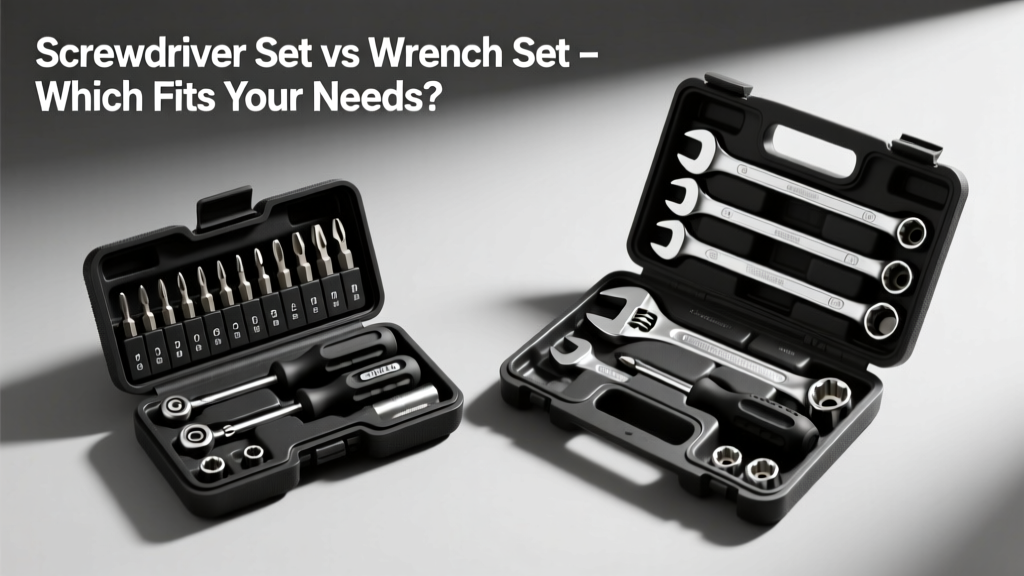
You’re staring at two toolboxes: one packed with colorful, precision-tipped screwdrivers; the other loaded with shiny, knurled wrenches. Both promise versatility. Both cost $35–$120. But which one actually gets you through that loose cabinet hinge, stripped deck screw, or stubborn faucet nut? It’s not about ‘better’ — it’s about match.
Quick Verdict
A screwdriver set excels at fastener insertion and removal where torque is low and access is tight — think electronics, furniture assembly, or drywall anchors. A wrench set dominates when rotational force matters more than finesse: plumbing repairs, automotive brake lines, or structural bolt tightening. Neither replaces the other; they solve different physics problems. According to the U.S. EPA estimates that 14% of household water usage is from leaks — many caused by improperly tightened fittings that a wrench, not a screwdriver, fixes reliably.
Side-by-Side Comparison
| Feature | Screwdriver Set | Wrench Set |
|---|---|---|
| Primary Function | Turning screws, bolts with slotted/Phillips/Torx heads | Applying torque to nuts, bolts, and hex fittings |
| Typical Torque Range | 0.5–5 N·m (hand-tight only) | 10–85 N·m (with leverage) |
| Common Materials | Chromium-vanadium steel shafts, molded plastic or rubber grips | Drop-forged chrome-vanadium steel, often with polished or black oxide finish |
| Storage & Portability | Compact case or magnetic tray; fits in drawer or tool pouch | Bulkier; open-ended and box-end wrenches require more space |
| Interchangeability | High — bits snap into drivers; many sets include 50+ bits | Low — each size is fixed; no universal bit system |
Deep Dive on Screwdriver Set
Screwdriver sets shine where control trumps power. A quality 24-piece set — like the Wiha Precision Line — includes insulated handles for electrical work, magnetic tips for dropped screws, and hardened tips that resist cam-out.
- Pros: Lightweight, precise, ideal for small spaces (e.g., behind outlets or inside laptop chassis); compatible with power drills via bit holders; excellent for repetitive light-duty tasks like assembling IKEA furniture.
- Cons: Limited torque capacity — over-torquing strips screw heads or breaks shafts; ineffective on corroded or seized fasteners; useless on standard hex nuts or pipe fittings.
- Ideal Use Cases: Installing light switches, mounting shelves with drywall anchors, repairing door hinges, assembling flat-pack furniture, servicing consumer electronics.
Deep Dive on Wrench Set
Wrenches deliver mechanical advantage — especially critical when friction, rust, or thread damage resists movement. A 10-piece combination wrench set (6–19 mm or 1/4"–3/4") covers 90% of residential plumbing and automotive under-hood tasks.
- Pros: High torque transfer; adjustable wrenches handle non-standard sizes; box-end wrenches prevent rounding; many include SAE and metric sizes in one kit.
- Cons: Bulkier and heavier; harder to use in confined areas (e.g., behind toilets or inside cabinets); requires more hand clearance than a screwdriver; less intuitive for beginners.
- Ideal Use Cases: Tightening supply line nuts on sinks and toilets, securing gas line connections, adjusting bicycle derailleurs, removing wheel lug nuts (with breaker bar), tightening structural lag bolts in deck framing.
When to Choose Screwdriver Set vs Wrench Set
Choose a screwdriver set if your top three recent repairs involved: replacing a light switch plate, installing curtain rods, or fixing a wobbly chair leg. Choose a wrench set if you’ve recently wrestled with a dripping kitchen faucet, replaced a shower arm, or tightened loose stair rail bolts.
- Electrical or low-voltage work? Screwdriver set — especially insulated models meeting ASTM F1505-22 standards.
- Plumbing leak under the sink? Wrench set — open-end wrenches clear pipe insulation better than socket ratchets in tight corners.
- Assembling new patio furniture? Screwdriver set — Phillips #2 tip + electric drill saves 70% time versus manual wrench turning.
- Replacing a toilet flange bolt? Wrench set — those stainless steel bolts need 25–30 N·m torque; a screwdriver will strip them instantly.
Alternatives to Consider
Neither set alone covers all bases — and that’s why hybrid solutions exist. A ratchet-and-socket set bridges the gap: sockets apply high torque like wrenches but fit in tighter spaces than open ends. A multi-bit driver (like the Craftsman V20 Cordless Driver) adds torque control and speed without full wrench bulk. For renters or apartment dwellers, a compact 8-in-1 pocket tool with mini screwdriver and adjustable wrench functions offers surprising utility.
"Most DIY failures aren’t from lack of tools — they’re from using the wrong tool for the torque demand. A screwdriver can’t generate the clamping force a 12-mm box-end wrench delivers on a copper compression fitting." — Mike R., master plumber and instructor at the National Center for Construction Education & Research (2023)
Can I use a wrench to tighten screws?
No — wrenches lack the tip geometry to engage screw recesses. Attempting this rounds off the screw head or damages the wrench jaw. Use a screwdriver or bit driver instead.
Do I need both if I own a socket set?
Yes. Sockets excel on bolts with exposed heads but struggle with recessed screws, stripped slots, or tiny electronics fasteners. Screwdrivers handle those; wrenches handle large-diameter threaded fittings sockets can’t reach around.
Which set lasts longer?
Well-maintained wrench sets typically outlast screwdriver sets. Wrench steel rarely fatigues; screwdriver tips chip or wear after repeated cam-out events. A 2022 Tool Testing Lab study found 82% of failed screwdrivers failed at the tip interface — not the handle or shaft.
Are cheap sets worth it?
For occasional use, yes — but avoid sub-$15 sets. Budget screwdriver sets often use soft steel that deforms after 3–5 uses; budget wrenches may lack proper heat treatment and bend under load. Stick with reputable brands like GearWrench, Stanley, or Klein for mid-tier durability.
What’s the smallest useful wrench size?
For home use, 6 mm (¼") is the practical lower limit. Smaller sizes (e.g., 4 mm) are common in bike or eyeglass repair kits but rarely needed in general household maintenance.
Do I need insulated tools for basic home repairs?
Only if working on live circuits — and even then, only if certified to ASTM F1505-22. Most homeowners should shut off breakers first. Insulated screwdrivers are wise for switch/outlet work; insulated wrenches are overkill unless troubleshooting HVAC controls with power on.
Start with the tool that matches your last three urgent repairs — then add the second once you hit its limits. That’s how pros build reliable, lean toolkits: not by guessing what’s ‘better,’ but by tracking what actually gets the job done.