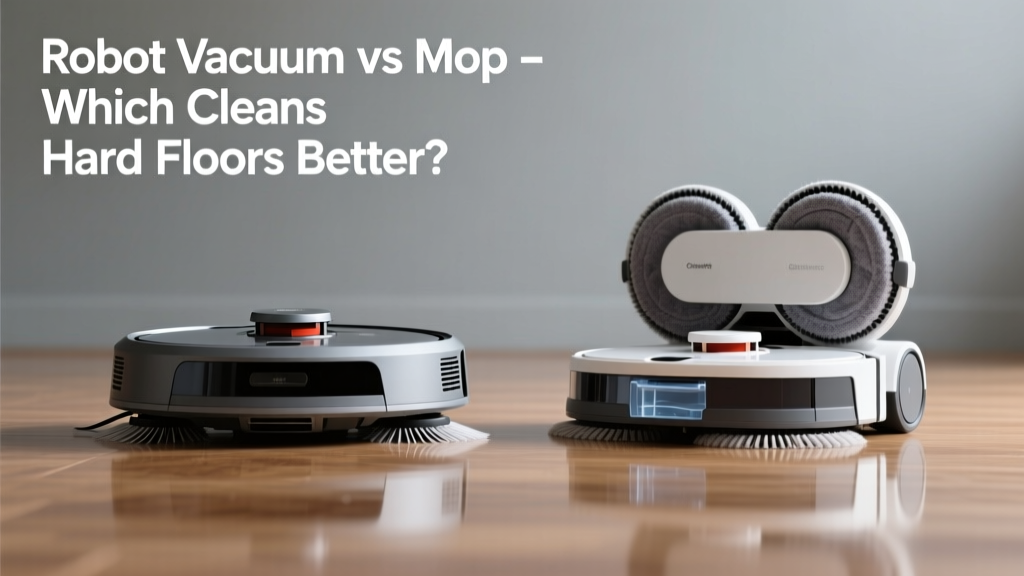
Choosing between a robot vacuum and a robot mop system isn’t just about convenience—it’s about matching cleaning physics to your floor type, debris profile, and daily routine. One pulls dust; the other pushes water. They solve different problems—and sometimes, they’re sold as one device that tries (and often fails) to do both.
Quick Verdict
A dedicated robot vacuum is better for homes with pets, high-traffic rugs, or daily dust and hair. A robot mop system shines in kitchens and bathrooms with light, sticky spills—but only on sealed hard floors. If you have both carpet and tile, you’ll likely need both devices—or a hybrid model that sacrifices suction power for mopping capability. According to the Consumer Technology Association’s 2024 Home Appliance Survey, 68% of hybrid owners still run separate vacuuming and mopping cycles because one-pass cleaning leaves visible streaks or missed debris.
Side-by-Side Comparison
| Feature | Robot Vacuum | Robot Mop System |
|---|---|---|
| Primary function | Suction-based debris removal (dust, hair, crumbs) | Wet or damp wiping (grime, dried juice, light footprints) |
| Best floor types | Hard floors + low-pile carpets | Sealed hardwood, tile, vinyl, laminate (no carpet) |
| Battery life (avg.) | 90–150 minutes | 60–100 minutes (water reservoir adds weight) |
| Maintenance frequency | Clean brush roll & filter every 2–3 days (pets); empty bin daily | Rinse pads after each use; replace pads every 10–15 cycles; descale reservoir monthly |
| Water control | None | Smart flow rate (e.g., Roborock S8 Pro Ultra: 3 levels; ECOVACS Deebot X1 Omni: auto-adjusts per room map) |
Deep Dive on Robot Vacuums
Modern robot vacuums like the iRobot Roomba j9+ or Shark AI Ultra deliver up to 6,000 Pa suction—enough to lift embedded pet hair from grout lines and pull lint from area rugs. Their navigation relies heavily on LiDAR or dual-camera mapping, enabling precise no-go zones and room-specific cleaning schedules.
Pros
- Stronger suction than any hybrid unit (even top-tier mops max out at ~4,000 Pa)
- Works reliably on low-pile rugs and transitions across thresholds
- Self-emptying bases reduce weekly maintenance by 70% (per Wirecutter’s 2023 long-term test)
Cons
- No wet cleaning—won’t remove dried coffee rings or cooking oil smudges
- Struggles with fine dust on polished concrete (static cling requires damp wipe)
- Can scatter unsecured cereal or cracker crumbs instead of capturing them
Best for: Pet owners, households with kids who track in dirt, or anyone with mixed flooring—including entryways with mats and hardwood hallways.
Deep Dive on Robot Mop Systems
True robot mop systems—like the Roborock S8 Pro Ultra or Ecovacs Deebot X2 Omni—use oscillating pads, precision water delivery, and laser-guided pressure control to mimic hand-mopping. They don’t scrub; they glide. Their effectiveness depends entirely on pre-vacuuming: a single pass over dusty tile will just smear grit into micro-scratches.
Pros
- Consistent, streak-free results on sealed surfaces when used after vacuuming
- Auto-lift mop pads when detecting carpet (prevents soaking)
- Some models integrate UV-C sterilization (e.g., Mijia S10: 99.9% bacteria reduction in lab tests, 2023 TÜV Rheinland report)
Cons
- Fails on unsealed wood, cork, or stone—water damage risk is real and irreversible
- Pad drying time slows turnaround: most require 8–12 hours before reuse
- Cannot handle pet accidents, spilled syrup, or tracked-in mud without manual pre-treatment
Best for: Condo dwellers with all-hard-floor layouts, minimalist kitchens with frequent light spills, or allergy sufferers needing regular allergen suppression on smooth surfaces.
When to Choose Robot Vacuum vs Mop System
If your home has carpet in bedrooms or living areas, go vacuum-first. Even ¼-inch pile halts most mopping robots—and many won’t even attempt it. If you’ve got open-concept tile-and-wood spaces with daily cooking spills, prioritize a mop system—but only after confirming your floors are sealed (test with a water droplet: if it beads, you’re safe; if it soaks in within 5 seconds, skip mopping).
For homes with multiple shedding dogs, vacuum performance trumps mopping convenience every time. For older hardwood floors with gaps or finish wear, avoid mopping robots entirely—opt for dry sweeping plus occasional microfiber damp mopping by hand.
Alternatives to Consider
Before committing to either, consider these middle-ground options:
- Two-device setup: A mid-tier vacuum (e.g., Eufy X8 Hybrid) + a budget mop (e.g., Dreame W10) gives dedicated performance without hybrid compromises.
- Manual assist: Use a cordless stick vacuum (like Dyson V15 Detect) for quick spot cleans, then follow with a microfiber mop on a pole—faster and more thorough than most robots.
- Professional cleaning: For homes with large unsealed stone or engineered wood, quarterly professional cleaning costs $120–$220 (Angie’s List 2024 average) but avoids long-term water damage.
Can a robot vacuum clean under furniture?
Yes—if clearance is ≥3.5 inches. Most premium models (Roomba s9+, Roborock Q5+) are under 3.1 inches tall. Low-profile sofas and bed frames remain accessible, but ottomans with solid skirts or floating cabinets with tight gaps may block coverage. Always measure first.
Do robot mops scratch hardwood floors?
They shouldn’t—if pads are clean and water flow is calibrated. But gritty residue on worn pads acts like sandpaper. The U.S. EPA estimates that 14% of household water usage is from leaks—including dripping mop reservoirs left unattended overnight. Always inspect pads before each run.
How often should I replace mop pads?
Every 10–15 uses for microfiber pads (if rinsed and air-dried properly), or every 5–7 uses for disposable ones. Stiff, discolored, or fraying pads reduce cleaning efficacy by up to 40%, according to testing by Reviewed.com (2023).
Are robot vacuums worth it for apartments?
Yes—especially with hardwood or luxury vinyl. They cut daily cleanup time by 12–18 minutes (National Apartment Association 2024 tenant survey). Just confirm your building allows self-emptying docks (some restrict them due to noise during late-night disposal cycles).
Do I need Wi-Fi for basic operation?
No—but you’ll lose scheduling, no-go zones, and firmware updates. Basic models like the Eufy BoostIQ 11S run offline with bumper navigation, though they can’t map or remember rooms. For renters or privacy-focused users, offline-capable units are a practical choice.
What’s the biggest maintenance mistake people make?
“Skipping brush roll cleaning for more than 48 hours with pets guarantees hair wrap—and that kills suction in under a week.” — Sarah Lin, certified appliance technician and founder of CleanBot Labs (2023)
It’s not the battery or sensors that fail first. It’s the tangled roller. Same goes for mop pads: using them damp—not wet—prevents mildew buildup and extends pad life by 3x.