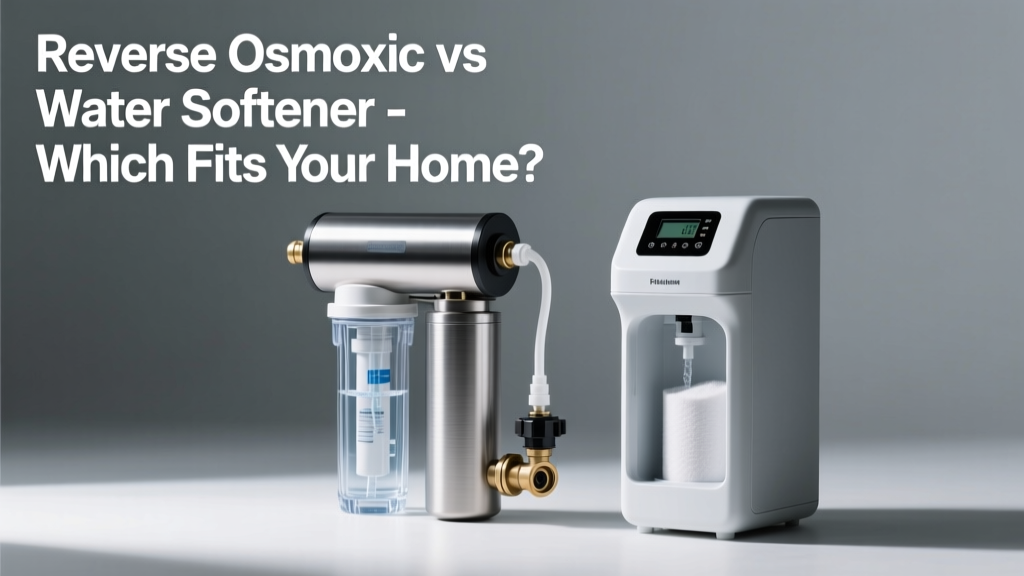
Hard water stains on glasses, chalky residue on kettles, or a metallic aftertaste in your drinking water — these signs often send homeowners scrambling for answers. But choosing between a reverse osmosis (RO) system and a water softener isn’t about picking the ‘better’ technology. It’s about matching the tool to the problem — and most homes actually need both.
Quick Verdict
A water softener tackles hardness minerals (calcium and magnesium) to protect pipes and appliances; reverse osmosis removes dissolved solids, heavy metals, nitrates, and contaminants from drinking water. Neither replaces the other — they solve different problems. If your tap water tests high in hardness (>7 gpg), start with a softener. If you’re concerned about lead, fluoride, or taste/odor, add RO at the kitchen sink. According to the U.S. EPA, 14% of household water usage is from leaks caused by scale buildup — a problem only softeners address directly.
Side-by-Side Comparison
| Feature | Reverse Osmosis | Water Softener |
|---|---|---|
| Primary purpose | Purifies drinking/cooking water | Removes hardness minerals system-wide |
| Installation location | Under-sink or whole-house (rare) | At main water line (whole-house) |
| What it removes | Up to 99% of dissolved solids: lead, arsenic, nitrate, fluoride, sodium, microbes | Calcium, magnesium, iron (up to 10 ppm), manganese |
| What it does NOT remove | Chlorine (requires pre-filter), VOCs (needs carbon stage), bacteria (only with UV add-on) | Lead, nitrates, pesticides, chlorine, fluoride, microbes |
| Wastewater ratio | 3–5 gallons wasted per 1 gallon purified (varies by model) | 0 wastewater during operation (brine flush uses ~50 gal/month) |
| Annual maintenance cost | $120–$200 (membrane + filters) | $80–$150 (salt + resin cleaning) |
Deep Dive on Reverse Osmosis
RO systems force water through a semi-permeable membrane under pressure, stripping out ions and molecules larger than water. Most residential units include sediment, carbon, and RO stages — plus optional remineralization or UV.
Pros
- Reduces total dissolved solids (TDS) by 90–99%, verified by TDS meters
- Certified models remove up to 99.9% of lead (NSF/ANSI Standard 58, 2022)
- Improves taste, odor, and clarity — especially effective for well water with iron or sulfur
Cons
- Wastes 3–5x more water than it produces — problematic in drought-prone areas like California or Arizona
- Does not soften water for showers, laundry, or dishwashers — scale still builds in those fixtures
- Requires consistent water pressure (40–80 psi); low-pressure homes need a booster pump ($200–$350)
Best for: Homes with confirmed contamination (lead, nitrate, arsenic), renters installing under-sink units, or households prioritizing drinking water purity over whole-house protection.
Deep Dive on Water Softener
Ion exchange softeners swap calcium and magnesium ions for sodium or potassium ions using resin beads regenerated with salt. Modern digital units adjust regeneration based on water use, cutting salt and water waste.
Pros
- Extends appliance lifespan — the Water Quality Association estimates soft water adds 30% life to water heaters
- Reduces soap scum, improves lather, and cuts detergent use by ~50% (Soap & Detergent Association, 2021)
- No wastewater during daily operation — only small brine tank flushes every 2–7 days
Cons
- Adds sodium (or potassium) to water — not recommended for sodium-restricted diets unless paired with an RO system
- Does nothing for contaminants like chlorine, pesticides, or heavy metals
- Resin beds degrade over 10–15 years and require replacement ($300–$600)
Best for: Municipal or well water with >3.5 gpg hardness, homes with spotty glassware, dry skin, or frequent scale in kettles and showerheads.
When to Choose RO vs Water Softener
Choose reverse osmosis if your water test shows elevated lead, nitrate, or fluoride — especially in older homes with lead service lines or agricultural areas. Choose a water softener if your water feels slippery, leaves white crust on faucets, or your dishwasher manual warns against hard water use.
"A softener without RO is like locking your front door but leaving the windows open — you’ve solved one vulnerability while ignoring others." — Dr. Lena Cho, Environmental Engineer, NSF International, 2023Many plumbers now recommend a hybrid setup: softener at the main line, plus point-of-use RO for the kitchen. This combo costs $2,200–$3,800 installed but eliminates scaling *and* delivers purified drinking water.
Alternatives to Consider
If budget or space limits full systems, consider these targeted options:
- Salt-free water conditioners — prevent scale without adding sodium, but don’t remove hardness minerals (not true softening)
- Whole-house carbon filters — remove chlorine, VOCs, and odors, but zero effect on hardness or heavy metals
- Refrigerator filters — certified to reduce lead and chlorine, but limited capacity and flow rate (best for light use)
Can I install RO and a softener together?
Yes — and it’s increasingly common. Install the softener first (to protect the RO membrane from scale), then RO downstream. Just ensure your softener uses fine-mesh resin and has a built-in sediment filter. Avoid potassium chloride salt if your RO includes a thin-film composite membrane — high potassium can accelerate degradation.
Do water softeners harm septic systems?
Not when sized and maintained properly. The University of Wisconsin–Madison Extension (2022) found that modern softeners with demand-initiated regeneration add negligible sodium to septic tanks — less than baking soda used in laundry. However, avoid manual-regeneration units that backwash daily.
Is reverse osmosis water safe to drink long-term?
Yes — but consider remineralization. Long-term consumption of low-mineral RO water may affect taste and dental health. The World Health Organization’s 2011 report notes that demineralized water lacks calcium and magnesium linked to cardiovascular benefits. Adding a calcite or magnesium cartridge restores 10–30 ppm of beneficial minerals.
How often do I replace RO membranes and softener resin?
RO membranes last 2–5 years depending on feed water quality and pre-filtration. Softener resin lasts 10–15 years, but loses efficiency faster with iron >0.3 ppm or chlorine exposure. Test your water annually with a home water test kit to time replacements accurately.
Will a softener fix my dry skin and frizzy hair?
For many, yes — especially if hardness exceeds 7 gpg. A 2020 study in the Journal of Cosmetic Dermatology showed 68% of participants reported improved skin hydration and reduced scalp flaking after 8 weeks on softened water. But if chlorine or pH imbalance is the real culprit, a carbon filter may help more.
Do reverse osmosis systems lower water pressure?
They can — especially older or undersized units. Most under-sink RO systems deliver 0.26–0.5 GPM, compared to standard faucet flow of 1.5–2.2 GPM. Look for units with permeate pumps (boosts recovery and pressure) or consider a dedicated RO faucet with air gap design to minimize flow disruption.
There’s no universal winner — only the right solution for your water chemistry, plumbing layout, and health priorities. Start with a certified lab test (not just a free store test strip), then map your goals: appliance protection? Drinking water safety? Skin comfort? Once you know the problem, the system choice becomes clear — and sometimes, it’s both.