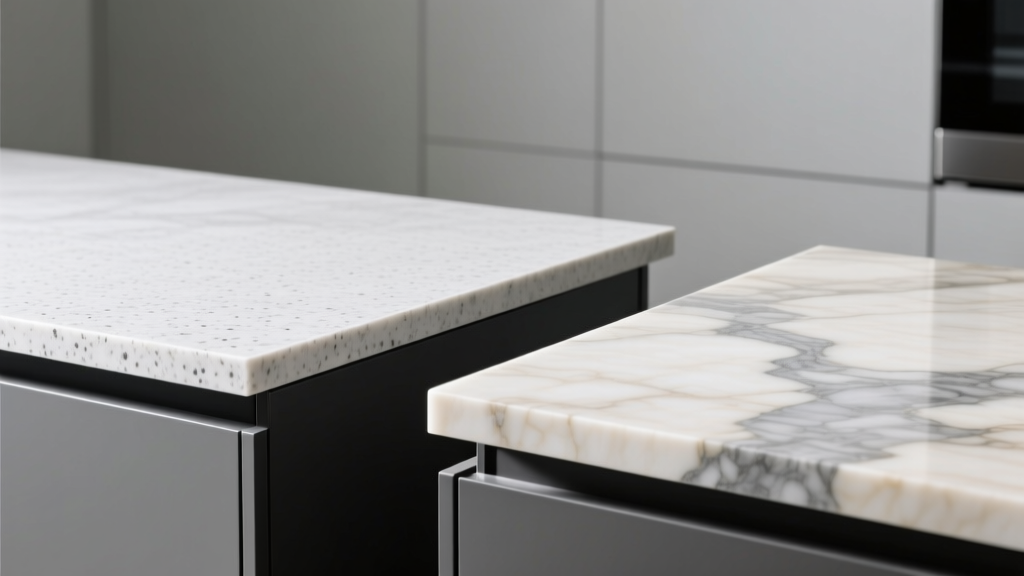
Choosing between quartz and marble countertops feels like picking between a reliable daily driver and a luxury sports car — both impressive, but built for very different priorities. You want beauty, but also need something that won’t stain when you spill red wine at 8 a.m., or crack when you set down a hot skillet.
Quick Verdict
Quartz is the smarter choice for most homeowners who prioritize low maintenance, consistent performance, and long-term value — especially in kitchens and high-traffic bathrooms. Marble excels in formal spaces where natural elegance and artistic variation matter more than scratch resistance, such as butler’s pantries or powder rooms. According to the National Kitchen & Bath Association’s 2023 Design Trends Report, quartz accounts for 42% of all countertop installations in new U.S. homes — nearly double marble’s 23% share.
Side-by-Side Comparison
| Feature | Quartz | Marble |
|---|---|---|
| Composition | 90–94% ground natural quartz + polymer resins and pigments | Metamorphic rock composed primarily of calcite or dolomite |
| Hardness (Mohs scale) | 7 | 3–4 |
| Heat resistance | Up to 150°F; prolonged direct heat may damage resin binder | High — tolerates brief contact with hot cookware |
| Stain resistance | Non-porous; no sealing required | Porous; requires resealing every 6–12 months |
| Average installed cost (per sq ft) | $75–$125 | $100–$250+ |
| Lifespan | 25+ years with minimal upkeep | 50+ years with diligent care |
Deep Dive on Quartz Countertops
Quartz delivers engineered consistency — every slab looks uniform, performs predictably, and resists everyday wear better than almost any natural stone.
Pros
- No sealing needed — non-porous surface blocks liquids, bacteria, and stains
- Wide range of colors and patterns, including convincing marble-look options like Calacatta quartz
- Scratch-resistant under normal kitchen use (though avoid dragging cast iron or ceramic knives directly)
- Warranties often cover 10–15 years against manufacturing defects
Cons
- Not heatproof — thermal shock from hot pans can cause microfractures or discoloration
- Cannot be refinished if deeply scratched or chipped (unlike marble, which can be honed or polished)
- Less resale appeal in ultra-luxury markets where natural stone remains a status signal
Quartz shines in primary kitchens, laundry rooms, and family bathrooms — especially where kids, coffee spills, or frequent meal prep are part of daily life. It’s also ideal for those who dislike routine maintenance or live in humid climates where moisture retention in porous stone invites mold.
Deep Dive on Marble Countertops
Marble brings unmatched organic character: veining patterns are unique to each slab, and its cool, dense surface feels luxurious under hand and knife. But it’s not forgiving — and that’s part of its charm.
Pros
- Natural beauty with dramatic, one-of-a-kind movement and depth
- Excellent for baking — stays cool and provides ideal surface for rolling dough
- Can be professionally refinished to remove etches and light scratches
- Increases perceived home value in historic or high-end properties
Cons
- Etches easily from acidic substances (lemon juice, vinegar, wine) — leaves dull white marks
- Stains readily without proper sealing; water rings appear within minutes on unsealed surfaces
- Requires professional installation due to weight and fragility during fabrication
Marble works best in low-use areas like wet bars, fireplace surrounds, or formal dining room buffets. It’s also popular for bathroom vanities where aesthetics outweigh heavy usage — though even there, Carrara marble demands vigilance. As interior designer Sarah Blankenship notes in Architectural Digest’s 2022 Stone Guide: “Marble isn’t a finish — it’s a commitment. Its beauty deepens with age, but only if you accept its evolving patina as part of the story.”
When to Choose Quartz vs Marble
Opt for quartz if you’re renovating a busy family kitchen, managing a rental property, or prioritizing long-term durability over artisanal uniqueness. Choose marble if you’re designing a boutique hotel lobby, restoring a 1920s bungalow, or building a dedicated pastry station where surface temperature and tactile response matter more than spotlessness.
Also consider your cleaning habits: if you rarely wipe counters immediately after use or prefer natural cleaners like vinegar, quartz avoids the risk of accidental etching. If you enjoy polishing surfaces weekly and don’t mind resealing twice yearly, marble’s vulnerability becomes manageable — even poetic.
Alternatives to Consider
Before locking in either option, weigh these mid-tier performers:
- Soapstone: Non-porous, heat-resistant, and naturally antimicrobial — ages to a soft charcoal gray. Less flashy than marble, more forgiving than quartz in thermal performance.
- Granite: Harder than marble, more heat-tolerant than quartz, and offers natural variation without marble’s acidity sensitivity. Requires annual sealing.
- Porcelain slabs: Ultra-dense, UV-stable, and increasingly realistic in marble and concrete visuals. Priced close to mid-range quartz but lighter and easier to install.
For small-space upgrades, consider edge profiles that mimic marble’s elegance — ogee or dupont edges add sophistication without the upkeep.
Can quartz look like marble without the maintenance?
Yes — many quartz lines replicate Calacatta and Statuario marble so convincingly that even designers miss the difference at first glance. However, quartz veining tends to repeat every 6–8 feet, while real marble’s flow is entirely random. For large islands, this repetition can become noticeable unless carefully book-matched during layout.
Does marble increase home resale value?
In luxury markets ($1.5M+ homes), marble countertops correlate with 3–5% higher sale prices, per a 2023 study by the Appraisal Institute. But in suburban starter homes, that premium vanishes — and buyers often see marble as a liability requiring immediate refinishing.
How often does marble really need sealing?
It depends on usage and sealer type. Impregnating sealers (like those from Dry Treat or Miracle Sealants) last 6–12 months in kitchens, but only 3–6 months near sinks or stovetops. The water test — droplet beads up for >10 minutes — is the only reliable field check. Skip it, and you’ll likely see darkening around faucet bases within weeks.
Is quartz eco-friendly?
Mixed record. Most quartz contains ~7% petroleum-based resins and is not recyclable. However, brands like Cambria use 93% natural quartz and disclose full ingredient lists, while Silestone incorporates recycled glass and mirror fragments. Compare EPDs (Environmental Product Declarations) — available on manufacturer sites — before deciding.
What happens if I cut directly on marble?
You’ll dull your knives faster than on quartz or granite — marble’s softness means blade edges catch and degrade. More critically, repeated cutting creates micro-scratches that trap grime and accelerate staining. Always use a wood or composite cutting board, even on honed marble.
Can I install quartz or marble myself?
No — both require professional templating, CNC fabrication, and structural support. Quartz weighs ~15 lbs/sq ft; marble averages 18–20 lbs/sq ft. Unsupported overhangs beyond 10 inches risk cracking. DIY attempts account for nearly 12% of post-installation warranty claims, per the Marble Institute of America’s 2023 Field Report.
"Quartz wins on practicality, marble on poetry. The right choice isn’t about which is 'better' — it’s about whether your space needs a tool or a testament." — Elena Ruiz, CKD, senior specifier at Studio Materia (2024)
If your mornings involve rushed breakfasts and school lunches, quartz gives you peace of mind — and more time for what matters. If your kitchen doubles as a gallery and your idea of self-care includes polishing a countertop at sunset, marble rewards that intentionality. Neither is wrong. One just asks more of you — and returns something quieter, deeper, and unmistakably alive.