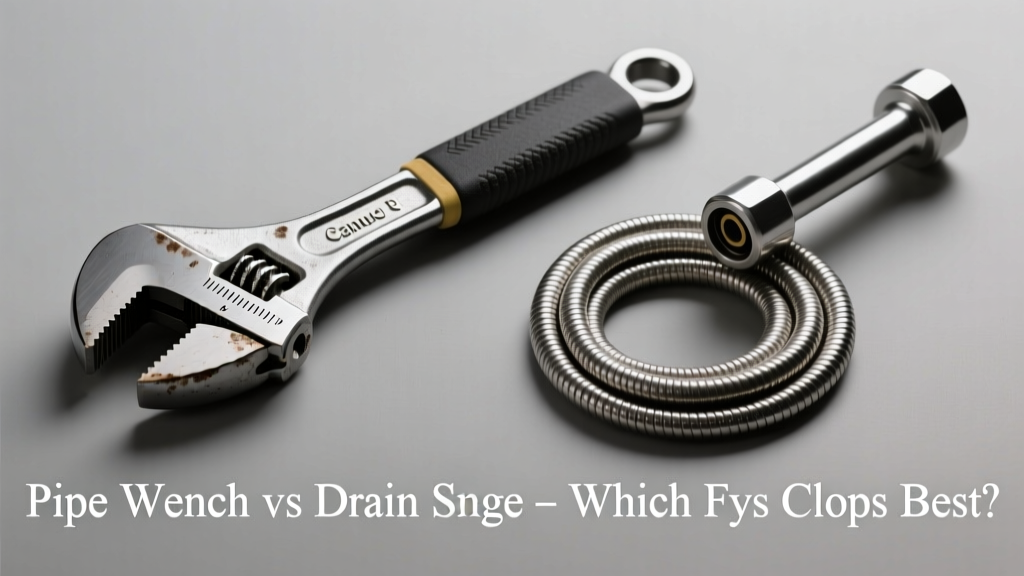
You’re standing in your bathroom with water pooling around the drain—and your toolbox is open. A pipe wrench sits next to a coiled metal snake. Both look like they *could* fix this. But which one actually will? It’s not just about grabbing the nearest tool—it’s about matching the tool to the problem’s location, cause, and severity.
Quick Verdict
A drain snake is almost always the better choice for clearing clogs inside pipes—especially hair, soap scum, or food debris stuck 2–15 feet down. A pipe wrench excels at disassembling fixtures, tightening loose joints, or removing corroded fittings—but it won’t pull gunk out of a trap. Using a wrench on a clog often means unnecessary disassembly, potential damage to chrome finishes, and zero progress on the actual blockage.
Side-by-Side Comparison
| Feature | Pipe Wrench | Drain Snake |
|---|---|---|
| Primary function | Mechanical gripping & turning of pipes/fittings | Physical removal of obstructions from inside pipes |
| Effective clog depth | 0 ft (does not enter pipe) | 2–25 ft (depending on model) |
| Typical clog types addressed | None directly—only enables access | Hair, grease, food, soap scum, small objects |
| Required skill level | Moderate (torque control critical) | Low to moderate (rotation + feel-based feedback) |
| Risk of damage to plumbing | High if over-tightened or used on soft brass/chrome | Low with proper technique; high if forced past bends |
Deep Dive on Pipe Wrench
The pipe wrench is a jawed, adjustable wrench designed to grip round, uneven surfaces—like galvanized steel or cast iron pipe. Its serrated teeth dig in when torque is applied, making it indispensable for installing or repairing supply lines, replacing valves, or loosening seized compression nuts.
Pros
- Unmatched grip strength on rusty or corroded fittings
- Adjustable jaw accommodates pipe diameters from ½" to 2" (standard models)
- No electricity or batteries required
- Essential for shutting off water at the source before snaking
Cons
- Cannot clear any internal obstruction—only grants access
- Leaves visible tooth marks on polished brass, chrome, or plastic
- Over-torquing can crack PVC unions or strip threads on older galvanized pipe
- Useless for sink, shower, or tub clogs unless you plan full trap removal
According to the U.S. EPA estimates that 14% of household water usage is from leaks—many caused by over-tightened or misaligned fittings. That makes proper wrench technique not just convenient, but conservation-critical.
Deep Dive on Drain Snake
A drain snake (or plumber’s auger) is a flexible, coiled cable with a corkscrew tip that advances into pipes to hook, break up, or retrieve blockages. Manual versions range from 15- to 25-foot cables; motorized variants handle deeper or tougher clogs in main lines.
Pros
- Directly targets clogs inside P-traps, wall drains, and branch lines
- Minimal disassembly needed—often works through overflow holes or cleanouts
- Reusable, low-cost, and widely available ($12–$45 for reliable manual models)
- Works on both vertical and horizontal runs when fed carefully
Cons
- Ineffective on tree roots or collapsed pipes (requires camera inspection first)
- Can scratch porcelain if tip isn’t retracted before pulling out
- Manual models struggle beyond 20 ft or through tight 90° bends without practice
- Doesn’t address underlying causes like grease buildup or poor slope
"A good hand-crank snake clears ~80% of residential clogs without opening a single joint—saving time, mess, and risk of flood." — Plumbing Contractor Magazine, 2022 Field Survey
When to Choose Pipe Wrench vs Drain Snake
Reach for the drain snake when: water backs up slowly in a sink or shower, you hear gurgling, or the clog is within 20 ft and likely organic (hair, soap, food). It’s also the go-to if you’ve already tried boiling water and baking soda/vinegar with no effect.
Grab the pipe wrench only when: you need to remove a faucet cartridge, replace a shut-off valve, disconnect a garbage disposal, or loosen a stuck P-trap nut—especially if corrosion is visible. It’s part of the prep, not the cure.
If your kitchen sink is backing up and the pop-up lever feels stiff, try the pop-up drain repair guide first. If your basement floor drain gurgles after laundry, check the main line clog signs before assuming it’s a simple trap issue.
Alternatives to Consider
Neither tool solves every clog—and sometimes, neither is appropriate. Here are three alternatives worth keeping on hand:
- Wet/dry vacuum: Creates strong suction for shallow clogs (under 3 ft); effective on sink and bathtub stoppers
- Zip-it tool: Rigid plastic strip with barbs—ideal for hair in shower drains; disposable, under $3
- Enzyme cleaner (e.g., Green Gobbler): Breaks down organic matter over 24–72 hours; best for maintenance, not emergencies
For recurring clogs, consider whether your home has older galvanized pipes—a common culprit behind slow drainage. Learn more in our galvanized pipe replacement cost breakdown.
Can I use a pipe wrench to loosen a drain stopper?
Only if it’s a threaded lift-and-turn stopper with exposed metal. Most modern pop-up assemblies use plastic or set-screws—not wrench-ready threads. Forcing a wrench risks cracking the flange or stripping the pivot rod. Use needle-nose pliers or an Allen key instead.
Will a drain snake damage PVC pipes?
Not if used correctly. Avoid cranking aggressively at bends—feed gently, rotate steadily, and retract slowly. Snakes with coated tips (e.g., nylon or rubber sheathing) reduce friction and scratching risk. Over-rotation or forcing past a 90° turn can kink or gouge thin-wall Schedule 40 PVC.
Is a power snake worth it for homeowners?
For most single-family homes, no. Motorized snakes start at $120 and require storage space, maintenance, and safety awareness (they spin at 300+ RPM). Reserve them for persistent main-line clogs—or hire a pro with camera inspection capability first.
What if the snake comes out dirty but the drain still won’t flow?
You may have cleared only part of the clog—or hit a secondary obstruction downstream. Try snaking again while running cold water to flush debris. If flow remains poor, the issue could be venting (check roof vent for bird nests), slope loss, or a collapsed section—call a licensed plumber for video inspection.
Do I need both tools in my kit?
Yes—but for different jobs. Keep a 10-inch pipe wrench for fixture repairs and a 25-foot drum-style snake for routine clogs. They complement each other: the wrench secures your work area; the snake clears the path. Think of them as a mechanic’s socket set and brake caliper tool—not interchangeable, but both essential.
Bottom line: Your wrench tightens and releases. Your snake probes and retrieves. Confusing their roles wastes time, risks damage, and delays real solutions. Match the tool to the task—not the tool to the frustration.