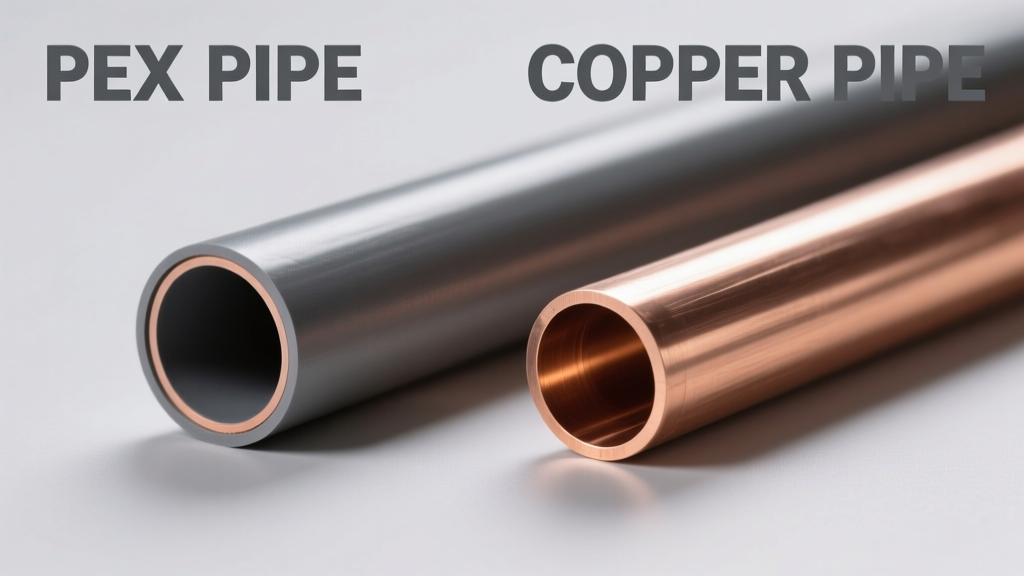
Choosing between PEX and copper pipe feels like picking a foundation material: it’s invisible once installed, but gets you in trouble if you get it wrong. Both are widely approved, trusted by plumbers, and found in millions of U.S. homes — yet they solve different problems in different ways.
Quick Verdict
PEX is usually the better choice for residential repipes, additions, and DIY-friendly projects due to lower material and labor costs, freeze resistance, and flexibility. Copper remains the gold standard for high-heat applications (like gas lines or boiler loops), commercial builds, and areas with aggressive water chemistry — where longevity under stress matters most. Neither is universally 'better'; the right pick depends on your water quality, climate, budget, and skill level.
Side-by-Side Comparison
| Feature | PEX Pipe | Copper Pipe |
|---|---|---|
| Material | Cross-linked polyethylene plastic | Tempered Type M, L, or K copper alloy |
| Typical Lifespan | 40–50 years (per ASTM F876 testing) | 50–70+ years (with proper water pH and no galvanic corrosion) |
| Freeze Resistance | High — expands up to 3x without bursting | Low — rigid metal cracks under ice expansion |
| Installation Time (per 100 ft) | ~2.5 hours (with crimp or clamp tools) | ~5–7 hours (soldering, fluxing, drying, pressure testing) |
| Average Material Cost (per ft) | $0.35–$0.65 (PEX-A/B/C) | $2.20–$4.80 (Type L, ½") |
| Required Tools | Crimp tool, cutter, go/no-go gauge | Propane torch, flux, solder, tube cutter, deburring tool |
| Code Approval (IRC 2021) | Approved for potable water & radiant heat | Approved for potable water, gas, and hydronic systems |
Deep Dive on PEX Pipe
PEX comes in three cross-linking methods — A (peroxide), B (silane), and C (electron beam) — with subtle differences in flexibility, chlorine resistance, and expansion rates. All types handle hot water up to 200°F at 80 psi, making them suitable for domestic hot water lines and radiant floor heating.
Pros of PEX
- No open flame required — critical for retrofitting older homes with wood framing or insulation
- Resists scale and corrosion — ideal for areas with hard or acidic water (e.g., Midwest and Pacific Northwest)
- Can run in long, continuous lengths — fewer fittings mean fewer potential leak points
- Quieter than copper when water shuts off (no water hammer amplification)
Cons of PEX
- UV-sensitive — must be shielded from sunlight within 30 days of installation (per ASTM F876)
- Vulnerable to rodent damage unless protected in conduit or behind drywall
- Not approved for outdoor above-ground use or direct burial without sleeve in some jurisdictions
- Some early PEX-A formulations showed permeation issues with diesel fuel vapors near garages (rare today; check ASTM F1960 certification)
PEX shines in whole-house repipes, bathroom remodels, and slab-on-grade radiant heating. It’s also the top choice for how to repipe a house on a tight timeline or budget.
Deep Dive on Copper Pipe
Copper has been the residential plumbing backbone since the 1960s — and for good reason. Its antimicrobial surface (EPA-registered as a public health benefit since 2008), high thermal conductivity, and proven track record in diverse water chemistries make it irreplaceable in specific roles.
Pros of Copper
- Recyclable and inert — contains no plasticizers or VOCs that could leach into water
- Withstands high pressure (up to 1,000 psi cold, per ASTM B88) and repeated thermal cycling
- Compatible with existing brass, stainless, and cast iron fittings — easy to integrate into legacy systems
- Accepted for natural gas distribution (Type K only, per NFPA 54 2023)
Cons of Copper
- Susceptible to pinhole leaks in high-chloramine or low-pH water (e.g., parts of California and Florida)
- Requires skilled soldering — improper joints cause 62% of copper-related failures, per the Plumbing-Heating-Cooling Contractors Association’s 2022 field survey
- Price volatility — copper prices spiked 87% between 2020–2022, raising installed costs unpredictably
- Conductive — requires dielectric unions when connecting to steel tanks or galvanized lines
Copper remains essential for copper pipe installation tips in commercial kitchens, medical facilities, and boiler supply lines — places where regulatory scrutiny and zero tolerance for leaching matter most.
When to Choose PEX vs Copper
Choose PEX if you’re replacing pipes in a 1970s ranch with slab leaks, adding a second bathroom in a finished basement, or installing radiant heat under hardwood floors. Its flexibility lets you snake through joist bays with minimal drywall tear-out.
Choose copper if your home draws from a private well with unbuffered acidic water (pH <6.5), you’re running a gas line to a fireplace, or local code mandates copper for multi-family structures over three stories. According to the Insurance Institute for Business & Home Safety's 2023 report, copper outperformed PEX in fire-resistance tests when embedded in walls — a factor for high-density housing.
"We specify PEX for 80% of single-family retrofits, but never skip copper for gas or steam systems — the risk/reward ratio flips completely." — Maria Chen, Master Plumber and IAPMO Code Committee Member, 2024
Alternatives to Consider
While PEX and copper dominate residential water supply, two alternatives deserve mention:
- CPVC: Lower-cost plastic option rated for hot water (up to 200°F), but brittle in freezing temps and incompatible with solvent cement near PEX or copper transitions
- Stainless steel tubing (Annex 51): Used in high-end European homes and lab facilities — corrosion-proof and non-permeable, but costly ($8–$12/ft) and requires specialty compression tools
For drain-waste-vent (DWV) systems, neither PEX nor copper applies — stick with PVC, ABS, or cast iron. See our guide on PVC vs ABS pipe for those decisions.
Can PEX and copper be connected directly?
Yes — but only with a dielectric union or transition fitting rated for both materials (e.g., BrassCraft G150 or SharkBite 1/2" push-to-connect). Direct soldering to PEX melts the polymer. Per IPC 2021 Section 605.4, dielectric separation is mandatory to prevent galvanic corrosion.
Does PEX affect water taste or odor?
Early PEX-B installations (pre-2010) sometimes imparted a temporary plastic taste, especially with stagnant water. Modern ASTM F876-compliant PEX-A (like Uponor Wirsbo) shows no detectable organoleptic impact after 14 days of flushing, per NSF/ANSI 61 testing data from 2023.
Is copper safer for drinking water?
Copper does leach small amounts — especially in new installations or low-pH water — and the EPA action level is 1.3 mg/L. But copper is an essential nutrient; PEX carries no mineral benefit or risk. Neither poses health hazards when installed per code. For vulnerable populations (infants, dialysis patients), consider point-of-use carbon filtration regardless of pipe type.
How do insurance companies view PEX vs copper?
Most major insurers (State Farm, USAA, Liberty Mutual) treat both equally — provided installation follows IRC or UPC standards. However, some regional carriers in wildfire-prone zones (e.g., California’s FAIR Plan) require copper for exterior risers due to flame-spread ratings. Always disclose material choice during underwriting.
What’s the best pipe for a vacation cabin used seasonally?
PEX wins here — its freeze resilience saves thousands in burst-pipe claims. The U.S. EPA estimates that 14% of household water usage is from leaks, many caused by frozen copper lines in intermittently heated spaces. Just ensure all PEX is drained or insulated below 20°F.
There’s no universal winner — just smarter matches. Many pros now use PEX for branch lines and copper for main runs or gas, blending strengths instead of choosing sides. Your water test results, local code amendments, and whether you’ll be swinging a torch or crimping a ring should drive the call — not marketing slogans or nostalgia. For more on joining methods, see our how to solder copper pipe tutorial or PEX crimp vs clamp vs expansion comparison.