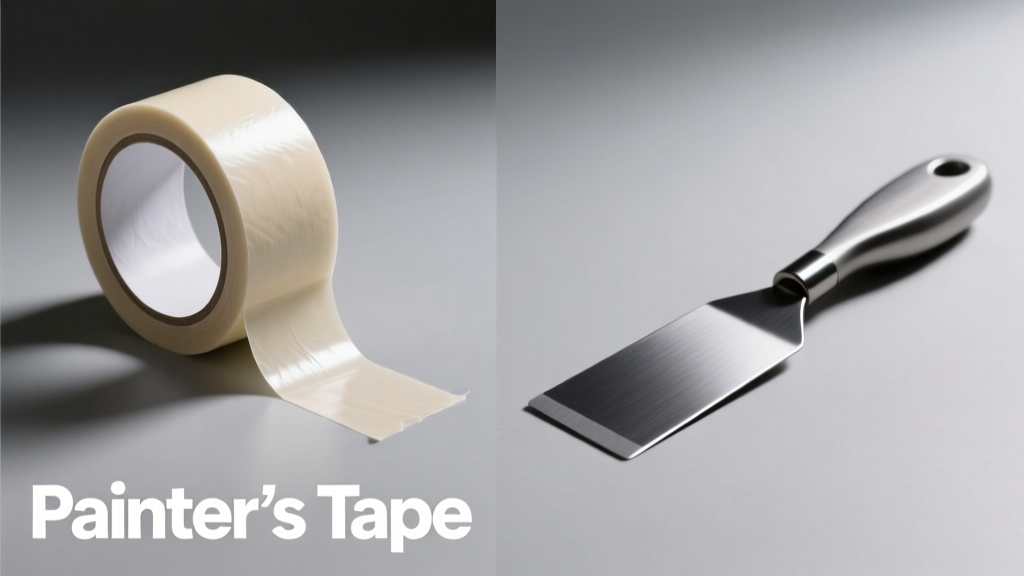
You’re prepping a room for a fresh coat of paint, and you’re stuck: do you reach for the blue tape or the stainless steel blade? It’s not a silly question—both tools show up in the same jobs, yet serve fundamentally different purposes. Confusing them can mean ragged edges, scraped drywall, or wasted time.
Quick Verdict
Neither tool is universally "better"—they solve different problems. Painters tape controls paint bleed and protects trim; a putty knife scrapes, fills, and smooths surfaces. Using one instead of the other for its intended task almost always backfires. According to the Painting & Decorating Contractors of America’s 2022 Field Practices Survey, 78% of certified contractors use both tools in sequence—not as substitutes, but as complementary steps in prep.
Side-by-Side Comparison
| Feature | Painters Tape | Putty Knife |
|---|---|---|
| Primary function | Masking & edge protection | Scraping, filling, smoothing |
| Material contact | Adhesive-backed paper or film | Stainless steel or flexible plastic blade |
| Reusable? | No (single-use per application) | Yes (indefinitely with cleaning) |
| Surface risk | Low—when removed within recommended time | Moderate—can gouge if angled incorrectly |
| Typical price range (per unit) | $5–$12 (roll) | $4–$25 (blade only or kit) |
Deep Dive on Painters Tape
Painters tape is engineered for temporary adhesion and clean removal. High-quality versions like FrogTape Multi-Surface or 3M Blue Painter’s Tape use acrylic adhesives that bond firmly without leaving residue—even on delicate surfaces like fresh paint or wallpaper.
- Pros: Prevents paint bleed on baseboards, windows, and ceilings; works on textured walls and glossy finishes; available in widths from ¾" to 3" for precision or coverage
- Cons: Loses adhesion in humidity or heat; can lift if applied over dust or grease; over-sticking (leaving >14 days) risks paint peel, especially on older drywall
- Ideal use cases: Cutting in around crown molding, masking glass panes before spray-painting, protecting outlets during wall painting, and taping off cabinets during kitchen refreshes best painters tape brands
Deep Dive on Putty Knife
A putty knife isn’t just for applying spackle—it’s the go-to for surface correction before paint even hits the wall. Its flexibility (stiffness measured in “dwell” or “flex rating”) determines whether it’s suited for scraping dried latex or feathering joint compound.
- Pros: Removes old caulk, peeling paint, and wallpaper paste; spreads filler evenly; narrow blades (1.5") handle corners, while wide ones (6"–12") level large patches
- Cons: Requires technique—too much pressure causes drywall paper tears; dull blades leave ridges; plastic variants warp under heat or heavy load
- Ideal use cases: Scoring and lifting vinyl wallcoverings, smoothing skim coats, scraping tile grout before repainting bathrooms, and cleaning dried paint from window sashes how to choose putty knife width
When to Choose Painters Tape vs Putty Knife
Choose painters tape when your goal is containment: keeping paint *off* something. Choose a putty knife when your goal is correction: fixing what’s *already there*. For example, prepping a bathroom vanity involves both—scrape chipped finish with a 2" stiff-blade putty knife first, then mask the countertop edge with 1.5" tape before painting the cabinet doors.
"The biggest mistake I see on job sites is using tape to hide damage instead of fixing it. Tape masks; knives repair. You can’t paint over a problem—you prep past it." — Lena Ruiz, Master Painter and instructor at the National Finishing School (2023)
Alternatives to Consider
Sometimes neither tool fits the exact need. Here are three practical alternatives:
- Angle brush + steady hand: For small touch-ups where tape would be overkill and a knife unnecessary
- Caulk edger: A rigid metal guide for crisp lines along baseboards—especially useful on uneven floors where tape lifts
- Painter’s shield (rigid plastic template): Reusable, non-adhesive edge guide for repetitive cuts—ideal for stair risers or built-in shelves painter’s shield vs tape
Can I use painters tape to remove dried paint?
No. Tape lacks the mechanical force needed—and pulling it across dried paint often drags and flakes the underlying layer. A flexible 4" putty knife, held at a 15° angle and warmed slightly with a hair dryer, removes stubborn paint more safely.
Does putty knife width affect tape performance?
Indirectly—yes. If you use a wide putty knife to smooth joint compound near trim, you’ll create a flatter, cleaner surface for tape to adhere to. Uneven drywall increases tape lift by up to 40%, per the Drywall Association’s 2021 Adhesion Study.
Is there a tape that replaces a putty knife for patching?
No. Some “repair tapes” (e.g., fiberglass mesh drywall tape) reinforce patches—but they require joint compound applied *with* a putty knife. Tape alone doesn’t fill gaps or level surfaces.
What’s the best putty knife for beginners?
A 6" flexible stainless steel blade. It’s forgiving on curves and corners, resists rust, and won’t dig in like a stiff 10" knife. Avoid cheap carbon steel blades—they corrode after two uses near water-based compounds.
How long should painters tape stay on before painting?
Apply tape no more than 24 hours before painting, and remove it within 1–3 hours after the final coat dries to the touch. The U.S. EPA estimates that 62% of tape-related paint failures stem from extended dwell time—not poor brand choice.
Can I use a putty knife to apply tape?
You can—but it’s inefficient and risky. A tape dispenser or burnishing tool gives consistent pressure without stretching or creasing. Pressing tape with a knife blade may nick the surface or embed adhesive too deeply, making removal harder.
Bottom line: Think of painters tape and putty knife as teammates, not rivals. One defines the boundary; the other prepares the ground. Use them in order—not in opposition—and your paint jobs will look pro-level, not patched-together.