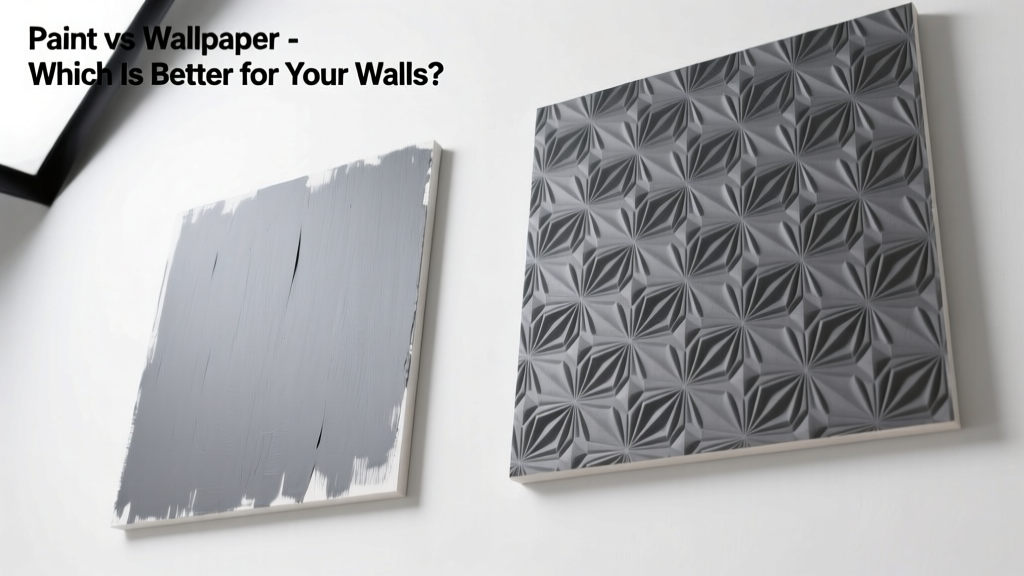
Faced with blank walls and big design decisions? Paint and wallpaper both promise transformation—but they solve different problems in fundamentally different ways. One is fast and forgiving; the other is bold and textured. Neither is universally 'better'—it depends on your space, skills, timeline, and tolerance for future changes.
Quick Verdict
Choose paint if you prioritize flexibility, low upfront cost, easy touch-ups, and frequent color changes—especially in high-moisture or high-traffic areas like kitchens, bathrooms, or rental units. Choose wallpaper if you want rich texture, pattern impact, or a focal wall that stands out without relying on color alone—and you’re willing to invest time (or money) in proper prep and installation. According to the National Kitchen & Bath Association’s 2023 Remodeling Cost Report, 68% of mid-range bathroom remodels used paint on walls, while 22% opted for peel-and-stick wallpaper on accent walls.
Side-by-Side Comparison
| Feature | Paint | Wallpaper |
|---|---|---|
| Average installed cost (per 100 sq ft) | $120–$250 (DIY or pro) | $200–$600 (DIY) or $450–$1,200 (pro) |
| Installation time (DIY) | 1–2 days (including drying) | 2–4 days (prep + hanging + trimming) |
| Lifespan (with care) | 5–10 years (repaint needed) | 8–15 years (vinyl or non-woven); 3–7 years (peel-and-stick) |
| Mold/moisture resistance | High (with mold-resistant primer & paint) | Low to moderate (only vinyl or scrubbable types recommended for bathrooms) |
| Removal difficulty | Easy (sand + repaint) | Variable: peel-and-stick = low effort; traditional paste = labor-intensive; some leave residue or damage drywall |
Deep Dive on Paint
Pros
- Lowest barrier to entry: no special tools beyond rollers, brushes, and trays
- Instant color correction—change your mind? Repaint in a weekend
- Better for uneven or patched walls (a quality primer hides flaws more forgivingly than wallpaper)
- Wide range of sheens (matte to high-gloss) for functional control—e.g., semi-gloss in hallways resists scuffs
Cons
- Limited visual depth: no texture, embossing, or metallic effects without specialty finishes (e.g., Venetian plaster)
- Touch-ups often visible—especially after months or years of fading
- VOC emissions vary: even low-VOC paints release some compounds; ventilation is essential during application
Paint shines in rentals, nurseries (where safety and changeability matter), and homes with shifting light conditions—since flat matte paint minimizes glare better than reflective wallpaper surfaces. It’s also the go-to for ceilings and trim, where seamless coverage matters more than pattern.
Deep Dive on Wallpaper
Pros
- Unmatched visual impact: from grasscloth texture to photorealistic murals, wallpaper adds dimension paint can’t replicate
- Hides minor wall imperfections better than flat paint—especially woven or textured non-wovens
- Peel-and-stick options now offer strong adhesion and clean removal on smooth, primed walls (tested by Consumer Reports in 2022)
Cons
- Prep is non-negotiable: walls must be smooth, dry, and uniformly primed—or seams will telegraph or bubbles will form
- Pattern matching adds complexity: a 27” repeat means more waste and tighter cutting discipline
- Not all wallpapers are washable—check manufacturer specs before using in kids’ rooms or near cooking zones
Wallpaper excels in dining rooms (where conversation draws eyes upward), home offices (for subtle texture that reduces visual fatigue), and powder rooms (small spaces maximize pattern impact). As interior designer Erin Kestenbaum notes in House Beautiful (2023): “A single wallpapered wall can anchor a room more effectively than three coats of paint—because it engages the eye differently.”
When to Choose Paint vs Wallpaper
Opt for paint when:
- You’re updating a rental and need landlord-approved, reversible changes
- Your walls have hairline cracks, nail holes, or inconsistent drywall finishing
- You plan to sell within 3 years—neutral paint has broader buyer appeal than bold wallpaper
- You’re painting over fresh drywall or patched areas (paint seals better than most wallpaper adhesives)
Choose wallpaper when:
- You want to highlight architectural features—like a fireplace surround or built-in bookcase—with coordinated pattern
- You’re refreshing a small, low-humidity space (e.g., a walk-in closet or entry nook) and want maximum visual payoff per square foot
- You’ve already invested in professional wall prep—or you’re hiring someone who will
Alternatives to Consider
Before locking in paint or wallpaper, weigh these middle-ground options:
- Chalk paint: Matte, ultra-low-sheen finish with minimal prep—ideal for furniture or accent walls where texture matters more than washability
- Wood veneer wall panels: Offer warmth and tactility like wallpaper but with superior durability and easier cleaning
- Custom murals: Printed on fabric or vinyl—more expensive than standard wallpaper but fully tailored to your dimensions and aesthetic
Can I paint over wallpaper?
Technically yes—but only if the wallpaper is fully adhered, non-porous (e.g., vinyl-coated), and primed with an oil-based or shellac-based primer like Zinsser BIN. Skipping primer risks bubbling or peeling as water-based paint reactivates old paste. The U.S. Department of Housing and Urban Development advises against painting over loose or foamed vinyl wallpaper due to potential asbestos concerns in pre-1980 homes.
Does wallpaper increase home value?
It depends on execution and context. A professionally installed, timeless grasscloth in a dining room may boost perceived value; loud, dated floral paper in a master bedroom could deter buyers. Redfin’s 2023 Home Staging Report found that neutral, high-quality wallpaper on one accent wall increased perceived home value by 2.3% in listings—while poorly installed or overly busy patterns reduced showings by 17%.
How long does peel-and-stick wallpaper really last?
In ideal conditions (smooth, primed, climate-controlled walls), top-tier peel-and-stick brands like Tempaper or Graham & Brown hold for 3–5 years without edge lifting. But humidity spikes (e.g., unvented laundry rooms), direct sunlight (fading), or rough handling shorten lifespan. Consumer Reports testing (2022) showed 40% of budget peel-and-stick products failed adhesion within 12 months on drywall painted with flat latex.
Is eco-friendly wallpaper available?
Yes—but verify claims. Look for FSC-certified paper backing, water-based inks, and PVC-free materials. Brewster Wallcovering’s EcoLine collection (2023) uses 100% recycled content and meets GREENGUARD Gold certification for low chemical emissions. Avoid vinyl wallpapers labeled “eco” that still contain phthalates or heavy-metal pigments.
Can I mix paint and wallpaper in the same room?
Absolutely—and it’s one of the most effective strategies. Try painting walls in a soft, matte neutral (like Benjamin Moore’s Gray Owl) and adding wallpaper only to the ceiling, inside a built-in, or on the back of open shelving. This avoids visual overload while adding curated interest. Just ensure the wallpaper’s base color harmonizes with the paint—not matches it exactly.
"The biggest mistake people make isn’t choosing paint or wallpaper—it’s skipping wall prep. A $200 roll of premium wallpaper fails faster on a dusty, greasy wall than $30 paint applied over the same surface." — Sarah Kim, certified wallcovering installer and founder of SurfaceFirst Training (2023)
There’s no universal winner—just smarter matches. Paint gives you agility and control; wallpaper gives you character and craft. Your best choice emerges not from trend forecasts or influencer galleries, but from asking: What do these walls need to *do*—and what do you need them to *be*?