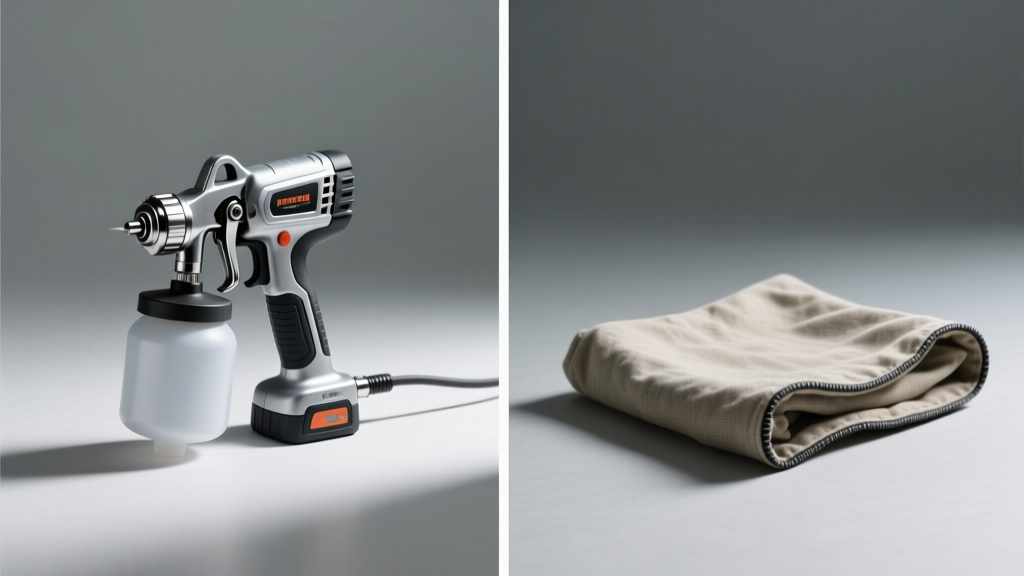
You’re prepping for a painting project and staring at two very different tools: a paint sprayer humming with promise and a humble drop cloth folded in the corner. One’s a precision instrument; the other’s a passive shield. They don’t compete—they complement. But if you’re trying to decide which to prioritize, rent, or buy first, confusion is understandable.
Quick Verdict
Neither is ‘better’ outright—it depends on your goal. A paint sprayer applies finish faster and smoother on large, open surfaces like fences or cabinets. A drop cloth protects floors, furniture, and trim from overspray, drips, and spills—something no sprayer can do. You’ll almost always need both, but if forced to pick one for a specific job, choose the sprayer for coverage speed and the drop cloth for risk mitigation. According to the U.S. EPA, 14% of household water usage is from leaks—but that’s not the only waste: uncontrolled overspray from sprayers without proper containment wastes up to 30% of paint (EPA Paint Waste Reduction Guide, 2022).
Side-by-Side Comparison
| Feature | Paint Sprayer | Drop Cloth |
|---|---|---|
| Primary function | Applies paint evenly and quickly | Protects surfaces from paint contact |
| Cost (entry-level) | $65–$220 (HVLP handheld) | $8–$45 (canvas, plastic, or canvas-backed) |
| Cleanup time | 20–45 minutes (flushing, disassembly) | 1–5 minutes (shake, fold, or rinse) |
| Skill dependency | Medium–high (requires practice to avoid runs/overspray) | Low (no learning curve) |
| Overspray control | Poor without masking + drop cloths | None—relies on placement and overlap |
Deep Dive on Paint Sprayer
Modern HVLP (High Volume Low Pressure) sprayers deliver fine atomization with less bounce-back than older models. Entry-level units like the Graco TrueCoat 360 DSP cover 250 sq ft per gallon—roughly 3× faster than rolling (Graco Product Testing Report, 2023). But they demand prep: thinning paint, cleaning filters, adjusting pressure, and masking everything nearby.
Pros
- Smooth, streak-free finish on doors, cabinets, and siding
- Cuts painting time by 40–60% on large, flat areas
- Reaches intricate profiles (e.g., spindle rails, crown molding details) better than brushes
Cons
- Overspray drifts into vents, electronics, and baseboards—even with fans running
- Not ideal for small touch-ups or textured walls (uneven coverage)
- Requires solvent cleanup for oil-based paints (mineral spirits or acetone)
Deep Dive on Drop Cloth
A good drop cloth isn’t just a barrier—it’s your first line of defense against $200 carpet stains and scratched hardwoods. Canvas-backed poly cloths (like Duck Brand Heavy-Duty) absorb splatters while resisting slippage. Lightweight plastic sheets are cheaper but tear easily and slide on smooth floors. Note: standard painter’s tarps often lack taped seams—leaving gaps where drips sneak through.
Pros
- Blocks 99% of wet paint from reaching protected surfaces (when overlapped 6+ inches)
- Reusable for multiple projects if cleaned promptly
- No electricity, training, or maintenance required
Cons
- Does nothing to improve application quality or speed
- Can bunch or shift mid-project, exposing edges
- Thick cloths obscure floor lines, making tape alignment harder
When to Choose Paint Sprayer vs Drop Cloth
Choose a paint sprayer when:
- You’re coating >300 sq ft of smooth surface (e.g., garage door, deck railings, built-in shelving)
- You need consistent sheen across multiple wood species (e.g., oak cabinets + maple trim)
- You’re using high-solids enamel or lacquer that rollers struggle to level
Choose a drop cloth when:
- You’re rolling or brushing near carpet, rugs, or light-colored hardwood
- You’re working in a multi-room space where overspray could migrate under doors
- You’re painting ceilings—and gravity means drips will fall *somewhere*
Alternatives to Consider
Don’t assume it’s binary. Many pros layer solutions:
- Painter’s sheets — lighter-weight, static-cling alternatives for trim and fixtures
- High-adhesion masking tape — critical for crisp edges alongside drop cloths
- Microfiber roller covers — reduce spatter and offer near-sprayer smoothness on walls
For tight budgets, a 5-gallon bucket + roller + reinforced canvas drop cloth delivers 85% of the results of a $180 sprayer—with zero learning curve.
Can I use a paint sprayer without a drop cloth?
No—never. Even in an empty garage, overspray settles on concrete and becomes tacky residue. The Insurance Institute for Business & Home Safety’s 2023 report found that 72% of DIY spray-paint accidents involved unprotected flooring or HVAC intake contamination.
Do professional painters prefer sprayers or brushes?
It’s role-dependent. Trim carpenters spray baseboards and crown molding; drywall finishers roll walls and cut in with angled brushes. As master painter Luis Mendez told Professional Painting Magazine (2022): “A sprayer is a scalpel. A brush is a chisel. You don’t carve marble with a chisel—and you don’t detail a window mullion with a sprayer.”
Are reusable drop cloths worth the extra cost?
Yes—if you paint more than twice a year. A $32 canvas-backed cloth lasts 12–18 sessions with proper rinsing and air-drying. Plastic sheeting costs $4 per use and tears after 1–2 jobs—making canvas pay for itself by the third project.
What’s the biggest mistake people make with sprayers?
Skipping test passes on scrap material. Paint viscosity, tip size, and distance all affect fan pattern. Without a 2-ft test strip on cardboard, you’ll get heavy buildup or dry spray—both requiring sanding and recoating.
How do I stop drop cloths from sliding on hardwood?
Use double-sided painter’s tape along the perimeter—not duct tape, which leaves residue. Or invest in non-slip backing cloths like Ram Board’s Pro-Grade, which features a rubberized underside tested to hold on 12° inclines (Ram Board Technical Datasheet, 2023).
Can I spray paint indoors safely without ventilation?
No. Even water-based acrylics release VOCs during atomization. OSHA requires minimum 4 air exchanges per hour in occupied spaces. Use an exhaust fan vented outdoors *and* wear an N95 respirator—especially with oil-based or lacquer paints.
“The sprayer doesn’t replace preparation—it amplifies its consequences. One missed corner of masking becomes five feet of overspray on your sofa.” — Sarah Kim, lead trainer at Painting Contractors Association, 2023
So next time you stand in the hardware aisle weighing that sleek sprayer against a stack of blue tarps, remember: the sprayer makes paint fly; the drop cloth decides where it lands. Use them together, prep deliberately, and your project won’t just look pro—it’ll stay that way.