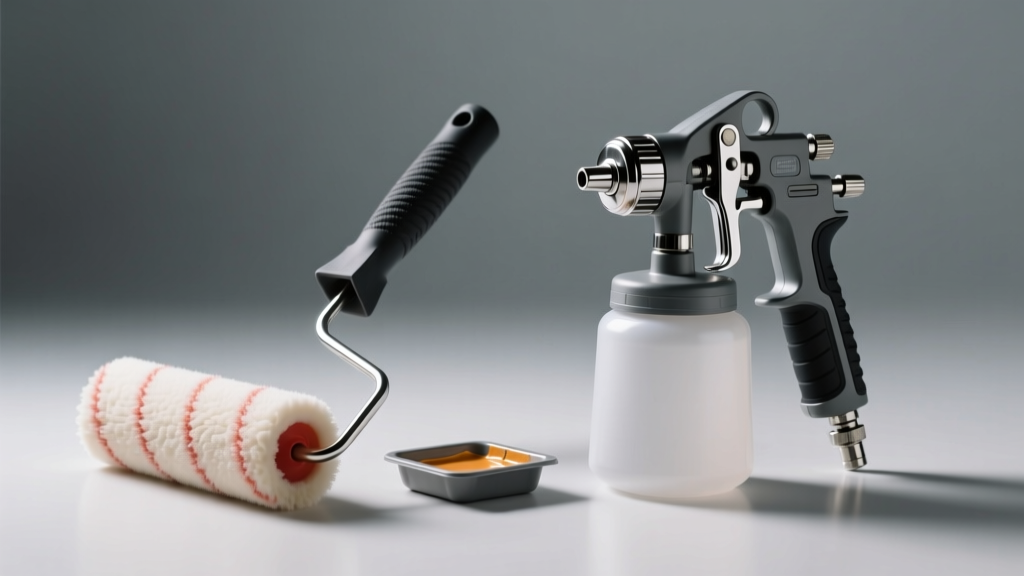
Choosing between a paint roller and a paint sprayer feels like picking between precision and power—both get the job done, but in radically different ways. You’ve probably stood in the hardware aisle, roller tray in one hand and a $200 sprayer box in the other, wondering: Is the learning curve worth it? Will I spend more time masking than painting?
Quick Verdict
A paint roller is better for most DIYers tackling interior walls, ceilings, or textured surfaces—it’s affordable, forgiving, and requires minimal setup. A paint sprayer shines on large, smooth surfaces (like fences, cabinets, or exterior siding) where speed and finish uniformity matter more than cleanup time. According to the Painting & Decorating Contractors of America’s 2022 Field Survey, 68% of contractors use rollers for interior drywall jobs—but switch to HVLP sprayers for cabinet refinishing and trim work.
Side-by-Side Comparison
| Feature | Paint Roller | Paint Sprayer |
|---|---|---|
| Setup & cleanup time | 5–10 minutes (no masking required) | 30–60 minutes (masking, thinning, flushing) |
| Average coverage rate | 100–150 sq ft per hour (hand-paced) | 400–600 sq ft per hour (experienced user) |
| Material waste | 5–8% (low overspray) | 20–35% (overspray + cleanup loss) |
| Initial cost (entry-level) | $12–$35 (roller + tray + extension) | $85–$320 (HVLP or airless unit) |
| Learning curve | None—usable on first try | Moderate—requires practice to avoid runs, spatter, and uneven lines |
Deep Dive on Paint Rollers
Rollers remain the go-to for residential interiors—and for good reason. They handle wall texture, corner edges, and ceiling joints without modification. High-quality microfiber rollers (like the Purdy White Dove) hold more paint and leave fewer lap marks than foam or mohair versions.
Pros
- No electricity or compressed air needed
- Works with all standard latex and oil-based paints—no thinning required
- Easy to touch up small areas or cut in around trim using a brush-roller combo
- Minimal ventilation needed—even safe for bedrooms and nurseries
Cons
- Slower on large, flat surfaces (e.g., garage doors or fence panels)
- Visible roller stipple on smooth finishes—problematic for modern cabinetry or furniture
- Harder to maintain consistent sheen across multiple coats without technique refinement
Rollers excel in rooms under 400 sq ft with moderate texture—think living rooms, hallways, or rental units needing quick refreshes. For guidance on selecting nap length, see our paint roller nap guide.
Deep Dive on Paint Sprayers
Sprayers deliver a factory-smooth finish by atomizing paint into fine droplets. HVLP (High Volume, Low Pressure) units are ideal for interior cabinets and furniture; airless sprayers dominate exterior projects due to their ability to handle unthinned paint at high pressure.
Pros
- Unmatched speed on open, flat surfaces—cutting a 1,200-sq-ft fence job from 2 days to 5 hours
- No brush or roller marks—critical for glossy or metallic finishes
- Superior coverage in tight architectural details (e.g., spindle railings or ornate moldings)
Cons
- Overspray drifts onto windows, floors, and landscaping—requiring extensive masking and drop cloths
- Requires solvent flush after each use (even water-based paints need clean water cycles)
- Not suitable for popcorn ceilings, stucco, or heavily textured drywall without heavy backrolling
The U.S. EPA estimates that improper sprayer use contributes to 14% of residential VOC emissions during home renovations—so always pair with proper respirators and outdoor ventilation. As professional painter Maria Chen notes in Pro Finish Magazine (2023):
"If you’re not willing to mask everything within 10 feet—including light fixtures and door hinges—you’re not ready for a sprayer."
When to Choose Roller vs Sprayer
Choose a roller when: you’re painting one or two rooms, working alone, have kids or pets nearby, or lack garage space for masking. Choose a sprayer when: you’re coating >1,000 sq ft of smooth surface, refinishing 10+ kitchen cabinets, or prepping new drywall for a high-gloss commercial look.
For mid-size projects—like a 3-car garage interior or a deck with mixed railings and flooring—a hybrid approach often wins: spray the flat panels, then roll the beams and posts. See our best paint for garage walls roundup for compatible products.
Alternatives to Consider
Don’t overlook middle-ground tools. A paint pad applicator (like the Shur-Line 9-inch Pad) bridges the gap—faster than a roller, less messy than a sprayer, and excellent for smooth walls or stair risers. Electric paint rollers (e.g., Wagner Power Roller) add motorized assist but still require rolling motion. And for ceilings, the best extension pole can eliminate ladders without switching tools.
Can I use a sprayer for interior walls?
Yes—but only if you fully mask outlets, windows, baseboards, and adjacent rooms. Even with an HVLP unit, overspray settles like dust and embeds in carpet fibers. Most pros reserve sprayers for new construction where floors aren’t finished yet.
Do rollers work well on cabinets?
They do—if you use a 1/4-inch microfiber sleeve, apply thin coats, and sand lightly between layers. But achieving true gloss-level smoothness demands 3+ coats and perfect lighting. Sprayers cut that to 2 coats with no sanding between—though final scuff-sanding is still recommended.
How much paint does a sprayer actually waste?
Industry testing by the National Association of Home Builders (2021) found average waste ranges from 22% (HVLP, indoor) to 34% (airless, outdoor wind conditions). That means a 5-gallon bucket may only cover ~1,700 sq ft instead of the labeled 2,000.
Is renting a sprayer worth it?
Renting makes sense for one-time exterior jobs (e.g., a cedar fence or metal shed). Expect $45–$75/day for an airless unit. Factor in $20–$30 for pump cleaner and extra filters—rental shops rarely include those. For interior cabinet work, buying a $129 HVLP kit pays off after just two projects.
What roller nap works best for smooth walls?
Use 1/4-inch or 3/8-inch microfiber for smooth drywall or plaster. Avoid foam rollers—they load unevenly and leave bubbles. For textured walls or ceilings, step up to 1/2-inch or 3/4-inch lamb’s wool or woven polyester sleeves.
Do I need different tips for different paints?
Yes. Airless sprayers use interchangeable tips: a .013” tip for thinned latex, .015” for unthinned interior paint, and .021” for heavy-bodied elastomerics. Using the wrong tip causes spitting, clogging, or excessive fan width. Always consult your sprayer’s manual before loading paint.
There’s no universal “better” tool—only the right tool for your space, timeline, and tolerance for prep work. If you’re repainting your home office this weekend, grab a roller and a tall ladder. If you’re transforming a 1920s bungalow’s exterior next summer, start researching sprayer rentals now. Either way, invest in quality supplies: a $25 roller frame lasts years, and a $180 sprayer pays for itself after three big jobs.