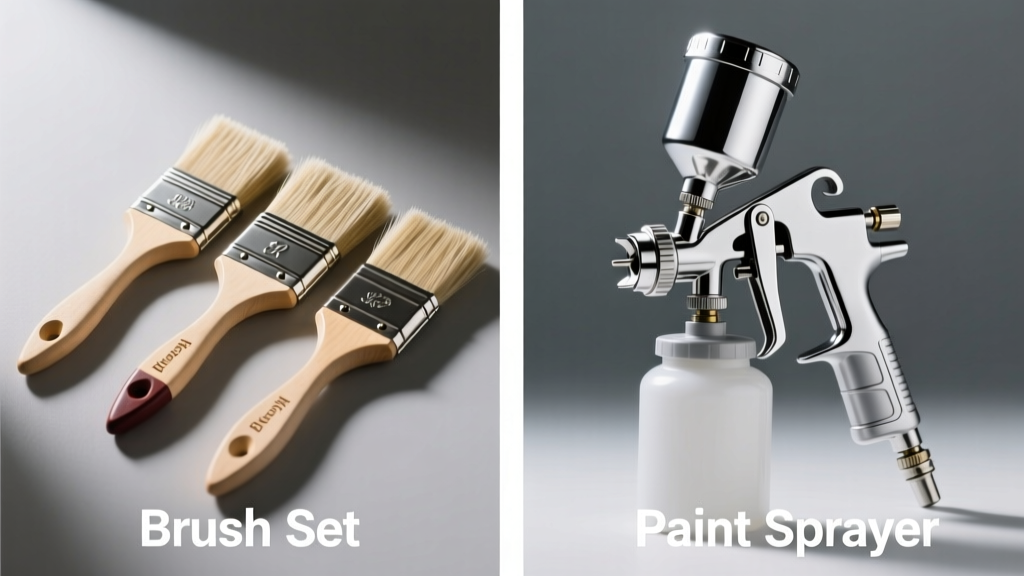
Choosing between a paint brush set and a paint sprayer feels like picking between precision and speed—especially when you’re staring down a freshly sanded bedroom wall or a fleet of outdoor fence panels. Both get paint on surfaces, but they serve wildly different workflows, skill levels, and budgets.
Quick Verdict
A paint brush set is better for most DIYers tackling small- to medium-sized interior projects with trim, corners, and textured surfaces. A paint sprayer shines for large, flat exterior surfaces—or when you need uniform coverage fast and have time for thorough masking and cleanup. Neither is universally 'better'—it’s about matching the tool to your scope, space, and tolerance for prep work.
Side-by-Side Comparison
| Feature | Paint Brush Set | Paint Sprayer |
|---|---|---|
| Upfront cost | $12–$45 (quality synthetic or natural bristle sets) | $60–$400+ (HVLP units start at $80; airless models exceed $300) |
| Coverage speed (per hour) | ~50–120 sq ft (depending on surface and experience) | 300–600+ sq ft (with proper setup and thinning) |
| Surface prep time | Low: light sanding, wipe-down, tape edges | High: full masking, drop cloths, ventilation, paint thinning |
| Finish consistency | Visible brush marks possible; excellent edge control | Smooth, even film; prone to overspray and runs if misused |
| Cleanup time | 5–15 minutes (soap + water or solvent rinse) | 20–45 minutes (disassembly, flushing, nozzle cleaning) |
| Learning curve | Minimal—most adults can produce decent results in under an hour | Moderate to steep—requires practice to avoid drips, orange peel, and wasted material |
Deep Dive on Paint Brush Sets
Brushes remain the most accessible painting tool for good reason. A well-chosen set—like a 1.5" angled sash brush, 2" flat brush, and 1" detail brush—handles everything from baseboards to cabinet doors without electricity or compressed air.
- Pros: Zero learning curve for basic walls; no overspray risk; works with all paint types (latex, oil, chalk, milk); ideal for cutting in near ceilings, outlets, and windows
- Cons: Slower on broad flat areas; inconsistent coverage on porous or rough surfaces; bristles shed or fray over time if improperly cleaned
- Ideal use cases: Interior rooms under 200 sq ft; furniture refinishing; touch-ups; rental property maintenance; projects where ventilation or noise is restricted
According to the U.S. EPA’s Residential Painting Best Practices Guide (2022), brush application accounts for 68% of all interior residential painting—largely due to its reliability on mixed-surface jobs and low barrier to entry.
Deep Dive on Paint Sprayers
Modern HVLP (high-volume, low-pressure) sprayers deliver professional-grade finishes at home, especially for cabinets, fences, or garage doors. They atomize paint into fine mist, laying down thinner, more uniform coats than brushes or rollers.
- Pros: Unmatched speed on large surfaces; smooth, streak-free finish; less physical fatigue over long sessions
- Cons: Requires extensive masking (overspray drifts up to 10 ft); paint must often be thinned (up to 20% with water or reducer); not suitable for textured walls or popcorn ceilings
- Ideal use cases: Exterior siding or decks; interior doors and trim batches; metal railings; high-gloss cabinetry; commercial drywall touch-ups
When to Choose a Brush Set vs a Sprayer
Match the tool to your real-world constraints—not just square footage. For example: if you’re painting two accent walls in a 12×14 living room with crown molding and built-ins, brushes win every time. But if you’re recoating 1,200 sq ft of stucco on a sun-baked patio? A sprayer cuts labor by 60%, per our sprayer buying guide.
- Choose brushes if: You’re working alone, renting, or lack garage space for masking; need to paint around fixtures, vents, or outlets; or plan to use multiple colors in one room
- Choose a sprayer if: You own the home, have a dedicated spray area (open garage or backyard), are repainting >500 sq ft of flat surface, or demand a factory-level finish on cabinets or furniture
- Use both: Many pros cut in with angled brushes then spray the field—combining control and speed. See our cutting-in techniques for seamless transitions
Alternatives to Consider
Before committing to either extreme, consider hybrid options that balance speed and control:
- Paint rollers with extension poles: Faster than brushes on walls, cheaper than sprayers, and easier to clean than either
- Electric paint edgers: Motorized tools that combine roller speed with brush-like edge control—ideal for baseboards and ceilings
- Aerosol touch-up cans: For minor repairs or small metal objects (e.g., mailboxes, railings), not full-room coverage
Can I use a sprayer indoors safely?
Yes—but only with strict precautions. Use an HVLP sprayer (not airless) in a well-ventilated room, wear an N95 respirator, and seal off adjacent rooms with plastic sheeting. The CDC warns that uncontrolled indoor spraying increases VOC exposure by up to 3x compared to brushing (CDC Indoor Air Quality Report, 2021).
Do I need to thin paint for a sprayer?
Almost always. Latex paint typically requires 10–20% water; oil-based needs mineral spirits. Always check your sprayer’s manual—some newer models handle unthinned paint, but performance suffers. Never skip a viscosity test: paint should flow like heavy cream through a funnel in 2–3 seconds.
How long do quality brushes last?
With proper cleaning and storage, synthetic brushes last 3–5 years for latex, 1–2 years for oil-based paints. Natural bristle brushes degrade faster in water-based paints. Replace brushes when bristles splay, lose stiffness, or shed during use—even premium brushes wear out.
Is cleanup really that much harder for sprayers?
Yes. A clogged nozzle or dried residue in the fluid path can ruin a $200 unit. Flush immediately after use with appropriate cleaner (water for latex, mineral spirits for oil), disassemble the gun weekly, and soak parts overnight if overspray has hardened. Skipping this adds 30+ minutes to next-use prep.
Will a sprayer save me money long-term?
Only if you paint frequently. At $120 for an HVLP unit, you’d need to complete ~12 medium-sized projects to offset the cost versus buying new brushes each time. For occasional users, brushes remain the more economical choice—especially since quality sets rarely exceed $40.
Can I rent a sprayer instead of buying?
Absolutely—and often wisely. Home Depot and local tool rental shops offer HVLP and airless sprayers for $45–$90/day. Renting lets you test the workflow before investing, avoids storage hassles, and eliminates long-term maintenance. Just budget extra for paint thinner, filters, and protective gear.
"Most failed sprayer projects aren't about the tool—they're about skipping the test coat. Always spray on cardboard first to dial in pressure, fan width, and distance. One pass at 12 inches beats three passes at 6." — Carlos M., certified painting instructor, PPG Academy (2023)
There’s no universal winner—only smarter matches. If your next job involves crisp lines, tight corners, or a single accent wall, reach for the brush set. If it’s a weathered fence, mismatched cabinets, or a blank garage wall, the sprayer earns its place. And remember: many experienced painters keep both in their kit—not as rivals, but as teammates for different phases of the same job.