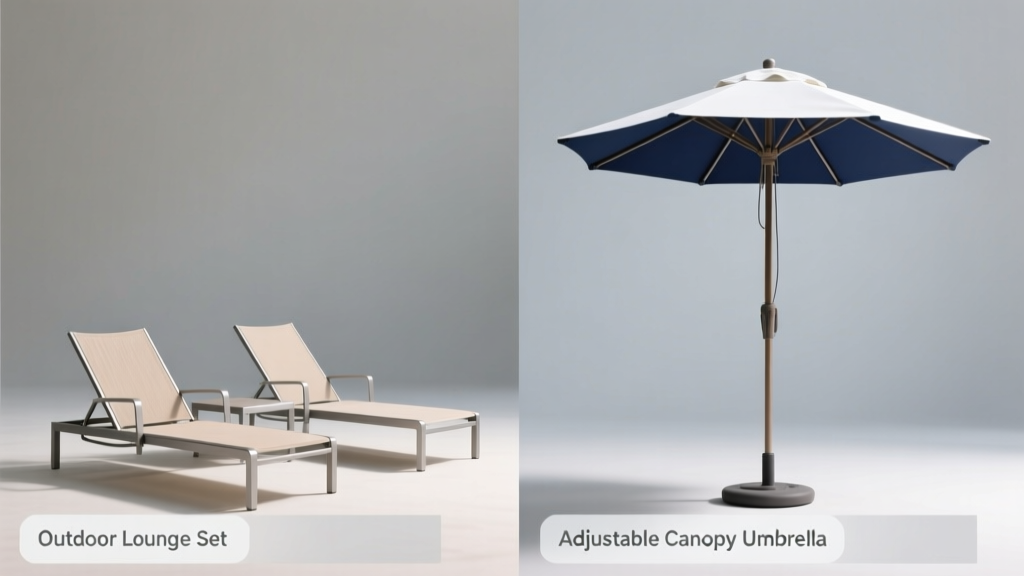
You’re staring at your sun-baked patio, wondering whether to invest in a full outdoor furniture set or just a high-quality umbrella — or maybe both. It’s not just about shade or seating; it’s about how you actually use the space, how long you plan to stay, and what kind of weather your backyard faces most often.
Quick Verdict
Neither option is universally "better" — it depends on your priorities. Outdoor furniture delivers long-term comfort, social function, and resale value but requires more space and upfront investment. An umbrella offers flexible, low-cost sun protection for existing surfaces (like a concrete slab or deck) but lacks seating, stability in wind, and longevity without maintenance. For most homeowners with limited budgets or small spaces, an umbrella is the smarter first move — but if you host weekly dinners or want year-round usability, furniture wins.
Side-by-Side Comparison
| Feature | Outdoor Furniture Set | Standalone Umbrella |
|---|---|---|
| Average upfront cost (basic tier) | $499–$1,299 | $89–$349 |
| Shade coverage area | Varies by set; typically 0–50 sq ft (if includes canopy) | 64–144 sq ft (9–12 ft diameter) |
| Lifespan (with care) | 7–15 years (aluminum/teak frames) | 3–7 years (fabric fade, frame corrosion) |
| Wind resistance | High (anchored via weight, feet, or built-in bases) | Moderate to low (requires weighted base; tips easily above 15 mph) |
| Setup time | 1–3 hours (assembly + leveling) | 5–20 minutes (depending on base type) |
| Storage needs | Minimal (stackable chairs, foldable tables); some require covers | Umbrella folds to ~6 ft; base weighs 30–100 lbs and stays put |
Deep Dive on Outdoor Furniture
Outdoor furniture refers to coordinated sets — typically including a table, 2–6 chairs, and sometimes a chaise or loveseat — made from materials like powder-coated aluminum, all-weather wicker, teak, or HDPE lumber.
Pros
- Supports extended use: comfortable seating encourages longer gatherings and daily use
- Built-in versatility: many sets include umbrella holes, side tables, or modular components
- Higher property value impact: well-maintained patio setups boost curb appeal — teak and aluminum retain 68% of resale value per Remodeling Magazine’s 2023 Cost vs. Value Report
- Year-round potential: add cushions, fire pits, or pergola integration for cooler months
Cons
- Space-intensive: even compact sets need 10' x 10' minimum footprint
- Upfront cost spikes fast — add all-weather cushions ($120–$300), storage covers ($45–$110), and cleaning kits ($25–$65)
- Vulnerability to moisture: untreated wood swells; low-grade wicker degrades after 2–3 wet seasons
Deep Dive on Standalone Umbrellas
A standalone umbrella is a single-point shade solution — usually mounted on a heavy base or in-ground sleeve — designed to shade an existing surface (e.g., a bistro table, hot tub, or lounge chair).
Pros
- Low barrier to entry: you can get UV-blocking shade for under $120
- Portable within your yard: move it to follow the sun or cover different zones
- Easier seasonal storage: tilt-and-fold models collapse to under 6 ft; fabric can be removed and washed
- Works with non-patio surfaces: perfect for grass, gravel, or rooftop decks where furniture anchoring is difficult
Cons
- No built-in seating — you’ll still need chairs or loungers separately
- Fabric degradation is real: Sunbrella fabric lasts ~5 years with full sun exposure, but polyester blends fade in 12–18 months (per Sunbrella’s 2022 UV Exposure Study)
- Base stability is non-negotiable: a 50-lb base won’t hold a 11-ft cantilever umbrella in coastal winds — the U.S. Consumer Product Safety Commission logged 212 tip-related injuries in 2023 alone
When to Choose Furniture vs Umbrella
Choose outdoor furniture if you:
- Host 3+ people regularly and want coordinated, comfortable seating
- Have a dedicated, level patio or deck ≥12' x 12'
- Plan to use the space year-round — especially with add-ons like electric patio heaters or string lighting
- Prefer minimal repositioning — once placed, furniture stays put
Choose a standalone umbrella if you:
- Rent or move frequently — no permanent installation needed
- Only need shade for 1–2 people (e.g., breakfast nook, reading corner, hot tub side)
- Have uneven ground, grass, or composite decking that can’t support heavy furniture legs
- Want to test shade solutions before committing to larger investments
Alternatives to Consider
Before picking one or the other, weigh hybrid or complementary options:
- Umbrella + minimal furniture: A 3-piece bistro set ($229) plus a 9-ft market umbrella ($149) gives shade and seating without full-set commitment
- Pergola with retractable canopy: Offers permanent shade and mounting points for lights, fans, and hanging plants — average ROI of 72% (National Association of Realtors, 2023)
- Shade sails: Low-profile, modern, and highly customizable — ideal for angular or multi-level patios where umbrellas struggle
- Pop-up canopy tents: Best for temporary events (tailgating, farmers markets), not daily residential use
Can I use an umbrella with my existing outdoor furniture?
Yes — as long as your table has a center hole (standard size: 1.5"–2") and your umbrella base is rated for its height and canopy size. Always match base weight to umbrella specs: a 10-ft offset umbrella needs ≥75 lbs of ballast. Skip flimsy screw-in bases on pavers — they crack under torque.
How much wind can a typical patio umbrella handle?
Most standard market umbrellas withstand sustained winds up to 10–12 mph. Cantilever models with reinforced frames and 100+ lb bases may tolerate gusts up to 20 mph — but
"If leaves are blowing sideways, it’s time to close and secure your umbrella," says landscape architect Lena Cho, who co-authored the American Society of Landscape Architects’ 2024 Outdoor Living Standards.
Do outdoor furniture cushions need special care?
Absolutely. Even 'all-weather' cushions absorb moisture. Remove them during rain or overnight dew, and store indoors or in ventilated bins. Vacuum fabric biweekly to prevent mildew spores from embedding — the U.S. EPA estimates that 14% of household mold cases originate from improperly stored outdoor textiles.
Is teak furniture worth the price premium?
For longevity and appearance, yes — but only if it’s Grade A kiln-dried teak (not plantation-grade). Real teak resists rot, insects, and UV fading for 12+ years untreated. Lower grades splinter and gray unevenly within 18 months. Look for FSC-certified sources and avoid "teak-look" rubberwood composites.
What’s the best umbrella fabric for UV protection?
Sunbrella acrylic is the gold standard: UPF 50+ (blocks 98% of UV rays), solution-dyed for fade resistance, and mildew-repellent. Polyester blends cost less but degrade faster — especially in high-humidity climates like Florida or the Pacific Northwest.
Can I leave outdoor furniture out all winter?
Aluminum and HDPE furniture can stay out year-round with covers. Wicker and wood need seasonal storage or heavy-duty breathable covers — freezing rain + trapped moisture causes irreversible fiber breakdown. Never cover damp furniture; condensation accelerates rust and rot.
Ultimately, your choice isn’t about picking one over the other — it’s about matching function to habit. If your idea of weekend relaxation is coffee solo at dawn, an umbrella over a small bistro set might be perfect. If your patio hosts birthday parties, holiday cookouts, and lazy Sunday brunches, investing in durable furniture pays off in comfort, convenience, and quiet confidence every time you step outside.