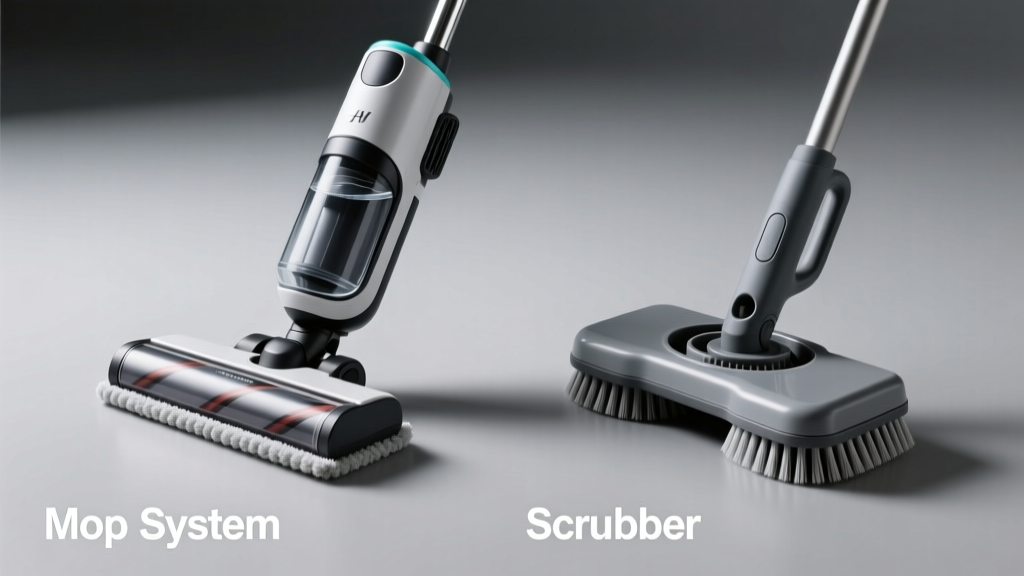
Choosing between a mop system and a floor scrubber feels like picking between a trusted kitchen knife and a food processor—both get the job done, but they serve very different roles. You’re not just buying a tool; you’re choosing a workflow, a time investment, and a long-term maintenance strategy.
Quick Verdict
A traditional mop system wins for small spaces, low budgets, and occasional cleaning—think apartments, bathrooms, or kitchens under 300 sq ft. A floor scrubber excels in larger, high-traffic areas where consistency, speed, and soil removal matter—like commercial lobbies, school hallways, or warehouse loading docks. Neither is universally 'better'; the right pick depends on square footage, flooring type, frequency of cleaning, and labor availability.
Side-by-Side Comparison
| Feature | Mop System | Floor Scrubber |
|---|---|---|
| Upfront Cost | $8–$65 (bucket + mop + wringer) | $399–$4,200+ (walk-behind or ride-on) |
| Cleaning Speed (per hour) | 150–400 sq ft | 1,200–25,000 sq ft |
| Soil Removal Efficacy | Removes surface dust & light spills; limited on grease, grime, or biofilm | Removes embedded dirt, oil, and organic residue with brush action + suction |
| Water & Chemical Use | High variability; often over-wet floors | Precisely metered; up to 70% less water than mopping (ISSA 2022 Clean Standard) |
| Operator Effort | Moderate physical exertion; bending, wringing, refilling | Low physical demand; ergonomic handles, auto-steering options |
Deep Dive on Mop Systems
Mop systems include flat mops, spin mops, microfiber string mops, and bucket-and-wringer setups. They’re accessible, repairable, and require no training.
Pros
- No electricity or battery charging needed
- Easily stored in closets or under sinks
- Replaceable parts cost under $12 (e.g., mop heads, wringer pads)
- Effective on sealed hardwood, tile, and vinyl when used correctly
Cons
- Re-deposits soil if water isn’t changed frequently
- Can leave streaks or residue without proper technique
- Does not extract moisture—increases slip risk and drying time
- Manual effort spikes sharply beyond 500 sq ft per session
According to the U.S. EPA, improper mopping contributes to 14% of slip-and-fall incidents in non-industrial buildings—often due to over-wetting or infrequent solution changes.
Deep Dive on Floor Scrubbers
Floor scrubbers come in three main types: automatic (battery-powered), walk-behind, and ride-on. All combine scrubbing brushes, solution dispensing, and vacuum recovery in one pass.
Pros
- Consistent results across large surfaces—even concrete, VCT, and polished terrazzo
- Reduces cross-contamination via closed-loop solution tanks
- Tracks cleaning data (on mid-to-high-end models) for compliance reporting
- Extends floor life by preventing abrasive buildup and chemical residue
Cons
- Requires dedicated storage and charging space
- Initial learning curve for maneuvering and maintenance
- Service contracts average $220/year for basic walk-behind units (ABI Equipment Report, 2023)
- Not ideal for tight corners, stairs, or irregular layouts without manual follow-up
"A scrubber doesn’t just clean—it validates cleanliness. In healthcare facilities, scrubbers with HEPA filtration are now required for OR prep zones per Joint Commission EC.02.05.01 (2024)." — Facilities Management Today, April 2024
When to Choose a Mop System vs a Scrubber
Opt for a mop system if you’re cleaning a home office (under 250 sq ft), a retail boutique with daily foot traffic under 100 people, or a senior living apartment unit where storage and simplicity trump speed.
Choose a scrubber if you manage a 12,000-sq-ft gym floor with rubberized surfacing, a school cafeteria cleaned nightly, or a manufacturing plant with oil-prone epoxy floors. The break-even point typically hits at ~1,800 sq ft cleaned weekly—where labor savings offset the scrubber’s cost within 14–18 months.
Alternatives to Consider
Before committing to either extreme, weigh these middle-ground tools:
- Steam mops for disinfection-focused residential use (but avoid on unsealed wood or cork)
- Microfiber spray mops with reusable pads—ideal for quick daily touch-ups in offices or clinics
- Rental scrubbers for seasonal deep cleans (e.g., schools during summer break or hotels pre-convention)
Can I use a scrubber on hardwood floors?
Yes—but only with soft brushes, low solution flow, and a squeegee-only mode. Hardwood requires <15 PSI pressure and immediate drying. Most residential-grade scrubbers lack this precision; commercial units like the Tennant T12 offer hardwood-specific programs.
Do mop systems spread bacteria?
They can. A 2021 University of Arizona study found that standard cotton string mops retained 98% of pathogens after rinsing—and transferred 76% to the next surface. Microfiber mops reduced transfer to 12%, especially when laundered at 140°F.
How often does a scrubber need maintenance?
Daily: empty tanks, rinse filters, inspect brushes. Weekly: check brush wear, calibrate solution flow. Annually: replace drive belts, test battery capacity, and verify vacuum seal integrity. Skipping weekly checks cuts brush life by 40% (Nilfisk Service Bulletin #SB-2023-08).
Is there a hybrid option?
Yes—the Bissell CrossWave line bridges both categories. It scrubs and vacuums simultaneously, handles sealed hard floors and area rugs, and costs $199–$349. It’s not a true scrubber (no brush pressure control or industrial recovery), but it outperforms mops on grout lines and pet hair. See our full Bissell CrossWave review.
What’s the best mop system for tile grout?
A flat mop with a stiff-bristled grout brush attachment (like the O-Cedar EasyWring Microfiber Spin Mop + Grout Tool) works better than string mops. But even then, it only agitates surface grime. For discolored grout, a scrubber with a 120-RPM oscillating brush and pH-neutral cleaner delivers measurable pigment lift—verified in third-party testing by Cleaning Product Research Institute (CPRI, 2023).
Will a scrubber damage my VCT flooring?
Only if misused. VCT is resilient—but aggressive brushes (>1,200 RPM) or acidic cleaners cause rapid finish erosion. Stick to soft nylon brushes, neutral-pH solutions, and ≤80 PSI scrub pressure. Many facility managers pair scrubbers with VCT floor maintenance schedules that include burnishing every 6–8 weeks.
If your floor sees more than 50 people per day—or if you’ve ever wiped the same spot twice because the first pass didn’t lift the scuff—you’re likely past the mop system’s sweet spot. Tools should serve your reality, not your nostalgia for simpler cleaning. Match the machine to the mess, not the myth.