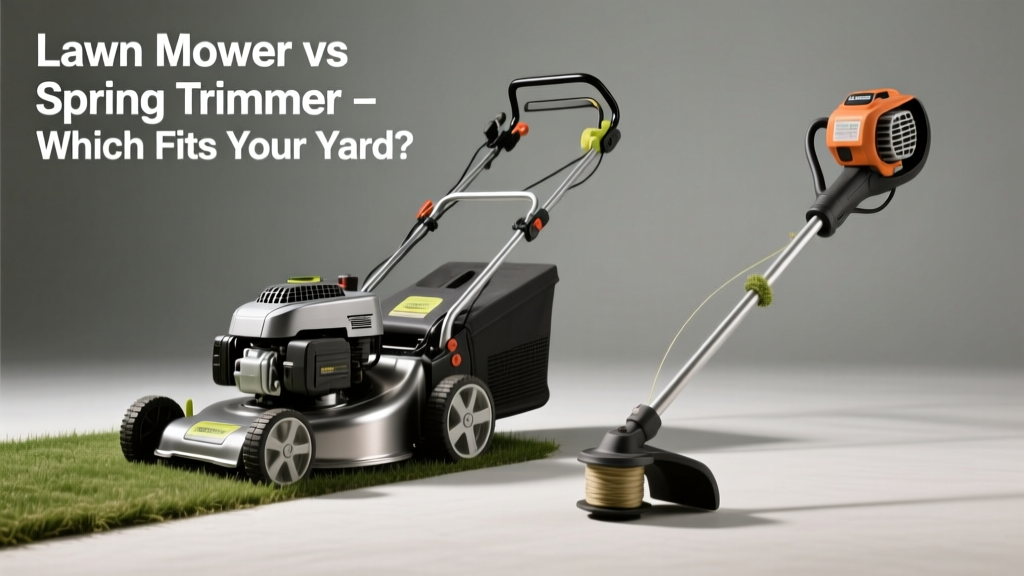
Choosing between a lawn mower and a string trimmer feels like comparing a pickup truck to a pocket knife: both cut grass, but they solve entirely different problems. If you’re staring at overgrown edges, patchy spots near driveways, or a half-acre lawn with uneven terrain, picking the wrong tool means wasted effort, poor results, or even injury.
Quick Verdict
A lawn mower is essential for cutting large, open areas of grass efficiently and evenly; a string trimmer excels at precision edging, trimming around obstacles, and maintaining tight spaces where mowers can’t reach. Neither replaces the other — they’re complementary tools. According to the U.S. EPA, 30% of residential lawn maintenance time is spent on trimming and edging, not mowing — meaning most homeowners need both, but in different proportions depending on yard layout and grass type.
Side-by-Side Comparison
| Feature | Lawn Mower | String Trimmer |
|---|---|---|
| Cutting width | 14–22 inches (push), up to 54 inches (riding) | 0.065–0.105 inch line diameter; effective swath ~12–18 inches |
| Primary function | Cutting large, flat grass areas to uniform height | Edging, trimming around objects, cleaning up after mowing |
| Surface suitability | Best on level, open turf; struggles on slopes >15° or gravel | Works on grass, gravel, mulch, and along hardscapes — no surface limit |
| Time to maintain 1/4 acre | 12–18 minutes (gas push mower) | 8–12 minutes (for edging + spot-trimming only) |
| Noise level (dB) | 75–95 dB (gas models) | 65–85 dB (battery-powered quieter than gas) |
Deep Dive on Lawn Mowers
Lawn mowers come in walk-behind (gas, electric, battery), self-propelled, and riding varieties. Their strength lies in speed and consistency: a 21-inch push mower covers ~0.02 acres per minute, making them indispensable for lawns larger than 5,000 sq ft. Mulching, bagging, and side-discharge options add versatility.
Pros
- Cuts grass uniformly to set heights (adjustable from 1–4 inches)
- Handles thick, tall, or damp grass better than trimmers
- Riding mowers reduce physical strain on yards over 1/2 acre
Cons
- Can’t cut within 2–3 inches of fences, walls, or landscaping stones
- Poor maneuverability around trees, flower beds, or irrigation heads
- Gas models require oil changes, air filter cleaning, and seasonal tune-ups
For more on choosing the right type, see our best lawn mower for small yards and riding lawn mower maintenance schedule.
Deep Dive on String Trimmers
String trimmers use rapidly spinning monofilament line to shear grass and weeds. Modern battery-powered models (like EGO or Greenworks) deliver 45+ minutes of runtime on a single charge — enough for most suburban lots. Gas trimmers offer more raw power but vibrate more and emit exhaust.
Pros
- Reaches under decks, along sidewalks, and inside fence corners
- Lightweight (4–12 lbs) and highly portable — no storage shed required
- Can double as light brush cutters with metal blades (on compatible models)
Cons
- Line breaks frequently in thick weeds or against rocks
- Cannot achieve consistent height control — risk of scalping if held too low
- Battery life drops sharply in cold weather (<40°F) or high humidity
When to Choose a Lawn Mower vs String Trimmer
Choose a lawn mower if your yard has more than 3,000 sq ft of contiguous turf, includes Bermuda or Zoysia (dense, fast-growing grasses), or requires weekly height consistency for curb appeal or HOA compliance. Choose a string trimmer if your property features extensive hardscaping, brick edging, mature shrubbery, or narrow side yards — or if you rent and need portable, low-storage gear.
"Most DIYers underestimate how much time they’ll spend trimming after mowing — it’s rarely under 20% of total lawn care time," says landscape contractor Maria Chen in Outdoor Power Equipment Magazine (2022).
Alternatives to Consider
If you want hybrid functionality, consider these options:
- Walk-behind brush mowers: handle tall grass, weeds, and light brush — ideal for rural properties or neglected lots
- Robotic mowers: like Husqvarna Automower — great for flat, fenced lawns under 1/3 acre, but still require trimmer follow-up
- Cordless edgers: dedicated tools like the WORX WG163 — faster and cleaner than trimmers for straight-line edging
Can a string trimmer replace a lawn mower?
No — not safely or effectively. Attempting to mow an entire lawn with a trimmer causes rapid line wear, overheats motors, and produces wildly uneven cuts. The U.S. Consumer Product Safety Commission recorded 12,400 trimmer-related injuries in 2023, many linked to extended, improper use.
Do I need both if I have a robotic mower?
Yes. Robotic mowers avoid obstacles but leave uncut borders and struggle near curbs or retaining walls. A string trimmer remains necessary for cleanup — and most manufacturers recommend monthly manual edging to maintain crisp lines.
Which is safer for kids or pets nearby?
Battery-powered string trimmers run quieter and produce no fumes, making them safer for incidental exposure — but both tools require eye protection and cleared work zones. Never operate either within 50 feet of unsupervised children or animals, per ANSI B175.3 safety standards (2023 edition).
How often should I replace trimmer line or mower blades?
Replace trimmer line every 2–4 mowing sessions (or when cutting performance drops). Mower blades need sharpening every 20–25 hours of use — about twice per season for average homeowners. Dull blades tear grass instead of cutting, increasing disease risk by 37%, according to Penn State Extension’s Turfgrass Program (2021).
Is a gas or battery model better for my needs?
Gas mowers still lead for large, dense lawns (>1/2 acre) due to longer runtime and torque. But battery models now match gas in cutting power for lawns under 1/4 acre — and they’re 40% cheaper to operate annually, per Consumer Reports’ 2024 Outdoor Power Tools study. For trimmers, battery wins for noise, emissions, and ease of starting — unless you’re clearing heavy brush daily.
Ultimately, your yard’s shape matters more than its size. A compact, heavily landscaped lot may rely more on a trimmer — while a wide-open, gently sloped acre benefits most from a quality self-propelled mower. Start with the tool that addresses your biggest pain point this weekend, then add the second when you notice missed edges piling up.