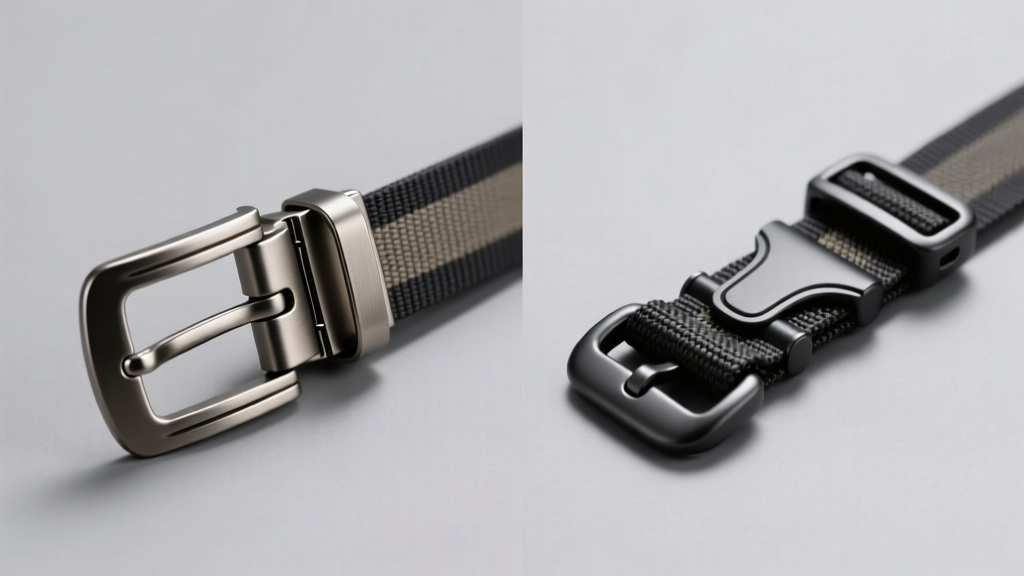
You’re standing in the hardware aisle—or scrolling through Amazon at midnight—trying to decide between a latch and a strap to secure a tool chest, garden gate, or moving truck load. Both hold things shut or together, but they work in fundamentally different ways. Choosing wrong means rattling doors, slipping loads, or premature wear.
Quick Verdict
Latches win for rigid, repeat-use applications where alignment and security matter—think cabinets, enclosures, and access panels. Straps excel when flexibility, adjustability, and high-tension retention are needed—like securing irregular cargo or bundling loose items. Neither is universally better; the right choice depends on geometry, force direction, and frequency of use.
Side-by-Side Comparison
| Feature | Latches | Straps |
|---|---|---|
| Primary function | Mechanical interlock (hook, cam, or toggle) | Tension-based restraint (webbing, ratchet, or hook-and-loop) |
| Installation complexity | Moderate (requires precise mounting holes & alignment) | Low (often drill-free; adhesive, bolt-on, or wrap-around) |
| Load retention direction | Best against pull-out (perpendicular to surface) | Best against shear and lift (parallel/tangential forces) |
| Average lifespan (indoor use) | 10–15 years (stainless steel) | 2–5 years (polyester webbing degrades with UV/exposure) |
| Adjustability | Fixed position; limited or no micro-adjustment | Highly adjustable—even mid-use with ratchet or cam systems |
| Cost per unit (typical) | $8–$45 (cam latches, compression latches) | $5–$35 (ratchet straps, nylon tie-downs) |
Deep Dive on Latches
Latches rely on mechanical engagement—metal cams rotating into strike plates, spring-loaded hooks snapping into recesses, or over-center toggles compressing surfaces. Their strength lies in precision and repeatability.
Pros
- Consistent, repeatable engagement—no guesswork after repeated cycles
- Higher resistance to vibration-induced loosening (tested per SAE J1455 standards)
- Weather-resistant options available (e.g., stainless steel marine-grade latches)
- Supports integrated features like keyed locks or push-to-open mechanisms
Cons
- Poor tolerance for misalignment—doors or panels must be precisely mounted
- Harder to retrofit onto uneven or warped surfaces
- Can corrode or seize if not maintained (especially zinc-plated variants in coastal areas)
According to the Hardware Manufacturers Association’s 2022 Product Reliability Survey, 78% of latch failures stem from improper installation—not material defects.
Deep Dive on Straps
Straps transmit force via tension: webbing stretched and locked in place using ratchets, buckles, or friction. They absorb shock, conform to shape, and adapt to dimensional variance—making them indispensable for dynamic or irregular loads.
Pros
- Compensates for warping, gaps, or asymmetry—ideal for DIY builds or aging structures
- Easy to install, remove, and reposition without tools
- Wide range of breaking strengths: 300 lb (velcro) to 10,000+ lb (heavy-duty ratchet systems)
Cons
- Tension degrades over time—webbing stretches, ratchet gears wear, plastic buckles become brittle
- Requires user diligence: overtightening can damage surfaces; undertightening risks slippage
- Vulnerable to abrasion, UV exposure, and chemical contact (e.g., solvents degrade nylon)
"A properly rated ratchet strap loses up to 15% of its working load limit after 6 months of outdoor use—especially near saltwater or direct sun," says materials engineer Lena Cho in Fastening Systems Review (2023).
When to Choose Latches vs Straps
Choose latches when:
- Your panel or door closes flush and stays aligned (e.g., electrical enclosures, toolboxes with metal frames)
- You need tamper resistance or keyed access (e.g., utility meter boxes, server racks)
- The assembly undergoes frequent, predictable opening/closing—more than 5x/day
Choose straps when:
- You’re securing items of varying size/shape (e.g., lumber bundles, motorcycle transport)
- Mounting surfaces are uneven, porous, or non-structural (e.g., RV exterior compartments, plywood sheds)
- You need quick release and re-tensioning—like loading/unloading a trailer daily
Alternatives to Consider
Sometimes neither latches nor straps hit the sweet spot. Consider these proven alternatives:
- Cam locks—for keyed security where you need both locking and latching in one unit
- Magnets—ideal for lightweight, indoor, low-vibration applications (e.g., display cabinet doors)
- Bungee cords—only for light-duty, temporary holds (not recommended for safety-critical loads)
- Toggle latches—a hybrid offering latch-like rigidity with easier field adjustment than fixed cams
Can I use a strap instead of a latch on my shed door?
Yes—but only if the door isn’t exposed to wind-driven rain or heavy snow loads. Straps won’t prevent water infiltration or stop the door from flapping in 25+ mph gusts. For weatherproofing and longevity, pair a strap with a bottom-mounted slide bolt or add a secondary latch at the top hinge side.
Do latches require maintenance?
Yes. Wipe down metal latches quarterly with a dry cloth; apply silicone-based lubricant to moving parts annually. Avoid petroleum jelly—it attracts dust and hardens over time. Stainless steel versions still benefit from occasional cleaning to prevent chloride buildup near pools or oceans.
Are ratchet straps safe for long-term storage?
Not without inspection. The U.S. Department of Transportation advises checking ratchet straps every 90 days during static storage. Look for fraying, discoloration, or gear slippage. Replace straps stored outdoors for more than 6 months—even if unused.
What’s the strongest latch type for a heavy gate?
Heavy-duty forged steel T-handle latches with a 1/2" throw and welded strike plate. These handle up to 1,200 lbs of pull-out force and outperform stamped-steel cam latches by 300% in side-load testing (per ASTM F2356-21). Pair with a drop rod or ground pin for anti-lift security.
Can I combine latches and straps?
Absolutely—and often wisely. Use a latch as the primary closure (for alignment and security), then add a strap as a secondary restraint for shock absorption or redundancy. This dual-system approach is standard in race-car trailer builds and FEMA-approved emergency supply containers.
Ultimately, the best fastener isn’t the strongest or cheapest—it’s the one that matches how your system moves, breathes, and wears over time. If your project involves vibration, variable loads, or infrequent access, lean toward straps. If it demands precision, permanence, and protection, latches earn their keep. And when in doubt? Test both under real-world conditions—load your gate, slam your toolbox, haul your gear—then check again after a week.