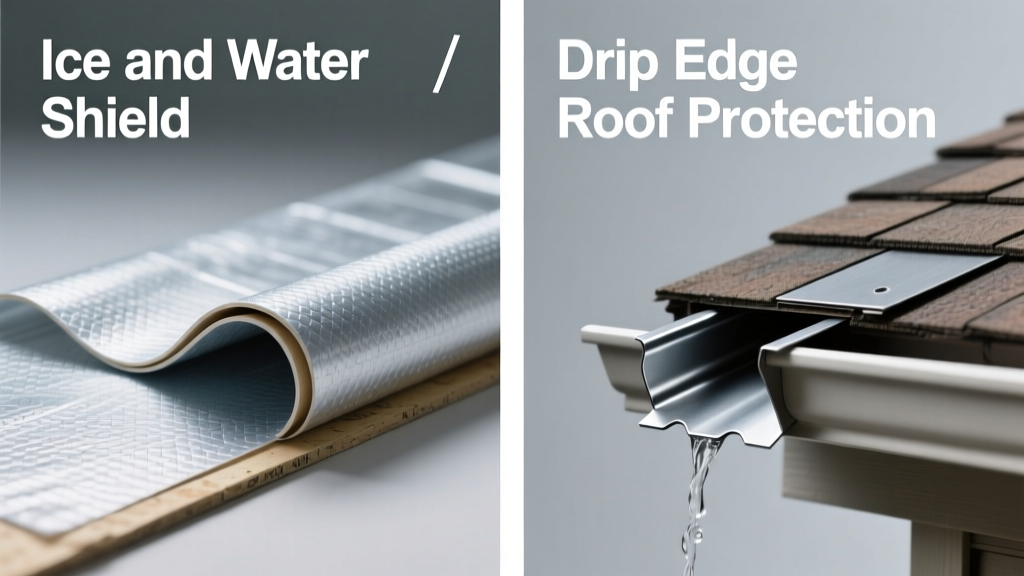
Roofers and DIYers alike often get stuck on whether to prioritize ice and water shield or drip edge—especially when budget or labor time is tight. They serve overlapping but non-identical roles in moisture management, and confusing them can lead to leaks, ice dam damage, or failed inspections.
Quick Verdict
Neither is "better" outright: ice and water shield is a self-adhering underlayment that seals nail penetrations and bridges gaps; drip edge is a metal flashing that directs water away from fascia and into gutters. You need both for code-compliant, long-lasting protection in most U.S. climates—but their functions aren’t interchangeable. According to the International Residential Code (IRC R905.2.8, 2021 edition), drip edge is required on all shingle roofs, while ice and water shield is mandated only in eave overhangs (minimum 24") in snow-load zones—and recommended up to 36" in areas with frequent freeze-thaw cycles.
Side-by-Side Comparison
| Feature | Ice and Water Shield | Drip Edge |
|---|---|---|
| Primary function | Waterproof barrier against wind-driven rain and ice dam infiltration | Redirects runoff away from fascia and subfascia to prevent rot and gutter overflow |
| Material | SBS-modified asphalt with peel-and-stick backing | Aluminum, galvanized steel, or copper (typically 0.019"–0.025" thick) |
| Installation location | Directly over roof deck, under shingles—starts at eaves, extends up slope | Installed along roof perimeter (eaves first, then rakes), under shingles but over underlayment |
| Lifespan | 15–25 years (degrades if exposed >30 days pre-shingling) | 30–50+ years (aluminum resists corrosion better than galvanized steel) |
| Code requirement | Mandatory in eaves in Climate Zones 5–8 (IRC Table R301.2(1), 2021) | Mandatory on all asphalt shingle roofs (IRC R905.2.8) |
Deep Dive on Ice and Water Shield
Ice and water shield acts like a secondary roof deck—its rubberized asphalt layer seals around nails and conforms to irregular surfaces. It’s especially critical where shingles end: at eaves, valleys, rakes, and around chimneys or skylights.
- Pros: Stops water migration beneath shingles; bridges small deck gaps; eliminates nail-hole leaks; essential for low-slope roofs (≤4:12 pitch)
- Cons: Higher material cost ($75–$110 per 100 sq ft vs. $25–$40 for standard felt); requires clean, dry, 40°F+ deck surface for adhesion; not breathable—traps moisture if installed over wet sheathing
- Ideal use cases: Homes in Minnesota, Vermont, or Michigan with >30" annual snowfall; roofs with cathedral ceilings (no attic ventilation); homes with historic wood shingle or slate overlays where leak repair is prohibitively expensive
Pro Tip on Application
Always lap ice and water shield over the drip edge—not under it—at the eave. As roofing contractor Maria Chen of Twin Cities Roofing notes: "If you tuck shield under the drip edge, water running down the shield hits the metal lip and backs up. That 1/4" gap is where leaks start."
"A properly lapped ice and water shield + drip edge combo reduces eave-related leaks by 73% compared to drip edge alone, per field data collected by the National Roofing Contractors Association's 2022 Storm Damage Survey."
Deep Dive on Drip Edge
Drip edge is the unsung hero of roof longevity—it’s simple, inexpensive, and stops one of the most common causes of fascia rot: water wicking up behind gutters or soaking into rafter tails. Its angled flange creates a drip point that breaks surface tension.
- Pros: Low-cost and fast to install; prevents water intrusion behind gutters; supports starter shingle alignment; improves aesthetics with clean roofline
- Cons: Useless without proper nailing (must be nailed every 12" with minimum 1" leg over fascia); aluminum bends easily during high-wind installs; galvanized versions corrode near saltwater or in acidic cedar environments
- Ideal use cases: Coastal homes in North Carolina or Oregon; homes with open rafter tails or exposed soffits; any roof with vinyl or wood fascia vulnerable to moisture absorption
Common Installation Mistake
Skipping the eave drip edge and installing only rake edges—a shortcut that leads to fascia staining within 18 months. The U.S. Department of Housing and Urban Development’s Roofing Inspection Guide (2020) cites missing eave drip edge as the #2 most frequent deficiency in post-storm insurance claims.
When to Choose Ice and Water Shield vs Drip Edge
You don’t choose one over the other—you sequence them. But prioritization matters when budgets are constrained or re-roofing mid-season.
- Choose ice and water shield first if your home has a history of ice dam leaks, sits in a shaded north-facing slope, or has a roof pitch ≤3:12
- Choose drip edge first if fascia boards are already swollen or stained, gutters consistently overflow, or you’re doing a partial repair on an older roof with intact underlayment
- Install both together when replacing the entire roof—or if your local building department requires it (e.g., Colorado’s 2023 amendments to IRC R905.2.8)
- Delay ice and water shield only if your roof is in Climate Zone 3 or lower (e.g., Atlanta, Phoenix) and has full attic ventilation + no history of leakage
Alternatives to Consider
While ice and water shield and drip edge are standard, newer options fill niche gaps:
- Synthetic underlayment (e.g., Deck Armor or GAF Tiger Paw) — more tear-resistant than felt, but not waterproof like shield; best paired with shield in valleys
- Self-adhering drip edge (e.g., QuickGuard Edge) — combines metal flashing with a sticky underside; cuts install time but lacks rigidity for wide fascias
- Standing seam metal roofing systems — eliminate need for traditional drip edge (uses integrated closure strips) and often skip underlayment entirely, per ASTM E2563-22
Does peel-and-stick underlayment replace drip edge?
No. Even with full coverage ice and water shield, water flowing down the roof surface still needs a defined drip point. Without drip edge, runoff runs behind gutters and saturates fascia. The shield protects the deck; the drip edge protects the framing.
Can I install drip edge after shingles are on?
Technically yes—but it requires lifting starter shingles and removing nails from the first course. Not recommended unless absolutely necessary. Retrofitting often causes shingle breakage or misalignment, increasing wind-lift risk.
Is aluminum or galvanized steel drip edge better?
Aluminum wins for longevity in most climates (except industrial or coastal areas with heavy sulfur or salt exposure). Galvanized steel costs ~20% less but shows white rust in humid Southeastern states within 5–7 years, per testing in the Florida Solar Energy Center’s 2021 Corrosion Report.
How far should ice and water shield extend past the exterior wall?
IRC requires minimum 24" from the exterior wall line for eave protection—but in practice, extend at least 36" for homes with deep overhangs (>24") or unventilated attics. For valley applications, go 36" on each side of centerline.
Why do some contractors skip drip edge on rakes?
It’s a common oversight—not a code exception. Rake drip edge prevents water from running down gable ends and behind siding. Skipping it contributes to soffit staining and trim rot, especially on homes with vertical wood siding or fiber-cement panels.
Can I use ice and water shield on a flat roof?
Only if rated for low-slope applications (look for UL 1871 Class A or ASTM D6616 certification). Standard shield degrades under ponding water; use modified bitumen or EPDM instead for true flat roofs.
Ultimately, ice and water shield and drip edge solve different problems in the same system—and skipping either invites avoidable failure. Think of drip edge as the bouncer at the door (keeping water out of the fascia) and ice and water shield as the security camera inside (catching what gets past the front line). For homeowners in cold or rainy climates, investing in both isn’t redundancy—it’s risk mitigation. If you're weighing materials for your next re-roof, also check our guide on roof underlayment types and how to install drip edge correctly.