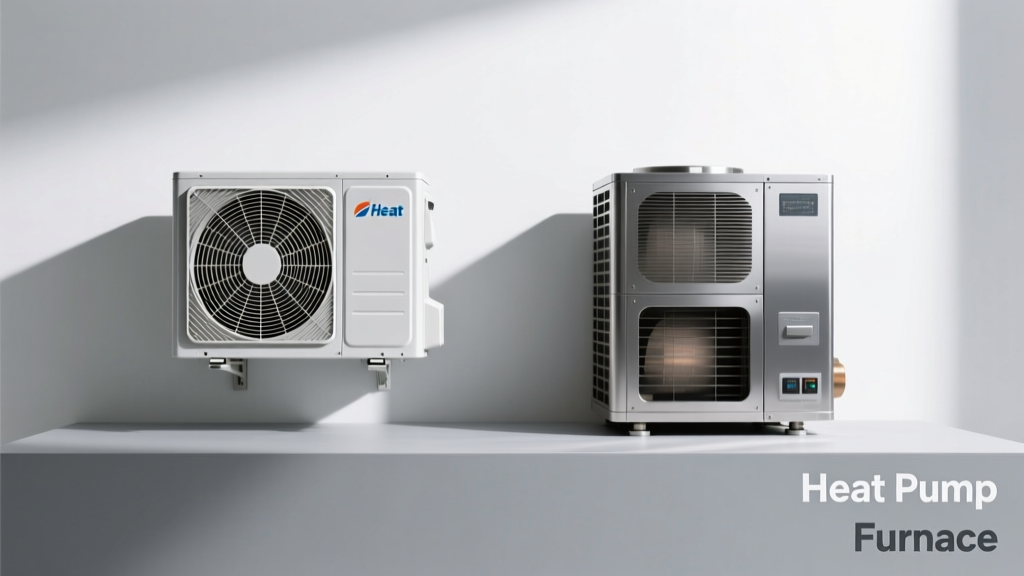
Choosing between a heat pump and a furnace feels like picking between two reliable friends—one excels in mild weather, the other powers through deep freezes. You’re not just buying hardware; you’re committing to 15–20 years of heating bills, maintenance routines, and indoor comfort levels.
Quick Verdict
A heat pump is usually the smarter long-term choice in climates where winter lows stay above 25°F—especially if you want year-round cooling, lower operating costs, and reduced carbon emissions. A gas furnace makes more sense in colder regions (like Minnesota or Maine), where consistent sub-zero temps would force a heat pump into inefficient backup heating mode. According to the U.S. Department of Energy’s 2023 Residential Energy Consumption Survey, homes with heat pumps in Zone 4 (e.g., Nashville, St. Louis) used 37% less energy for space heating than comparable furnace-equipped homes—but that advantage shrank to just 8% in Zone 7 (e.g., Duluth).
Side-by-Side Comparison
| Feature | Heat Pump | Furnace |
|---|---|---|
| Average Upfront Cost (installed) | $5,500–$12,000 | $3,200–$7,800 |
| Lifespan | 12–15 years | 15–25 years |
| Cooling Capability | Yes — built-in AC | No — requires separate AC unit |
| Heating Efficiency (HSPF/AFUE) | HSPF 8.2–13.0 (equivalent to 200–300%+ efficiency) | AFUE 80–98.5% |
| Fuel Source | Electricity only | Natural gas, propane, or oil |
| Performance Below 25°F | Requires electric resistance backup; efficiency drops sharply | Unaffected by cold; maintains rated output |
Deep Dive on Heat Pumps
Modern cold-climate heat pumps—like those certified by ENERGY STAR® in 2022—can deliver full heating capacity down to 5°F. They move heat rather than generate it, making them inherently more efficient than combustion-based systems. Their dual function eliminates the need for a separate air conditioner, simplifying ductwork and maintenance.
Pros
- Lower annual energy use in moderate climates (U.S. EPA estimates 20–50% savings over electric resistance heat)
- No on-site combustion — zero carbon monoxide risk or venting requirements
- Eligible for federal tax credits (30% up to $2,000 under the Inflation Reduction Act, 2023)
- Quieter operation and more even temperature distribution
Cons
- Higher upfront cost—especially with ductless mini-split or cold-climate models
- Shorter lifespan means earlier replacement (compressor failure is common after year 12)
- May require electrical panel upgrade (often needing 200-amp service)
- Defrost cycles cause brief interruptions in heating during humid cold snaps
Deep Dive on Gas Furnaces
Gas furnaces remain the dominant heating solution across the northern U.S. and Canada—not because they’re outdated, but because they deliver predictable, high-BTU output regardless of outdoor temperature. High-efficiency condensing models recover waste heat from exhaust gases, pushing AFUE ratings above 90%.
Pros
- Strong, rapid heat delivery—even at -20°F
- Longer service life, especially with annual maintenance
- Lower initial cost than most heat pump installations
- Compatible with whole-house humidifiers and UV air purifiers
Cons
- Requires gas line, flue venting, and combustion air intake—adding complexity to retrofits
- No cooling function; pairing with AC adds $3,000–$6,000 to total project cost
- Annual tune-ups are non-negotiable for safety and efficiency
- Carbon emissions depend heavily on local grid mix—though natural gas emits ~50% less CO₂ than oil per BTU (EIA, 2022)
When to Choose Heat Pump vs Furnace
If you live in Atlanta, Portland, or Kansas City—and your home has decent insulation and an updated electrical panel—a heat pump will likely cut your annual HVAC energy use by one-third while eliminating summer AC installation. But if you’re in Fargo or Burlington and rely on emergency heat more than 20 days per winter, a high-efficiency furnace paired with a ducted mini-split for cooling may be more practical and cost-effective over 15 years.
"In cold climates, the real issue isn’t whether a heat pump *works*—it’s whether its supplemental heat stays affordable. We’ve seen homeowners spend 40% more on electricity in January when their heat pump’s strip heaters run constantly." — Dr. Sarah Lin, Building Science Advisor, Northeast Energy Efficiency Partnerships (2023)
Alternatives to Consider
Before locking in either option, weigh these emerging or niche alternatives:
- Geothermal heat pumps: 30–60% more efficient than air-source units but require significant yard space and $18,000–$35,000 investment
- Ductless mini-splits: Ideal for additions, garages, or homes without ductwork—offer zoning and quiet operation
- Hybrid (dual-fuel) systems: Combine a heat pump with a gas furnace, automatically switching based on outdoor temp—best of both worlds in mixed climates
Can a heat pump replace my furnace entirely?
Yes—if your climate rarely dips below 20°F and your home’s insulation and air sealing meet current IECC standards. In older homes with leaky ducts or single-pane windows, even a top-tier heat pump will struggle to maintain comfort without costly envelope upgrades first.
Do heat pumps work in freezing rain or snow?
They do—but heavy ice buildup on the outdoor coil can reduce efficiency. Most cold-climate models include enhanced defrost algorithms and coated coils to minimize downtime. Still, expect brief pauses every 60–90 minutes when temps hover near 20°F and humidity is high.
How much does furnace maintenance cost annually?
Most HVAC contractors charge $80–$120 for a full tune-up: cleaning burners, checking heat exchangers, testing safety controls, and adjusting gas pressure. Skipping this increases breakdown risk by 3x, per the Air Conditioning Contractors of America’s 2022 reliability report.
Will rebates offset the higher heat pump cost?
Often—yes. Over 40 states offer additional incentives beyond the federal tax credit. For example, Massachusetts’ Mass Save program covers up to $10,000 for cold-climate heat pumps, while Vermont’s Efficiency Vermont offers $1,500–$3,000 depending on income level and equipment tier.
What’s the noise difference between the two systems?
Furnaces produce low-frequency rumbling (55–65 dB) when the blower kicks on; heat pumps generate higher-pitched whirring (50–60 dB outdoors, 35–45 dB indoors). Ductless indoor units operate as quietly as a library whisper (~19 dB), making them ideal for bedrooms or home offices.
There’s no universal winner—only the right match for your zip code, budget, and home’s physical realities. If your priority is simplicity and cold-weather resilience, lean furnace. If you value efficiency, electrification, and integrated cooling, go heat pump. And if you’re unsure? Start with a professional home energy audit—it’ll reveal which upgrades deliver the biggest bang for your buck before you commit to either system.