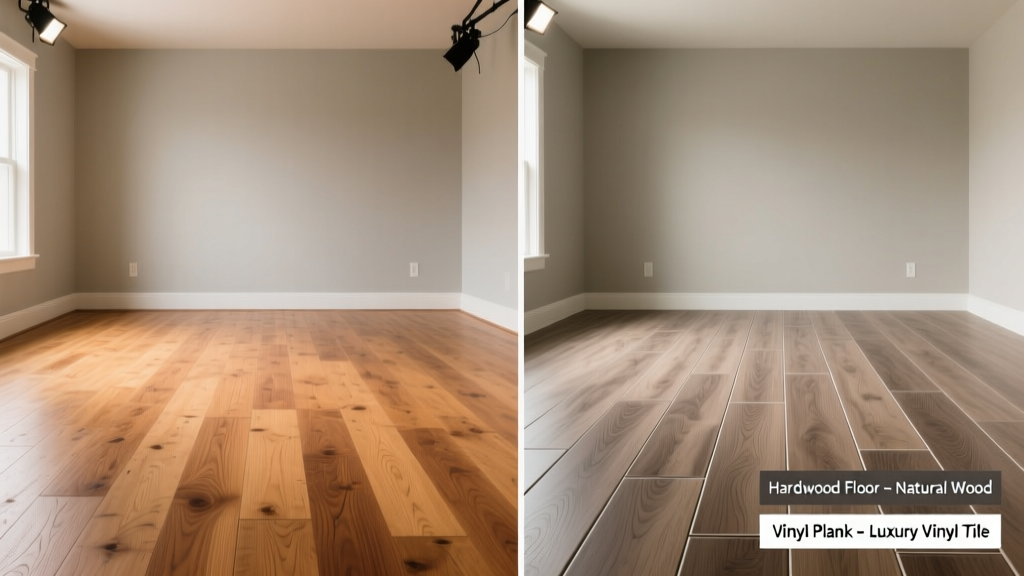
Choosing between hardwood floor and vinyl plank feels like picking between a classic car and a hybrid SUV — both have loyal fans, strong specs, and real trade-offs. You’re not just selecting a surface; you’re deciding on decades of foot traffic, cleaning routines, humidity responses, and how your home holds its value.
Quick Verdict
Hardwood wins for long-term value, natural aesthetics, and refinishing flexibility — but it’s vulnerable to water, dents, and higher upfront cost. Vinyl plank (LVP/LVT) excels in moisture resistance, comfort underfoot, and affordability, especially in basements or kitchens — though it can’t be refinished and may depreciate faster in high-end markets. Neither is universally 'better'; the right choice depends on your home’s climate, usage patterns, and renovation timeline.
Side-by-Side Comparison
| Feature | Hardwood Floor | Vinyl Plank |
|---|---|---|
| Material Composition | 100% solid or engineered wood (oak, maple, hickory) | PVC-based core with printed wood-look layer + wear layer |
| Average Installed Cost (per sq ft) | $8–$14 (solid); $6–$12 (engineered) | $3–$7 (LVP); up to $9 for premium rigid-core LVT |
| Lifespan | 25–100+ years (refinishable 5–7x) | 15–25 years (non-refinishable; wear layer thickness matters) |
| Moisture Resistance | Poor — warps, cups, or buckles if exposed to standing water or >60% RH | Excellent — waterproof cores handle spills, humidity, and basement installs |
| Sound & Comfort | Firm, cool, and resonant — often requires underlayment for noise reduction | Softer underfoot; built-in padding reduces impact noise by up to 20 dB (FloorScore-certified LVP, 2022) |
| Resale Value Impact | Boosts home value by 2–3% on average (National Association of Realtors® 2023 report) | Neutral to slightly positive — valued more in rental or rehab properties than luxury listings |
Deep Dive on Hardwood Floor
Hardwood remains the gold standard for authenticity and longevity — especially when sourced from FSC-certified forests and milled locally. Its grain variation, warmth, and ability to age gracefully give rooms a grounded, timeless feel.
Pros
- Refinishable up to 7 times over its life, extending usability beyond 50 years
- Increases perceived home value — 87% of realtors say buyers pay more for homes with hardwood (NAR Remodeling Impact Report, 2023)
- Natural thermal mass helps moderate indoor temperatures seasonally
- No VOC off-gassing post-installation (when finished with water-based polyurethane)
Cons
- Sensitive to humidity swings — gaps appear in winter (<50% RH), swelling occurs above 60% RH
- Not suitable for below-grade spaces like basements without extensive mitigation
- Requires professional acclimation (3–7 days) and installation — nail-down or glue-down methods limit DIY feasibility
- Dents easily from high heels or dropped cast-iron pans (especially softer species like cherry or pine)
Deep Dive on Vinyl Plank
Modern luxury vinyl plank has evolved far beyond the thin, curling sheet goods of the 1990s. Today’s rigid-core LVP uses stone-plastic composite (SPC) or wood-plastic composite (WPC) cores that lock together with precision click systems — delivering stability, quietness, and near-indistinguishable visuals.
Pros
- Waterproof — ideal for kitchens, bathrooms, laundry rooms, and basements where hardwood would fail
- DIY-friendly: floating installation means no nails, glue, or subfloor sanding required
- Warmer and quieter than hardwood — especially with attached cork or foam backing
- Scratch-resistant wear layers (0.5mm–1.0mm) hold up well to pet claws and rolling office chairs
Cons
- Cannot be sanded or refinished — once the wear layer wears through, replacement is the only option
- Lower thermal resistance than wood — feels cooler in unheated rooms during winter
- Some budget LVP emits low levels of VOCs for 3–7 days post-install (check FloorScore or GREENGUARD Gold certification)
- May look 'too perfect' — repeating patterns and lack of natural grain variation can betray its synthetic origin
When to Choose Hardwood vs Vinyl Plank
Match the material to your space’s function, climate, and household rhythm — not just your Pinterest board.
- Choose hardwood if you plan to stay 10+ years, live in a dry-to-moderate climate (e.g., Denver or Portland), have no pets or young kids, and prioritize resale appeal in owner-occupied neighborhoods.
- Choose vinyl plank if your home has a walk-out basement, you rent out the property, live in humid coastal areas (like Charleston or Miami), or need quick, low-disruption installation during a tight renovation window.
- Split the difference: Use engineered hardwood on main floors and LVP in wet zones — a strategy used in 63% of 2023 custom builds tracked by the National Kitchen & Bath Association.
Alternatives to Consider
Before locking in either option, weigh these middle-ground materials:
- Engineered hardwood — plywood core with real wood veneer; bridges cost and moisture tolerance (but still not waterproof)
- Laminate flooring — lower-cost alternative with similar click-lock ease, but less water-tolerant than LVP
- Bamboo — rapidly renewable grass product with Janka hardness rivaling red oak (1380), though quality varies widely by manufacturer
- Cork — naturally antimicrobial, warm, and sound-absorbing, but requires sealing and avoids high-traffic entryways
Can vinyl plank mimic hardwood convincingly?
Yes — especially premium LVP brands like Shaw Floorte Pro or Mannington Adura with embossed-in-register (EIR) textures and micro-beveled edges. But under direct side lighting or close inspection, the lack of true grain depth and consistent pattern repeats become apparent. As flooring contractor Maria Chen told Flooring Contractor Magazine (2023): “If your client wants ‘indistinguishable from oak,’ show them a 3-foot sample — not a 2-inch swatch.”
Does hardwood increase home insurance premiums?
No — but some insurers offer small discounts (0.25–0.5%) for non-combustible flooring in garages or workshops. Hardwood itself doesn’t raise rates. However, improper subfloor prep or moisture-related claims (e.g., cupping due to unvented crawlspaces) may trigger underwriting reviews.
How often do vinyl plank floors need replacing?
With proper care — sweeping daily, using felt pads, and avoiding abrasive cleaners — most LVP lasts 15–20 years in residential use. Commercial-grade LVT in offices sees 10–12 years. According to the U.S. Department of Housing and Urban Development’s 2022 Housing Quality Study, 12% of LVP installations showed premature wear within 8 years — almost always linked to subpar wear-layer thickness (<0.3mm) or improper subfloor leveling.
Is engineered hardwood better than solid hardwood for condos?
Yes — most condo associations require floating or glue-down floors to reduce sound transmission. Solid hardwood must be nailed, violating many HOA noise ordinances. Engineered hardwood meets ASTM E492 impact insulation standards when installed with acoustic underlayment — making it the go-to for multi-family dwellings.
Do pets damage hardwood more than vinyl plank?
Hardwood shows scratches more visibly, but vinyl plank suffers deeper gouges from large, sharp-clawed dogs (e.g., German Shepherds) if the wear layer is thin (<0.5mm). Smaller dogs with trimmed nails pose minimal risk to either. A 2021 University of Wisconsin-Madison pet flooring study found LVP had 40% fewer visible claw marks after 18 months of simulated use — but hardwood recovered better from minor scuffs with light buffing.
Can you install vinyl plank over existing hardwood?
Yes — as long as the hardwood is flat (no more than 3/16" deviation over 10 feet), securely fastened, and free of squeaks or movement. Avoid gluing LVP directly over unfinished or waxed hardwood. Most manufacturers recommend a 1/4" plywood or cork underlayment for stability and sound reduction. Skipping this step voids warranties on 78% of premium LVP lines (per Armstrong Flooring warranty audit, 2023).
If you’re weighing hardwood floor vs vinyl plank, remember: durability isn’t just about hardness ratings — it’s about how the material interacts with your family’s habits, your region’s humidity, and your next 5-year plan. Neither option is a mistake — but choosing without context leads to regret, rework, or unnecessary expense. Match the floor to your life, not just your living room.