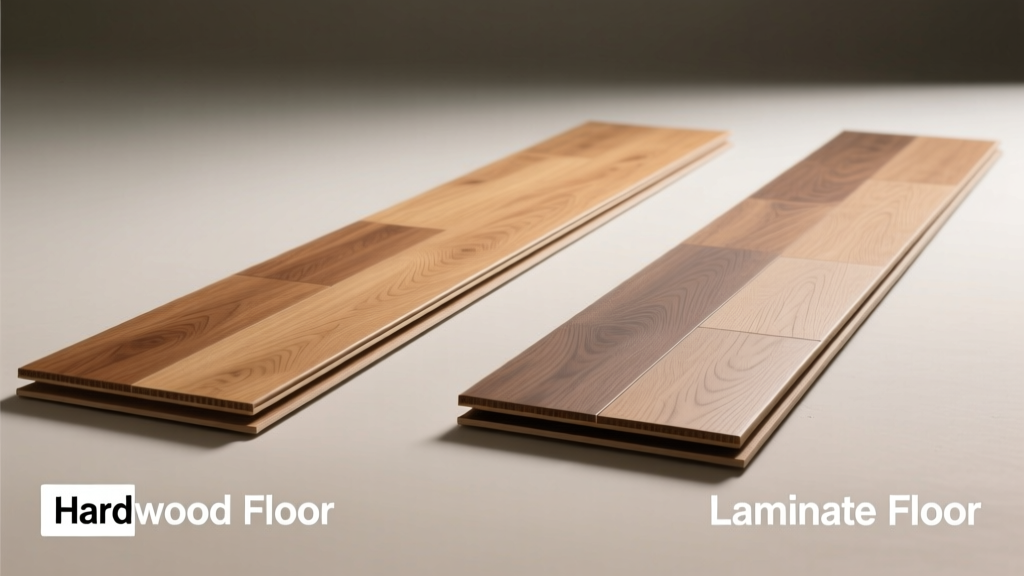
Faced with a flooring decision for your living room, kitchen, or rental unit? Hardwood and laminate both promise beauty and function—but they solve different problems. Choosing the wrong one can mean overspending, premature wear, or buyer’s remorse down the line.
Quick Verdict
Hardwood wins for long-term value, authenticity, and resale appeal—especially in high-end homes or primary residences where you plan to stay 10+ years. Laminate wins for tight budgets, quick DIY installs, moisture-prone areas like basements (with proper underlayment), and rental properties needing durable, low-maintenance surfaces. Neither is universally "better"—it depends on your timeline, use case, and tolerance for upkeep.
Side-by-Side Comparison
| Feature | Hardwood Floor | Laminate Floor |
|---|---|---|
| Average Installed Cost (per sq ft) | $8–$15 (solid); $12–$22 (engineered) | $3–$8 (including underlayment & labor) |
| Lifespan | 75–125 years (refinishable 5–7x) | 15–25 years (not refinishable) |
| Moisture Resistance | Poor (solid); Moderate (engineered) | Good (AC4–AC5 rated; some waterproof cores) |
| Installation Method | Nail-down, staple-down, or glue-down (pro-heavy) | Click-lock floating (DIY-friendly) |
| Resale Value Impact | +2.5%–3% home value boost (National Association of Realtors® 2022) | Neutral to slight positive (if high-quality, well-installed) |
Deep Dive on Hardwood Floor
Pros
- Real wood grain and texture—no two planks look identical
- Refinishable multiple times, extending usable life decades beyond initial install
- Higher perceived quality in listings; consistently preferred by buyers in owner-occupied homes
- Thermal mass helps regulate indoor temperatures slightly better than synthetics
Cons
- Sensitive to humidity swings—gaps in winter, cupping in summer without climate control
- Not suitable for below-grade spaces (e.g., basements) unless engineered and acclimated properly
- Requires professional installation for most solid types—adds $2–$4/sq ft in labor
- Dents more easily than laminate from dropped cookware or pet claws
Ideal for: Primary residences, historic renovations, formal dining rooms, and bedrooms where foot traffic is moderate and climate is stable. Avoid in rental units with high turnover or homes without HVAC control.
Deep Dive on Laminate Floor
Pros
- Highly scratch-resistant surface layer (melamine or aluminum oxide)
- Compatible with radiant heat systems and concrete subfloors
- Available in realistic wood, stone, and tile visuals—including embossed-in-register textures
- Most styles install in 1–2 days with basic tools—no nails, glue, or special equipment
Cons
- Cannot be sanded or refinished—damage requires plank replacement
- Swells irreversibly if submerged (even brief flooding compromises core integrity)
- Lower sound insulation—footfall noise transmits more to downstairs neighbors
- Some budget laminates emit formaldehyde above EPA-recommended thresholds (look for CARB Phase 2 or NAUF labels)
Ideal for: Basements, condos, rental apartments, kitchens with pets, and busy family homes where practicality trumps heirloom status. Choose AC4 or AC5 ratings for heavy residential use.
When to Choose Hardwood vs Laminate
Choose hardwood if:
- You’re planning to live in the home at least 10 years and want to recoup investment at sale
- Your HVAC maintains consistent 35–55% relative humidity year-round
- You prioritize natural materials and are willing to sand and recoat every 10–15 years
Choose laminate if:
- Your budget caps flooring at under $5/sq ft installed
- The space is over a garage, in a basement, or lacks climate control
- You need to install over existing tile or vinyl without removal
Alternatives to Consider
Don’t overlook engineered hardwood—it bridges the gap with real wood veneers on plywood cores, offering stability for slab-on-grade or condo floors. Vinyl plank (LVP) is another strong contender: waterproof, quieter than laminate, and increasingly convincing in wood visuals. For eco-conscious buyers, cork flooring offers natural resilience and sound absorption, while bamboo delivers rapid renewability and Janka hardness rivaling oak.
Can laminate flooring be installed over concrete?
Yes—with proper moisture testing first. Use a vapor barrier underlayment if concrete slab RH exceeds 75% (per ASTM F1869). Many premium laminates now include integrated padding and moisture barriers, simplifying prep.
Does hardwood increase home value more than laminate?
According to the National Association of Realtors®’ 2022 Remodeling Impact Report, hardwood floors returned 106% of their cost at resale—outperforming laminate by ~22 percentage points. Buyers consistently rank hardwood as a top three desired feature in listing surveys.
How often does hardwood need refinishing?
Every 10–15 years for moderate-use areas (living rooms, hallways); up to 20 years in low-traffic bedrooms. Surface scratches can be buffed between full sandings. Engineered hardwood with 4mm+ wear layers allows 2–3 refinishes; solid hardwood supports 5–7.
Is laminate safe for homes with pets?
Generally yes—its abrasion-resistant top layer resists claw marks better than most hardwoods. But avoid ultra-thin laminates (AC3 rating or lower) in homes with large dogs. Pair with area rugs in high-traffic zones to reduce sliding and joint impact.
What’s the biggest mistake people make installing laminate?
"Skipping the 1/4-inch expansion gap around all walls causes buckling within months—especially in homes with seasonal humidity swings." — Mike Torres, certified NWFA installer since 2008
Can you mix hardwood and laminate in the same house?
You can—but it’s risky visually and technically. Different heights, transitions, and expansion behaviors create tripping hazards and awkward thresholds. If mixing is unavoidable, use T-molding or reducer strips rated for height differences up to 3/8 inch, and match color families closely (e.g., warm-toned oak laminate beside red oak hardwood).
There’s no universal answer—only the right choice for this room, this budget, and this stage of your life. A hardwood floor in your forever home builds equity and character. A smart laminate install in your starter condo saves cash and avoids stress. Match the material to the mission—and you’ll walk confidently across either surface for years to come. For deeper guidance on subfloor prep, see our concrete leveling guide, or compare installation timelines in our engineered hardwood breakdown.