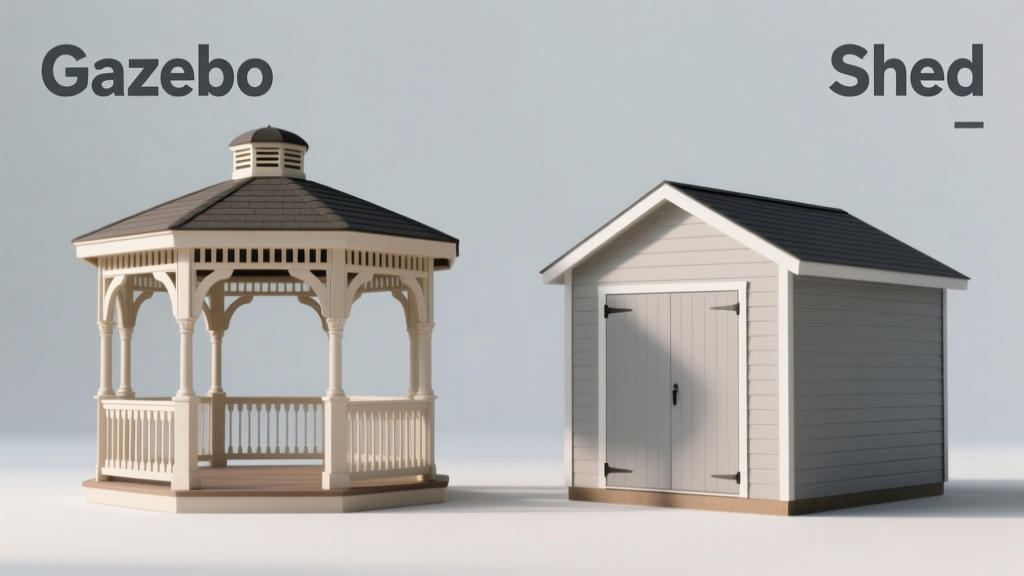
You’re standing in your backyard, measuring space, scrolling through Pinterest, and wondering: do I need a gazebo for summer gatherings—or a shed to finally organize that lawnmower, tools, and holiday decorations? It’s not just about aesthetics; it’s about how you actually use your outdoor space.
Quick Verdict
A gazebo is best if you prioritize shade, socializing, and visual appeal—think alfresco dinners or weekend coffee under open-air shelter. A shed wins for utility: secure, weather-resistant storage, workshop potential, and higher ROI on functional square footage. According to the U.S. Census Bureau’s 2023 American Housing Survey, 68% of homeowners with detached storage structures cite ‘tool and equipment organization’ as their top reason—not aesthetics.
Side-by-Side Comparison
| Feature | Gazebo | Shed |
|---|---|---|
| Average installed cost (8'×10') | $2,400–$6,800 (prefab to custom) | $1,700–$4,200 (standard wood/metal) |
| Permit required (most municipalities) | Yes — often classified as accessory structure with height/footprint limits | Yes — but exemptions common under 120 sq ft or 8' max height |
| Primary function | Outdoor living, relaxation, light entertaining | Storage, workshop, utility, seasonal gear housing |
| Weather resistance | Moderate (open sides, roof-only coverage; vulnerable to wind-driven rain) | High (enclosed, insulated options available, lockable doors) |
| Lifespan (with maintenance) | 15–25 years (cedar/vinyl); metal roofs last longer | 20–30+ years (pressure-treated wood or steel) |
Deep Dive on Gazebo
Pros
- Instant curb appeal — adds architectural interest and value to landscaping
- Open-air design promotes airflow and natural light (ideal for hot climates)
- Flexible use: yoga space, outdoor office nook, covered play area for kids
- Many models include built-in lighting, ceiling fans, and retractable sidewalls
Cons
- Not weatherproof — rain, cold, or insects limit year-round usability
- Higher long-term upkeep: staining/sealing every 2–3 years for wood models
- Less resale ROI than sheds — appraisers rarely assign added value beyond aesthetic contribution
- Wind vulnerability: lightweight prefab units may require anchoring upgrades in gust-prone zones
Best for: Homeowners in USDA Hardiness Zones 6–9 who host frequent outdoor meals, want shaded seating without full patio construction, or seek a romantic garden focal point. Not ideal if you need to store fertilizer, power washers, or bikes.
Deep Dive on Shed
Pros
- Functional versatility — double as workshop, potting shed, home gym, or tiny guest space (with proper insulation/electrical)
- Strong security: solid doors, padlock-ready hardware, optional alarm integration
- Lower insurance impact — most carriers don’t classify standard sheds as insurable structures unless >200 sq ft
- Easier DIY assembly: 80% of mid-size sheds ship with step-by-step video guides and pre-cut framing
Cons
- Can look utilitarian unless upgraded with siding, trim, or paint
- Requires level, gravel- or concrete-pier foundation — prep adds $300–$900
- Insulation and electricity add 35–60% to base cost (per HomeAdvisor’s 2024 Shed Installation Report)
- Zoning setbacks apply — often must be 5+ ft from property lines
Best for: Suburban and rural homeowners with lawn equipment, gardening supplies, or DIY projects. Also ideal if you’re converting space for remote work — 42% of respondents in the National Association of Home Builders’ 2023 Shed Use Survey reported using theirs as a hybrid storage-office.
When to Choose Gazebo vs Shed
Choose a gazebo when:
- You have a sloped or irregular yard where a shed’s foundation would require major grading
- Your HOA prohibits sheds but allows “ornamental structures” under 100 sq ft
- You’re planning an outdoor kitchen or fire pit zone and need overhead cover without enclosure
Choose a shed when:
- You’ve had three extension cords snaking across the garage floor just to reach your leaf blower
- You live in a region with heavy snowfall — a shed’s sloped roof sheds weight; a gazebo’s flat or domed roof can collapse
- You need climate-controlled storage for sensitive items like musical instruments or vintage tools
Alternatives to Consider
Before committing to either, weigh these middle-ground options:
- Pavilions: Larger, open-sided, no floor — better for group events, lower cost than custom gazebos
- Outdoor storage benches: Discreet, low-profile, fits under decks or patios — holds cushions, toys, or gardening gloves
- Carports: Enclosed on three sides, roof-only — ideal for vehicle + tool combo storage without full garage cost
Do gazebos increase home value?
Marginally — and only if well-integrated into landscape design. Appraisal Institute data (2022) shows gazebos contribute ≤0.3% to sale price in high-end neighborhoods, but zero measurable lift in mid-tier markets.
Can a shed be converted into a gazebo?
Technically yes — but it’s rarely cost-effective. Removing walls, adding decorative rafters, installing lattice, and re-roofing typically costs 70–90% of a new gazebo’s price. Better to start fresh unless your shed is structurally overbuilt (e.g., 2×6 framing, cedar siding).
Are there shed-gazebo hybrids?
Yes — called “garden rooms” or “covered pergolas with side panels.” Brands like Lifetime and Palram offer models with removable vinyl curtains, insulated roofs, and lockable doors. These bridge the gap but sacrifice some ventilation and ease of assembly.
What’s the most common permit issue for both?
Setback violations. The Insurance Institute for Business & Home Safety’s 2023 report found 41% of denied accessory structure permits cited failure to meet minimum distance requirements from property lines — especially problematic on corner lots or narrow urban lots.
How much maintenance does each really need?
“Most homeowners underestimate annual upkeep: a cedar gazebo needs recoating every 24 months; a basic resin shed needs only hose-downs and hinge lubrication twice yearly.” — Mark Delaney, Certified Landscape Contractor & NAHB Shed Council Advisor, 2024
Which is faster to install?
Sheds win — most prefabs take 1–2 days with two people. Gazebos average 3–5 days due to post-leveling, roof assembly complexity, and optional electrical/lighting integration. Anchor systems alone add half a day for gazebos in clay-heavy soils.
If your yard has more mulch than muscle, start with a shed. If your weekends revolve around hosting and you dream in string lights and citronella candles, go gazebo. Either way, measure twice, check your zoning code once — and skip the Instagram-perfect model if it doesn’t match how you live outside.