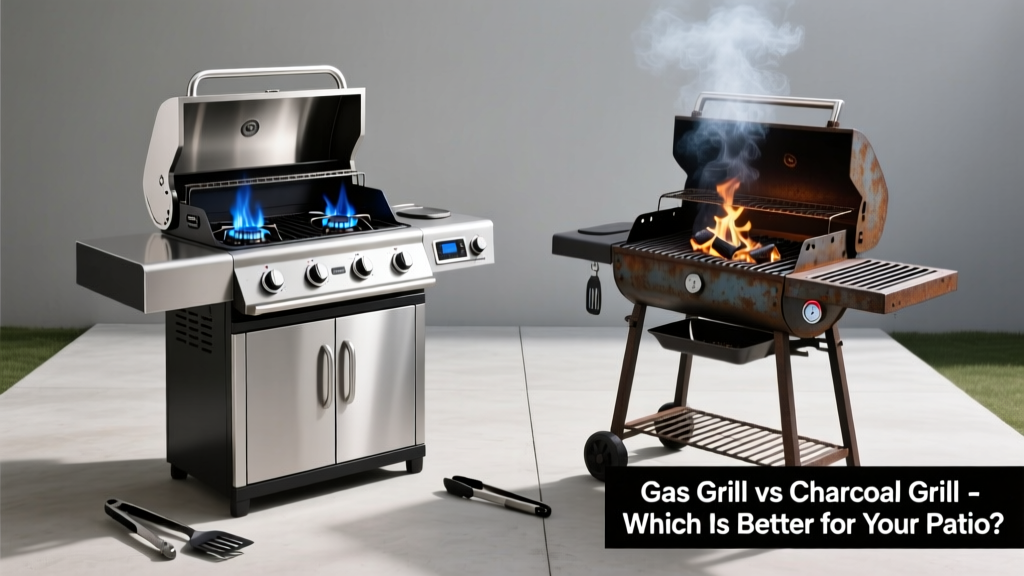
Choosing between a gas grill and a charcoal grill feels like picking a side in a backyard civil war—friends debate it over cold beers, and forums overflow with passionate testimonials. There’s no universal winner, just trade-offs that hinge on how you cook, how much time you have, and what ‘great grilled food’ means to you.
Quick Verdict
If you prioritize speed, temperature precision, and low-effort cleanup, go gas. If you chase deep smoke flavor, enjoy ritualistic prep, and don’t mind tending flames, charcoal delivers unmatched authenticity. Most home cooks who grill 1–2 times weekly lean gas; serious weekend pitmasters often keep both—but start with charcoal for learning fundamentals.
Side-by-Side Comparison
| Feature | Gas Grill | Charcoal Grill |
|---|---|---|
| Startup time | Under 10 minutes | 15–25 minutes (including lighting, ash management, temp stabilization) |
| Average fuel cost per 1-hour session | $0.85 (propane) or $0.62 (natural gas) | $2.20–$4.50 (briquettes or lump) |
| Temperature control precision | ±10°F with modern infrared burners | ±35°F—requires manual venting, coal raking, and experience |
| Flavor profile | Clean sear; minimal smoke unless using smoker boxes | Rich, layered smoke; Maillard reaction enhanced by radiant heat from glowing coals |
| CO₂ emissions per 1-hour use | ~3.2 kg (EPA, 2023) | ~1.9 kg (lump charcoal); ~2.7 kg (briquettes) |
Deep Dive on Gas Grills
Gas grills dominate U.S. backyards: 68% of households with outdoor grills own one (National Retail Federation, 2023). Their appeal lies in repeatability and integration—many connect to natural gas lines or use quick-swap propane tanks.
Pros
- Consistent, adjustable heat zones—ideal for searing steaks while gently warming buns
- No ash disposal or chimney cleaning; stainless steel burners last 10+ years with basic maintenance
- Compatible with smart controllers (e.g., Weber Connect) for remote temp monitoring and alerts
Cons
- Limited smoke generation without add-ons—smoker boxes rarely match charcoal’s depth
- Higher upfront cost: mid-tier 4-burner models start at $799; premium units exceed $2,500
- Vulnerable to grease fires if drip trays aren’t cleaned monthly (NFPA reports 10,300 grill fires annually, 43% involving gas units)
Best for families with tight weeknight windows, condo dwellers with gas hookups, or anyone who values predictable results over smoky mystique.
Deep Dive on Charcoal Grills
Charcoal grilling is less about convenience and more about craft. It demands attention—but rewards it with complexity no burner can replicate. The Maillard reaction intensifies when food hits radiant heat from glowing embers, not just conductive flame.
Pros
- Superior flavor development—especially for burgers, ribs, and whole chickens—due to volatile organic compounds released during wood-charcoal combustion
- Lower long-term operating cost: a 20-lb bag of lump charcoal lasts ~12 sessions and costs $18–$24
- Portability and simplicity: kettle grills weigh under 40 lbs and need zero electricity or gas lines
Cons
- Learning curve steepens quickly—understanding coal arrangement, airflow, and carryover heat takes practice
- Longer cool-down and cleanup: ash must fully extinguish before disposal; grates need wire-brushing after each use
- Weather sensitivity: wind disrupts airflow; rain delays ignition and lowers temps unpredictably
According to chef and grilling educator Meathead Goldwyn,
"Charcoal isn’t harder—it’s more honest. It tells you exactly what you did wrong, every time. That feedback loop is why so many pro pitmasters still train on it." (AmazingRibs.com, 2022)
When to Choose Gas vs Charcoal
Match your grill to your real-world habits—not aspirational ones:
- Choose gas if you grill most weeknights, host large groups regularly, or live where charcoal storage or ash disposal is restricted (e.g., HOA communities or apartments with balcony rules).
- Choose charcoal if you grill weekends only, love experimenting with wood chunks (oak, hickory, cherry), or want to master low-and-slow techniques before upgrading to a pellet smoker.
- Consider hybrid if your budget allows: the Weber Genesis S-435 Dual Fuel lets you swap a charcoal insert into a gas chassis—or try the Weber Original Kettle Premium with an optional iGrill thermometer probe.
Alternatives to Consider
Neither option fits every need—and newer categories are gaining traction:
- Pellet grills: Combine wood-fired flavor with gas-like control (e.g., Traeger Pro 575). Best for smokers and roasters—but slower sear than charcoal or gas.
- Electric grills: Zero emissions and apartment-friendly, but lack direct radiant heat. Ideal for patios with strict fire codes—but not for true char.
- Portable tabletop grills: Like the Cuisinart CGG-180T, these run on small propane canisters and fit balconies or tailgates—gas convenience, compact footprint.
Can I get charcoal flavor on a gas grill?
Yes—but with caveats. Smoker boxes filled with soaked wood chips produce mild aroma, not authentic smoke ring or bark. For better results, use a cast-iron smoker box preheated 10 minutes before adding food, and choose dense hardwoods like mesquite or apple. Still, it won’t replicate the layered flavor of indirect charcoal cooking.
How often should I clean a gas grill?
Wipe grates after every use. Vacuum burners and check for spider nests monthly (they clog ports). Deep-clean the grease tray and interior every 3–4 months—especially before seasonal storage. Neglecting this causes uneven heating and flare-ups.
Is charcoal grilling unhealthy?
Charring meat at high temps creates heterocyclic amines (HCAs) and polycyclic aromatic hydrocarbons (PAHs), linked to increased cancer risk in lab studies (American Institute for Cancer Research, 2021). Mitigate risk by marinating meats, trimming fat, avoiding flare-ups, and flipping frequently—not by switching fuels. Both gas and charcoal produce these compounds when food chars.
Do I need a cover for my grill?
Yes—for both types. UV exposure degrades rubber hoses and control knobs on gas units; moisture corrodes charcoal grates and ash pans. A fitted, breathable cover extends lifespan by 3–5 years. Skip vinyl covers in hot climates—they trap condensation and promote rust.
What’s the best starter method for charcoal?
Use a chimney starter—not lighter fluid. It’s faster, safer, and adds zero chemical taste. Fill the chimney ¾ full, stuff newspaper underneath, light, and wait 15–20 minutes until coals glow red with gray ash. Then pour and arrange for direct/indirect zones. Avoid self-lighting briquettes: they contain paraffin and sodium nitrate, which alter flavor and increase smoke toxicity.
Ultimately, the “better” grill isn’t the one with more BTUs or fancier features—it’s the one you’ll actually use, maintain, and enjoy. Try borrowing a friend’s charcoal kettle for a Saturday cookout. Fire up a neighbor’s gas unit on a rainy Tuesday. Your hands—and your taste buds—will tell you more than any spec sheet ever could.