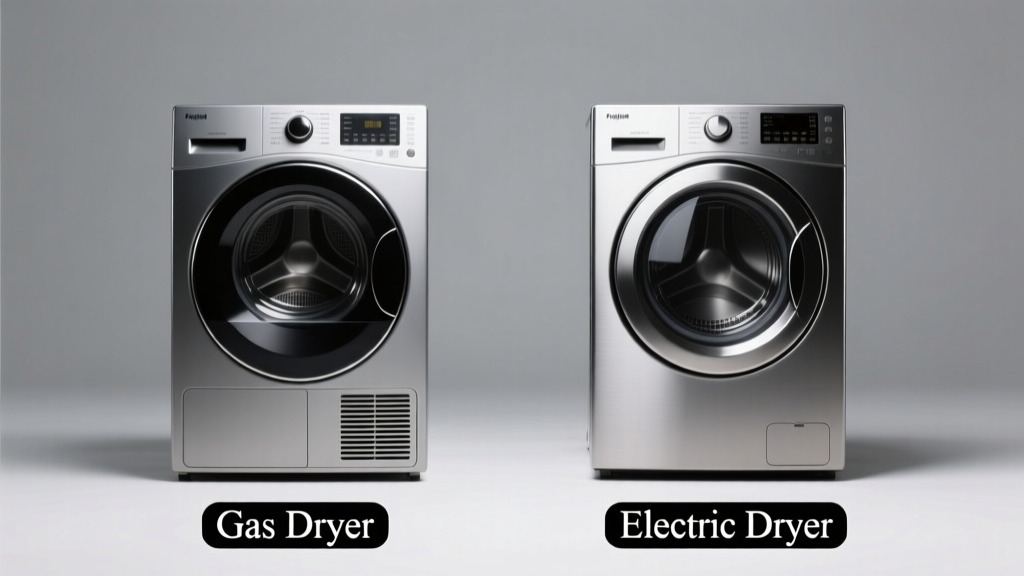
Facing the gas vs. electric dryer decision? You’re not alone—nearly 60% of U.S. households weigh this choice when replacing an aging unit (U.S. Energy Information Administration, 2023). It’s more than plug-in convenience versus gas line logistics; it’s about long-term operating costs, drying speed, safety, and what your home can actually support.
Quick Verdict
For most homeowners with existing gas infrastructure and moderate-to-heavy laundry loads, a gas dryer delivers faster drying, lower energy bills, and longer drum life—despite higher upfront cost and installation complexity. If you rent, live in an all-electric building, or do fewer than 3 loads per week, an electric dryer is simpler, safer to install, and often more practical—even if it costs more to run over time.
Side-by-Side Comparison
| Feature | Gas Dryer | Electric Dryer |
|---|---|---|
| Average Purchase Price | $850–$1,400 | $600–$1,100 |
| Installation Cost (professional) | $150–$400 (gas line + vent) | $75–$150 (240V outlet check) |
| Annual Operating Cost (U.S. avg.) | $25–$35 | $85–$120 |
| Dry Time (full load, cotton) | 35–45 minutes | 45–65 minutes |
| Vent Requirements | Standard 4" rigid metal duct required | Same—but less heat stress on ducts |
| Carbon Monoxide Risk | Yes—requires proper venting & annual inspection | No |
Deep Dive on Gas Dryers
Gas dryers use a burner to heat air, drawing combustion air from the room and exhausting byproducts—including carbon monoxide—through a dedicated vent. That means they require both a 120V electrical connection (for the drum motor and controls) and a natural gas or propane supply line.
Pros
- Faster drying: Heats air more efficiently—reducing average cycle time by 20–30% (AHAM, 2022)
- Lower long-term cost: Saves $60–$90 annually vs. comparable electric models
- Less fabric wear: Lower exhaust temperatures (125–140°F vs. electric’s 150–170°F) reduce shrinkage and fiber stress
- Better for large households: Handles heavy, damp loads (e.g., towels, jeans) without extended cycles
Cons
- Higher upfront investment: Unit + professional gas line install often exceeds $1,200 total
- Installation limitations: Requires certified gas technician; prohibited in many apartments and condos
- Safety oversight needed: Vent blockages or cracked heat exchangers can cause CO buildup—inspect annually
- Fewer model options: Only ~35% of new dryer SKUs are gas-powered (Consumer Reports, 2024)
Deep Dive on Electric Dryers
Electric dryers rely entirely on resistive heating elements powered by a dedicated 240V circuit. They’re self-contained units—no gas line, no combustion, no external fuel source. Most homes built since the 1960s already have the correct outlet (NEMA 14-30), making them the default choice for retrofits and rentals.
Pros
- Widely compatible: Works anywhere with proper 240V wiring—no gas line or venting certification hurdles
- Lower initial barrier: No gas contractor fees; many landlords allow tenant-installed units
- Consistent performance: Less sensitive to vent length or bends than gas models
- Easier service: Most HVAC or appliance techs can diagnose and repair common issues
Cons
- Higher energy cost: Electricity is typically 3–4× more expensive per BTU than natural gas (EIA, 2023)
- Slower drying: Longer cycles increase wear on fabrics and raise moisture-related risks (e.g., mildew in damp climates)
- Heavier load strain: May struggle with thick cottons or oversized comforters without extended timed dry
- Limited efficiency gains: Even ENERGY STAR® electric models use ~18% more energy than standard gas units
When to Choose Gas vs. Electric
Your decision hinges less on preference and more on infrastructure, usage, and timeline:
- Choose gas if: You own your home, already have a gas line nearby, do 4+ loads/week, and plan to stay put for 5+ years.
- Choose electric if: You rent, live in a high-rise, lack gas access, do <3 loads/week, or prioritize quick replacement over lifetime savings.
- Reconsider both if: Your laundry room lacks proper ventilation—neither type performs safely or efficiently in unvented or poorly vented spaces. See our guide on dryer venting requirements before buying.
Alternatives to Consider
While gas and electric dominate the market, two emerging options deserve attention—especially for eco-conscious or space-constrained households:
- Heat pump dryers: Use refrigerant cycles to extract moisture—cutting energy use by up to 50% vs. standard electric units. They require no external vent (condenser or drain hose only), but cost $1,200–$2,000 and dry slower. Ideal for apartments and cold-climate homes. Read our full heat pump dryer review.
- Compact ventless dryers: Often under-counter or stackable, using condensation or absorption tech. Best for studio apartments or vacation homes—not primary household use.
Do gas dryers really save money over time?
Yes—if used regularly. According to the U.S. Department of Energy’s 2023 lifecycle analysis, a mid-tier gas dryer breaks even with an electric counterpart after ~3.2 years of average use (5 loads/week). After that, savings compound: $200–$400 over 8 years.
Can I convert my electric dryer to gas—or vice versa?
No. The internal components—burner assembly, gas valve, heating element, wiring, and control board—are fundamentally incompatible. Retrofitting is unsafe and voids all certifications. Always match the unit to your home’s infrastructure.
Is it safe to install a gas dryer myself?
"Connecting a gas dryer without a licensed technician violates NFPA 54 and most local codes—and increases risk of undetected leaks. A single 1/8" leak can release enough gas to create an explosive concentration in under 10 minutes." — National Fire Protection Association, Fuel Gas Code 2023 Edition
Why does my electric dryer take so long to dry towels?
Thick cotton absorbs water deeply, and electric heating elements ramp up slowly. Poor venting (kinks, lint buildup, or excessive length) compounds this. Clean your duct every 6 months and verify your 240V circuit delivers full 24 amps—voltage drop below 220V cuts heating power by up to 30%.
Are newer electric dryers more efficient than older ones?
Moderately. Since 2015, federal standards raised minimum efficiency by ~15%, and sensor drying (vs. timed cycles) now appears in 80% of mid-tier models. But even the best electric dryer uses more energy per load than the least efficient gas model—due to physics, not engineering.
What should I check before ordering either dryer?
Verify three things: (1) Outlet type and voltage (NEMA 14-30 for electric; 120V + gas stub for gas), (2) Vent path length and material (rigid metal only—no foil or flexible plastic), and (3) Local code allowances (some municipalities ban gas dryers in new construction). Our dryer installation checklist walks through each step.
There’s no universal “better” option—only the right one for your home’s setup, your laundry habits, and your long-term plans. If you’ve got gas access and dry more than a few loads weekly, the efficiency and performance edge usually justifies the extra setup. If flexibility, safety, or simplicity matter more, electric remains the pragmatic standard—and still gets the job done reliably.