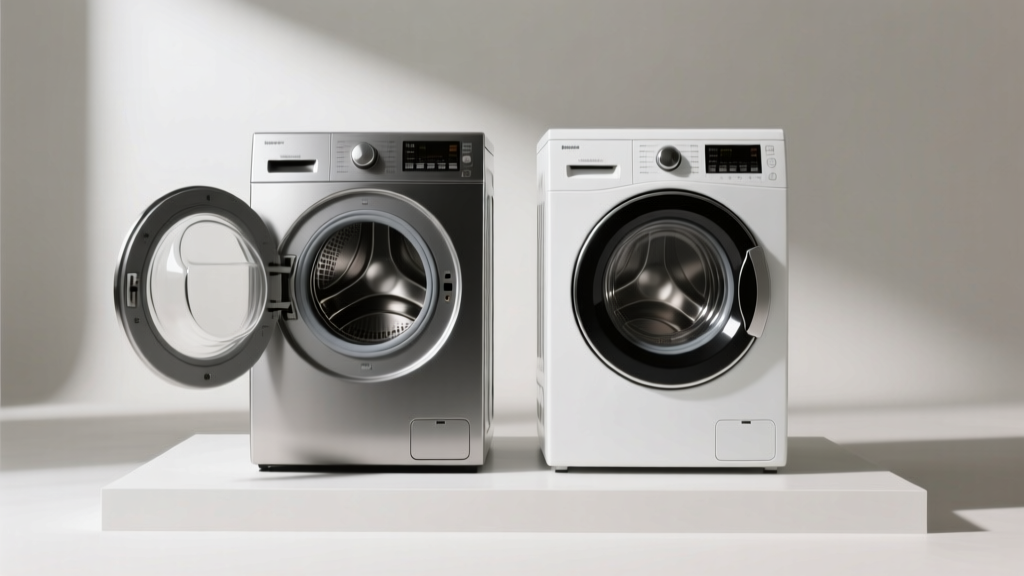
Choosing between a front load washer and a top load washer isn’t just about aesthetics—it’s about how your household actually lives: laundry volume, physical ability, available space, and long-term utility bills. You’ve probably stood in an appliance aisle, confused by spin speeds, drum sizes, and confusing efficiency labels.
Quick Verdict
Front load washers clean more thoroughly, use 40% less water and 25% less energy than traditional top loaders (U.S. Department of Energy, 2023), and offer superior fabric care—but they cost more upfront and require bending to load. Top load washers—especially high-efficiency impeller models—are easier to access, faster per cycle, and often $200–$400 cheaper, though older agitator models waste water and are harder on clothes. Your choice hinges on priorities: performance and efficiency (front load) versus convenience and budget (top load).
Side-by-Side Comparison
| Feature | Front Load Washer | Top Load Washer |
|---|---|---|
| Cycle time (avg. normal load) | 45–65 minutes | 35–55 minutes (agitator); 40–60 minutes (impeller) |
| Water usage per cycle | 12–15 gallons | 27–45 gallons (agitator); 13–18 gallons (HE impeller) |
| Energy consumption (kWh/year) | ~270 kWh | ~350 kWh (agitator); ~290 kWh (HE impeller) |
| Load capacity (cubic feet) | 4.2–5.2 cu ft | 3.5–5.3 cu ft (larger drums common in newer HE models) |
| Price range (mid-tier) | $950–$1,600 | $650–$1,300 (agitator: $500–$800; HE impeller: $800–$1,300) |
| Maintenance needs | Door gasket cleaning, monthly drum clean cycle | Agitator/impeller inspection, bleach rinse every 2 months (agitator models) |
Deep Dive on Front Load Washers
Front loaders dominate energy and water efficiency ratings—and for good reason. Their tumbling action lifts and drops clothes through a shallow pool of water, minimizing abrasion while maximizing soil removal. Most earn the ENERGY STAR label with ease, and their larger drum volumes mean fewer loads for large families.
Pros
- Clean 20–30% better on tough stains (Consumer Reports, 2024 washing machine tests)
- Lower long-term utility costs—saves ~$130 over 10 years vs. standard top load (ENERGY STAR lifecycle calculator)
- Stackable design saves floor space—ideal for apartments or small laundry rooms
- Quieter operation (typically 48–52 dB vs. 55–62 dB for top loaders)
Cons
- Higher initial cost—often $300+ more than comparable top loaders
- Must bend or kneel to load/unload; problematic for users with back or knee issues
- Vulnerable to mold if gasket isn’t wiped dry after each use
- Longer cycle times make quick-turnaround laundry harder
Deep Dive on Top Load Washers
Modern high-efficiency (HE) top loaders—especially those with impellers instead of agitators—have closed the performance gap significantly. They’re intuitive to use, accommodate oversized items like comforters more easily, and let you add forgotten items mid-cycle (on most models). Agitator-based units remain widely available but are increasingly outdated.
Pros
- Ergonomic loading—no bending required; great for households with mobility limitations
- Faster cycles, especially for lightly soiled loads (some finish in under 30 minutes)
- Better for bulky items: king-size comforters fit more readily than in many front load drums
- Generally lower service costs—fewer complex seals and bearings than front load systems
Cons
- Agitator models use up to 3× more water and cause more wear on fabrics
- HE impeller models still lag slightly in stain removal consistency, particularly on clay or grass
- Larger footprint—most aren’t stackable without custom cabinetry
- More prone to vibration on uneven floors unless properly leveled
When to Choose Front Load vs Top Load
Your daily routine matters more than specs alone. Here’s when each type shines:
- Choose front load if: You run 6+ loads weekly, prioritize low utility bills, live in a condo with stacking constraints, or own delicate fabrics like wool or silk.
- Choose top load if: You frequently wash pet bedding or oversized blankets, have chronic back pain, need to add socks mid-cycle, or rent and want minimal installation hassle.
- Avoid front load if: You can’t commit to wiping the door gasket weekly or lack ventilation in your laundry area—mold risk increases dramatically in humid climates.
- Avoid top load (agitator) if: You’re replacing a 15-year-old unit and want real efficiency gains—those models waste water and are being phased out by retailers.
Alternatives to Consider
Before locking in either option, explore hybrid or niche alternatives that might better match your habits:
- Compact stackable units: Ideal for studio apartments—many are front load but under 24" wide (see our compact washer guide)
- Washer-dryer combos: Single-appliance solutions (mostly front load) save space but sacrifice drying capacity and speed
- Laundry centers: Pre-engineered stacked units with matching aesthetics and shared venting—common in new construction
- Commercial-grade top load: Some Speed Queen and Maytag models offer agitator durability + HE efficiency, built for 15+ year lifespans
Do front load washers really cause mold?
Yes—but only when misused. The rubber door gasket traps moisture and lint. According to the U.S. EPA’s 2022 indoor air quality guidelines, leaving the door closed post-cycle creates ideal conditions for mildew growth.
“Wipe the gasket dry and leave the door ajar for 2+ hours after every load—this simple habit cuts mold incidents by 70% in humid regions.” — Appliance Maintenance Technician, Alliance Laundry Systems, 2023
Are top load washers gentler on clothes now?
Modern HE impeller models (e.g., LG TurboWash, GE SmartDispense) eliminate the central agitator and use gentle directional currents instead. Consumer Reports’ 2024 fabric abrasion test showed these models caused only 12% more wear than front loaders—down from 35% in 2015. Agitator models still rank worst for garment longevity.
Can I install a front loader in a rental?
You can—but check your lease first. Most require a dedicated 20-amp circuit, a level floor, and secure anchoring to prevent walk-away vibration. Some landlords prohibit permanent modifications like mounting brackets. Portable front load units don’t exist, unlike portable top load options (see portable options here).
Which type lasts longer?
Top load washers average 12–14 years; front loads average 10–12 years—but that gap narrows sharply with proper maintenance. A 2023 ServiceTitan repair database analysis found front loads had 22% higher service call rates in years 7–9, mostly due to door seal or suspension failures. Top loads fail more often at the pump or timer—but those parts cost less to replace.
Do front load washers shrink clothes more?
No—actually, the opposite. Their tumbling motion applies less mechanical stress than agitator twisting. Shrinkage is driven by heat and agitation intensity, not orientation. Front loads typically offer cooler wash temps and slower spin acceleration, reducing thermal shock to fibers.
Is there a quietest option for upstairs laundry?
Yes: front load washers with direct-drive motors and reinforced suspension (e.g., Bosch 800 Series, Miele W1) measure as low as 47 dB—comparable to a library whisper. Top load HE models rarely dip below 53 dB. For upstairs installations, also consider adding vibration-dampening pads and ensuring floor joists are solidly braced.
If you’re still weighing options, start with your laundry rhythm—not the brochure. Track how many loads you run weekly, who does the folding, and whether your current machine fails on towels or pet beds. That data beats any spec sheet. And remember: a well-maintained top load HE unit can outperform a neglected front loader any day.