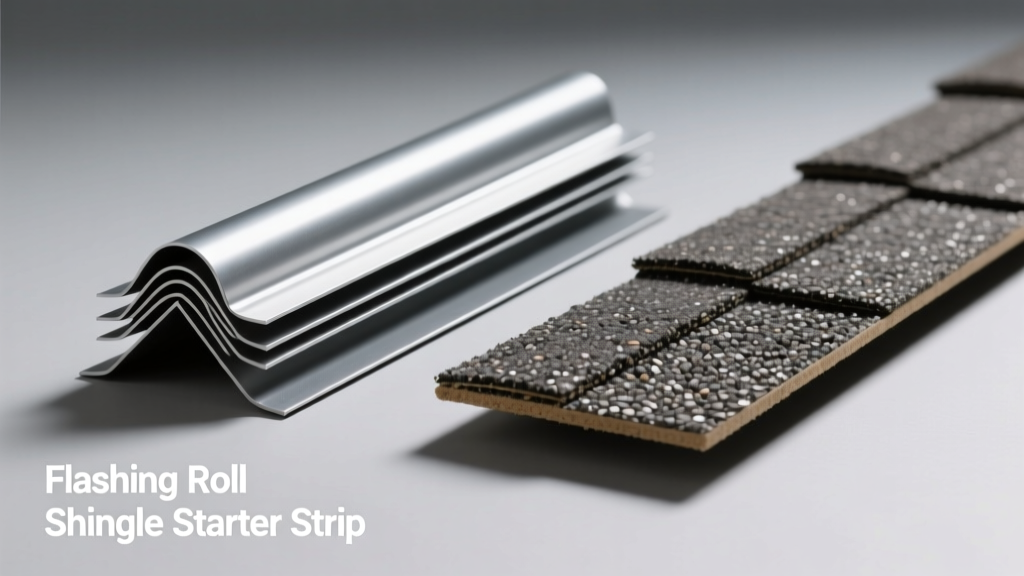
Choosing between flashing roll and a shingle starter strip isn’t just about sealing the eaves — it’s about how your roof handles wind-driven rain, ice dams, and long-term thermal cycling. Contractors debate this daily, especially in mixed-climate zones like the Midwest or Pacific Northwest.
Quick Verdict
For most standard asphalt shingle roofs with moderate slopes (4:12–9:12) and no severe ice dam risk, a factory-made shingle starter strip is simpler, faster, and more consistent. But if you’re roofing a low-slope section (≤3:12), retrofitting over damaged sheathing, or building in an area with frequent wind-driven rain (e.g., coastal Maine or Lake Michigan shores), self-adhering flashing roll delivers superior water-shedding performance — at roughly 2.3× the material cost per linear foot, according to the National Roofing Contractors Association’s 2023 Cost Benchmark Report.
Side-by-Side Comparison
| Feature | Flashing Roll | Shingle Starter Strip |
|---|---|---|
| Material composition | SBS-modified bitumen + adhesive backing + granule or aluminum top layer | Asphalt-saturated fiberglass mat, pre-cut to 6" width, coated with granules |
| Installation method | Peel-and-stick; requires clean, dry, above-40°F substrate | Nailed in place like regular shingles; compatible with all temps |
| Water resistance rating | ASTM D6616 Class A (tested to 15 psi hydrostatic pressure) | No formal hydrostatic rating; relies on shingle overlap and nail sealant |
| Average installed cost (per linear ft) | $1.85–$2.40 | $0.75–$0.95 |
| Lifespan (under ideal conditions) | 15–20 years (matches underlayment life) | 12–15 years (tends to oxidize faster at exposed edge) |
Deep Dive on Flashing Roll
Self-adhering flashing roll (often branded as Grace Ice & Water Shield, GAF StormGuard, or CertainTeed WinterGuard) acts as both underlayment and starter — forming a continuous, watertight membrane along the eave and rakes. Its rubberized asphalt compound flows into nail holes and minor deck imperfections, sealing them permanently.
- Pros: Stops wind-driven rain infiltration, bridges small gaps in OSB/plywood, critical for ice dam-prone regions, integrates seamlessly with step flashing at chimneys and valleys
- Cons: Requires precise surface prep (dust, dew, or temperatures below 40°F drastically reduce adhesion), can wrinkle if over-stretched during application, not code-compliant as sole starter in some municipalities without additional nailing
- Ideal use cases: Re-roofing over older decking with minor delamination, homes with cathedral ceilings (no attic ventilation), roofs with complex geometry (dormers, skylights), and projects in ASHRAE Climate Zones 5–7
Deep Dive on Shingle Starter Strip
A shingle starter strip is essentially a row of specially designed, non-tabbed shingles — thicker at the bottom, with enhanced sealant and granule coverage. It provides a solid nailing base and creates a straight, uniform first course for the field shingles above.
- Pros: Familiar installation workflow for crews, forgiving on uneven substrates, recyclable (unlike most flashing rolls), meets IRC Section R905.2.7 requirements without supplemental fasteners
- Cons: Vulnerable to capillary wicking under heavy, sustained rain, offers no protection against lateral water movement, less effective on roofs with poor overhangs (<12")
- Ideal use cases: New construction with pristine sheathing, warm-dry climates (Zones 1–3), steep-pitch roofs (>9:12), and budget-conscious replacements where ice dams aren’t historically documented
When to Choose Flashing Roll vs Shingle Starter Strip
Select flashing roll when your roof has any of these red flags: overhangs ≤10", roof slope ≤4:12, prior leak history at eaves, or proximity to large bodies of water. Choose shingle starter strips when working on a new build with engineered trusses, full attic ventilation, and verified historical snow loads under 20 psf — like those documented in the 2022 ASCE 7-22 Snow Load Map.
According to roofing consultant Maria Chen of RoofLogic Advisors, “I specify flashing roll on 80% of re-roofs in northern Ohio — not because it’s ‘better,’ but because legacy decks rarely meet today’s moisture management expectations. The starter strip assumes perfection; flashing roll forgives reality.”
“I specify flashing roll on 80% of re-roofs in northern Ohio — not because it’s ‘better,’ but because legacy decks rarely meet today’s moisture management expectations. The starter strip assumes perfection; flashing roll forgives reality.” — Maria Chen, RoofLogic Advisors, 2023
Alternatives to Consider
Neither option fits every scenario. Here are three credible alternatives worth evaluating:
- Metal drip edge + standard starter: Adds rigidity and directs runoff away from fascia; best paired with starter strips on ventilated attics (see our drip edge installation guide)
- Two-layer starter: One row of starter strip topped with 6" of self-adhering flashing — used on historic homes where code allows hybrid systems
- Fluid-applied flashing: Liquid rubber membranes (e.g., Henry 887 Tropi-Cool) applied with roller; excellent for irregular surfaces but requires strict curing time and weather windows
Can I mix flashing roll and starter strip on the same roof?
Yes — and it’s common practice. Many contractors install flashing roll only along eaves and rakes (where water entry risk is highest), then switch to starter strips on less-exposed sections like hips or ridges. Just ensure the flashing roll extends at least 2" beyond the interior edge of the starter strip to prevent step-lapping failures.
Does starter strip prevent shingle blow-off?
Only indirectly. Starter strips improve nailing consistency and create a tighter first-course seal — but wind resistance depends more on proper fastener placement, sealant activation, and shingle quality. The Asphalt Roofing Manufacturers Association (ARMA) notes that 72% of wind-related failures stem from improper nailing, not starter type (ARMA Wind Uplift Field Study, 2021).
Is flashing roll required by code?
Not universally — but it is mandated in specific scenarios. The 2021 IRC requires ice-barrier underlayment (which includes most flashing rolls) within 24" of eaves in designated ice-dam zones (Zones 2–7). However, local amendments — like those in Vermont’s 2023 Residential Code Supplement — extend that requirement to 36".
How do I repair a torn starter strip?
You can’t reliably patch it. Unlike flashing roll, which self-heals small punctures, a torn starter strip creates an unsealed channel for water. The fix is surgical: cut out the damaged 3–4 feet, replace with new starter, and seal all nail heads with butyl tape. For recurring tears, consider upgrading to flashing roll on the next re-roof — especially if your roof deck inspection reveals minor waviness or fastener pop-out.
Will flashing roll stick to wet plywood?
No — and doing so guarantees premature failure. The U.S. Department of Housing and Urban Development’s Roofer’s Field Manual (2022) states that moisture content above 15% in OSB or plywood causes adhesion loss exceeding 60% within 18 months. Always check with a moisture meter and allow drying time — even overnight — before rolling.
Do starter strips come in colors?
Most do — typically matching popular shingle lines (e.g., GAF Timberline HDZ starter in Charcoal, Weathered Wood, or Slate). Color-matching matters less for function but improves aesthetics on visible rake edges, especially with architectural shingles and open eave designs.
There’s no universal winner — only context-appropriate choices. Your roof’s age, location, and existing condition matter more than marketing claims. If you’re weighing options mid-project, pull back a corner of the old shingles: if the deck looks sound and dry, a starter strip may suffice. If you see black stains, blisters, or soft spots near the eave, flashing roll isn’t overkill — it’s insurance.