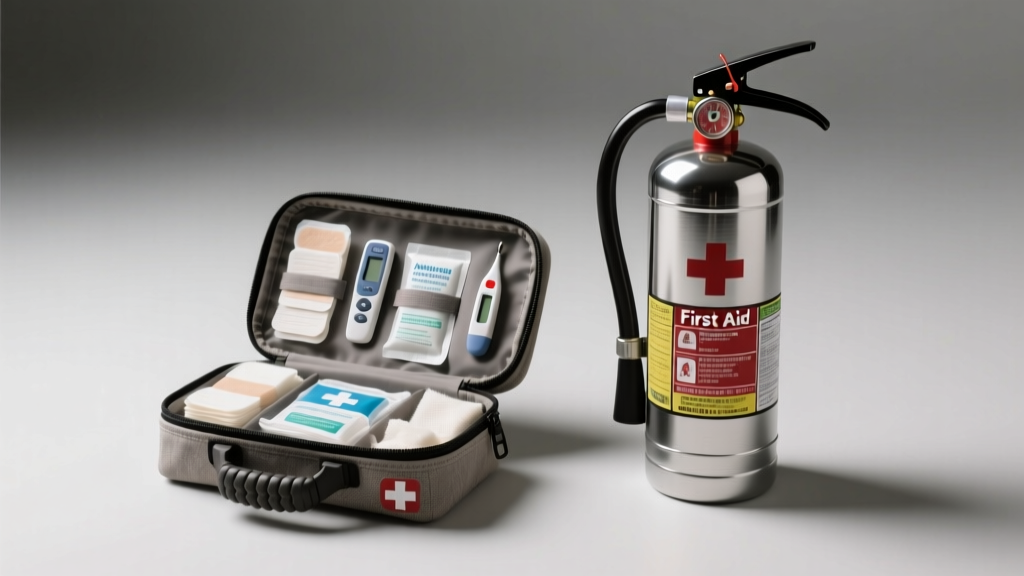
You’re standing in your garage after a minor chemical spill ignites near the workbench — smoke curls up, and your hand stings from a splintered wood shard. One tool sits on the shelf: a red fire extinguisher. Another hangs nearby: a green first aid kit. Neither replaces the other — but choosing wrong could cost seconds, safety, or worse.
Quick Verdict
Neither is "better" — they’re complementary life-safety tools with non-overlapping core functions. A first aid kit treats injuries; a fire extinguisher suppresses small, incipient fires. According to the National Fire Protection Association’s 2023 Fire Loss Report, 72% of home fire fatalities occurred in residences without working smoke alarms or accessible extinguishers — yet 89% of non-fatal burn injuries treated in ERs involved delayed or inadequate first aid (CDC Emergency Department Statistics, 2022). You need both — but prioritization depends on your space, risk profile, and regulatory requirements.
Side-by-Side Comparison
| Feature | First Aid Kit | Fire Extinguisher |
|---|---|---|
| Purpose | Treat injuries (cuts, burns, sprains, bleeding) | Extinguish Class A–D fires (ordinary combustibles, flammable liquids, electrical, metals) |
| Regulatory Requirement | OSHA 1910.266 recommends kits in workplaces with injury risk; not mandated for homes | OSHA 1910.157 requires extinguishers within 75 ft of Class A hazards; NFPA 10 mandates annual inspection |
| Typical Shelf Life | 3–5 years (adhesive bandages, antiseptic wipes degrade) | 10–12 years (if undamaged, unpressurized, and inspected yearly) |
| Refill/Recharge Cost | $15–$40 for full restock (depends on size and contents) | $15–$75 for recharge (ABC dry chem); $120+ for CO₂ or specialty units |
| Training Required? | Basic use intuitive; CPR/first aid certification improves outcomes | Yes — OSHA requires employer-provided training for workplace users |
Deep Dive on First Aid Kit
A well-stocked first aid kit bridges the gap between injury and professional care — especially critical when EMS response exceeds 8 minutes, the national average rural response time (NHTSA, 2023).
Pros
- Immediate control of bleeding with gauze, tourniquets, and hemostatic agents
- Reduces infection risk via antiseptics, sterile dressings, and antibiotic ointments
- Supports psychological reassurance — visible readiness lowers panic during minor incidents
Cons
- Useless against active fire, toxic fumes, or structural collapse
- Contents expire: epinephrine auto-injectors (EpiPens) last 12–18 months; saline solution degrades after 2 years
- No protection from environmental hazards (e.g., carbon monoxide, electrical shock)
Best for: Homes with kids or pets, workshops with sharp tools, vehicles, and offices where slips, falls, or lacerations are most likely. For tailored advice, see our best first aid kits for homes guide.
Deep Dive on Fire Extinguisher
Fire extinguishers stop small fires before they escalate — crucial because 90% of home fires grow beyond control within 3 minutes (UL Firefighter Safety Study, 2021). But misuse can worsen outcomes: spraying water on grease or electrical fires spreads flames or causes electrocution.
Pros
- Stops Class A (paper, wood), B (gasoline, oil), and C (electrical) fires when used correctly
- Required by code in commercial kitchens, garages with solvents, and workshops using flammable adhesives
- Compact ABC models weigh under 5 lbs and mount easily on walls or carts
Cons
- Zero medical utility — no antiseptic, no bandages, no pain relief
- Risk of inhalation injury from dry chemical residue (especially in confined spaces)
- Requires PASS technique training (Pull, Aim, Squeeze, Sweep) — 63% of untrained users fail basic operation in simulations (NFPA Fire Extinguisher Use Survey, 2022)
Ideal for: Attached garages storing gasoline or paint thinners, home workshops with soldering irons or CNC machines, and RVs or boats where fire spreads rapidly. For sizing help, check our how to choose a fire extinguisher guide.
When to Choose First Aid Kit vs Fire Extinguisher
Match the tool to the dominant hazard — not personal preference.
- Choose a first aid kit first if your space has high slip/trip/fall risk (bathrooms, kitchens, stairwells), uses sharp tools (sewing rooms, craft studios), or houses vulnerable individuals (seniors, infants, those with chronic conditions).
- Choose a fire extinguisher first if you store >1 gallon of gasoline, use deep fryers or griddles, operate lithium battery chargers, or have older wiring prone to arcing.
- Never skip both in mixed-risk zones: home workshops, rental properties, and home-based salons or tattoo studios must comply with local fire codes and OSHA-recommended injury response plans.
The U.S. EPA estimates that 14% of household water usage is from leaks — but far more preventable harm stems from unpreparedness for either fire or injury. As firefighter and safety educator Maria Chen told Occupational Health & Safety Magazine in 2023:
"An extinguisher won’t stitch a wound, and a bandage won’t smother a flame — but people keep buying one while ignoring the other because they don’t understand the physics of risk. Match the tool to the energy source: kinetic for cuts, thermal for fire."
Alternatives to Consider
While neither tool replaces the other, layered protection improves resilience:
- Smoke + CO detectors — early warning reduces fire deaths by 55% (NFPA, 2022)
- Emergency blankets and burn gel — bridge gaps between extinguisher use and medical care for thermal injuries
- ABC-rated combo units — rare, but some industrial suppliers offer wall-mounted stations with both extinguisher and sealed first aid module (e.g., First Alert FA1500)
- Digital emergency guides — offline apps like Red Cross First Aid or FEMA’s Emergency App provide step-by-step instructions during stress
For multi-threat environments, consider pairing with a comprehensive emergency preparedness kit — it includes both medical supplies and fire-response items plus water, light, and comms gear.
Can I use a fire extinguisher on a person who’s on fire?
No — never spray an extinguisher directly on a person. The force can cause injury, and dry chemical residue irritates eyes and airways. Instead: STOP, DROP, and ROLL. Then treat burns with cool (not ice-cold) water and sterile non-adherent dressings from your first aid kit.
Do first aid kits include burn treatment supplies?
Basic kits often contain burn ointment and gauze, but rarely enough for >2nd-degree burns covering >3% of body surface. Premium kits (ANSI/ISEA Z308 Class B) include hydrogel burn pads and sterile irrigation syringes — essential for workshop or kitchen use.
Is a fire extinguisher required in a residential garage?
Not federally — but 27 states and most municipal fire codes require at least one ABC extinguisher in attached garages storing flammable liquids. Check your local authority having jurisdiction (AHJ); noncompliance voids insurance claims in some jurisdictions after fire loss.
How often should I inspect my first aid kit?
Monthly visual checks for expired items, missing supplies, or damaged packaging. Restock after every use — even one adhesive bandage. ANSI-compliant kits include inventory logs; digital trackers like first aid kit inventory apps simplify compliance.
What’s the minimum fire extinguisher size for a home kitchen?
A 2-A:10-B:C rated unit (e.g., Kidde PRO-210 or First Alert Tundra) — sufficient for grease fires in fryers and oven fires. Mount within 3 feet of exit, not behind the stove. Never use water or baking soda on grease fires — it causes explosive splatter.
Can I store both in the same cabinet?
Technically yes — but avoid shared storage. Heat, humidity, and vibration degrade both: extinguisher seals weaken near HVAC vents; adhesive bandages melt in summer garages. Store kits indoors, away from direct sun; extinguishers upright in dry, temperate areas (50–120°F per UL standards).
Preparedness isn’t about owning the flashiest gear — it’s about aligning tools with real risks. A first aid kit won’t douse your toaster fire. A fire extinguisher won’t ease your child’s scraped knee. Keep both. Train your household on when and how to use each. And remember: seconds saved with the right tool aren’t just convenient — they’re clinical, legal, and sometimes life-defining.