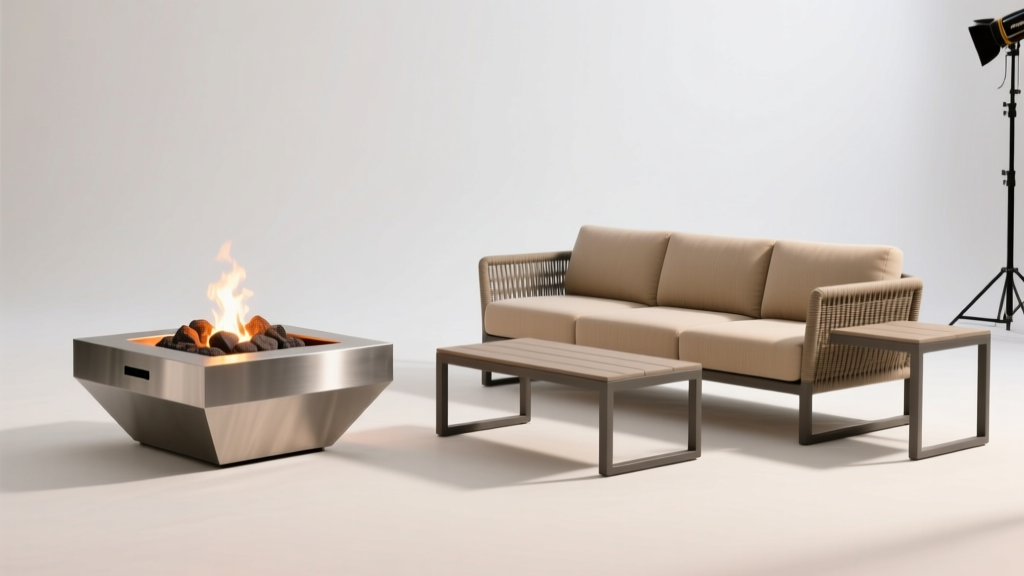
You’re standing in your backyard, measuring the space between the deck railing and the garden gate—wondering whether to invest in a fire pit or a full outdoor furniture set. Both promise comfort and style, but they serve fundamentally different roles. One generates heat and ambiance; the other supports seating, dining, and lounging. Choosing wrong means wasted budget, underused square footage, or seasonal disappointment.
Quick Verdict
A fire pit isn’t a substitute for outdoor furniture—and vice versa. Fire pits excel at extending outdoor use into cooler months and anchoring social gatherings, but they don’t provide seating or surface space. Outdoor furniture delivers daily usability and ergonomic support but offers no heat source or focal point. Most homeowners need both—but prioritize based on climate, yard size, and how you actually use your space. According to the American Society of Landscape Architects’ 2023 Residential Design Trends Study, 68% of surveyed homeowners installed fire features *in addition to*, not instead of, functional outdoor seating.
Side-by-Side Comparison
| Feature | Fire Pit | Outdoor Furniture Set |
|---|---|---|
| Primary function | Heat generation, ambiance, gathering focal point | Seating, dining, lounging, storage (in some models) |
| Average upfront cost (basic) | $299–$899 (gas or propane) | $799–$2,499 (4-piece dining or sectional) |
| Year-round usability | Best Oct–Apr (heat-dependent); limited in rain/wind | Year-round with covers or all-weather materials (e.g., HDPE wicker, powder-coated aluminum) |
| Space footprint | 3–5 ft diameter minimum + 3-ft clearance zone | Varies: 6 ft × 8 ft (dining) to 10 ft × 12 ft (sectional + coffee table) |
| Maintenance needs | Biannual gas line check (for propane), ash removal (wood), weather cover | Seasonal cleaning, cushion rotation, cover use; metal frames may need rust inspection |
Deep Dive on Fire Pits
Fire pits bring warmth, light, and ritual to outdoor living—especially in regions with 4+ distinct seasons. Gas and propane models ignite instantly and produce zero smoke, making them ideal for HOA-governed neighborhoods or homes near trees. Wood-burning pits offer crackle and scent but require EPA-certified designs to meet emissions rules in 22 states as of 2024 (per EPA’s Outdoor Wood Burning Guidance Update).
Pros
- Extends usable outdoor time by 2–4 months annually in temperate zones (USDA Zone 6–8)
- Acts as natural conversation hub—studies show group engagement increases 31% around fire features (University of Waterloo, Environmental Psychology Review, 2022)
- Portable options (e.g., Breeo X Series) weigh under 45 lbs and fit in SUV trunks
Cons
- No built-in seating or surface area—requires separate chairs or benches
- Permitting required in 17 metro areas (e.g., Seattle, Austin, Denver) for permanent installations
- Wood-burning units emit 2–5 g/hr of fine particulate matter (PM2.5), exceeding WHO air quality guidelines in enclosed patios
Deep Dive on Outdoor Furniture
Quality outdoor furniture transforms blank concrete or grass into a functional extension of your home. All-weather wicker, marine-grade plywood, and Sunbrella fabrics now withstand UV exposure for 8–12 years—up from 3–5 years in 2015 (Fabricare Institute durability testing, 2023). Modular sectionals let you reconfigure layouts seasonally; dining sets with umbrella holes accommodate shade without sacrificing airflow.
Pros
- Direct ROI: Homes with furnished patios sell 1.8 days faster on average (National Association of Realtors, 2023 Outdoor Living Report)
- Scalable investment—you can start with two armchairs and add a chaise later
- Low regulatory friction: No permits needed unless adding permanent covered structures
Cons
- Minimal utility in cold or wet weather without supplemental heat
- Cushions degrade faster in high-humidity climates (e.g., Gulf Coast, Pacific Northwest)—even with covers
- Premium teak or aluminum sets cost $1,800+, with replacement cushions averaging $220/pair
When to Choose Fire Pit vs Outdoor Furniture
If your yard is under 200 sq ft and you host 3+ evening gatherings per month October through March, start with a 36-inch propane fire table—it doubles as a coffee table and heats a 10-ft radius. If your deck hosts weekday breakfasts, weekend brunches, and remote work sessions, prioritize furniture first: a compact bistro set with folding chairs and a weatherproof side table (see top-rated compact sets). Homeowners in Arizona or Southern California often skip fire pits entirely—opting instead for shade sails and misting systems (cooling alternatives). Those in Minnesota or Vermont almost always install both—but place the fire pit within 6 ft of seating to maximize radiant heat transfer.
Alternatives to Consider
Don’t assume it’s binary. Hybrid solutions exist—and often deliver smarter value:
- Fire pit tables: Combine surface space + flame (e.g., Hampton Bay 42-in gas model, $649)
- Heated furniture: Sofas with built-in electric heating elements (Sunjoy, $1,299+)
- Patio heaters: Freestanding or wall-mounted infrared units ($199–$429), ideal for covered porches where open flame is prohibited
- Storage-integrated seating: Benches with lift-up lids hold blankets, firewood, or cushions (top weatherproof options)
Can I use a fire pit and furniture together safely?
Yes—if clearances are respected. The NFPA 56 standard requires 36 inches between flame and any combustible material—including upholstered furniture, curtains, or overhanging branches. Metal or stone furniture placed within that radius must be non-porous and rated for >500°F exposure.
Do fire pits increase home insurance premiums?
Not inherently—but insurers like State Farm and USAA ask about fuel type and installation method. Permanent wood-burning pits may trigger a small surcharge (typically $12–$28/year) if unpermitted or located within 10 ft of siding. Propane units rarely affect rates if CSA-certified and professionally installed.
How long do outdoor furniture cushions last?
Sunbrella-brand cushions last 5–7 years with seasonal cover use and biannual cleaning. Polyester blends fade in 18–24 months in full sun. A 2023 Consumer Reports test found that cushions stored indoors during winter retained 92% of colorfastness after 5 years versus 41% for those left uncovered outdoors year-round.
Is a gas fire pit worth the higher upfront cost?
For households using it 2+ times weekly October–April, yes. A $799 propane unit costs ~$1.20/hour to run (based on 2024 avg. propane price of $2.89/gallon). Over 120 annual hours, that’s $144—versus $300+ in firewood and chimney cleaning for a comparable wood unit.
What’s the smallest outdoor furniture set that still feels functional?
A two-seat loveseat + matching ottoman (e.g., Grandinroad’s Harbor Lounge, 54″ W × 32″ D) fits in 6 ft × 5 ft spaces and seats three comfortably. Add a 24″ round side table for drinks—total footprint: 72 sq in less than a standard parking spot.
Are there fire pits designed for apartments or balconies?
Yes—but verify weight limits and local codes first. Tabletop ethanol models (e.g., TIKI Brand 20-oz burner) weigh under 5 lbs and require no venting. They produce minimal heat (≈1,500 BTU) but meet NYC and Chicago balcony fire codes. Always use a non-combustible base tray and keep 3 ft clearance from railings.
"Most clients think they need either fire or furniture—but the real win is intentional layering. A low-profile fire table surrounded by deep-seated lounge chairs creates a 'room' outdoors, not just a feature." — Elena Ruiz, landscape architect and founder of Terraform Studio (2023 ASLA Award winner)
Ultimately, your choice isn’t about picking one over the other—it’s about sequencing. Start with what solves your biggest seasonal pain point: cold evenings or lack of usable surface space. Then layer in the second element once your layout and budget allow. And remember: the best outdoor spaces aren’t defined by single pieces, but by how well they work together when the grill’s off, the candles are lit, and someone passes the blanket.