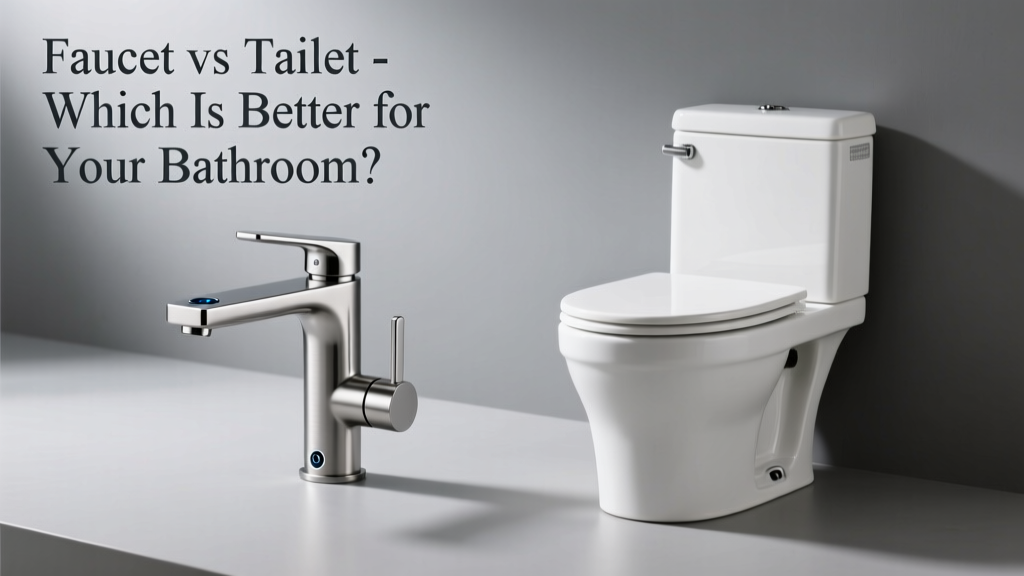
At first glance, comparing a faucet to a toilet might seem like apples and oranges—or more accurately, like comparing a water dispenser to a waste removal system. But homeowners and renovators often face this exact dilemma when prioritizing repairs, upgrades, or budget allocations during bathroom projects.
Quick Verdict
Neither is "better" in absolute terms—they serve fundamentally different functions. A faucet controls clean water delivery for washing; a toilet manages waste disposal and sanitation. Choosing one over the other isn’t about superiority—it’s about matching the right tool to the job at hand. If your sink drips constantly, no amount of toilet efficiency will fix it. If your toilet runs nonstop, upgrading the faucet won’t stop the water bill creep.
Side-by-Side Comparison
| Feature | Faucet | Toilet |
|---|---|---|
| Primary function | Deliver controlled flow of clean water | Remove human waste and wastewater safely |
| Average lifespan (with maintenance) | 15–20 years | 25–30 years |
| Water usage per use | 0.5–2.2 gallons per minute (GPM) | 1.28–1.6 gallons per flush (GPF) for modern models |
| Common failure points | Cartridge wear, aerator clogging, handle looseness | Flapper seal degradation, fill valve failure, tank-to-bowl gasket leaks |
| DIY repair difficulty | Low to moderate (most replacements take <30 min) | Moderate (leak diagnosis often requires disassembly and pressure testing) |
Deep Dive on Faucet
Faucets are precision control devices—designed for repeated, short-duration use with high responsiveness. Modern single-handle cartridge models offer smoother operation and better temperature stability than older compression types.
Pros
- Quick installation or replacement—most fit standard 4-inch or 8-inch centers
- Wide range of finishes (brushed nickel, matte black, chrome) that coordinate with other fixtures
- Smart options available (touchless activation, temperature memory, leak detection)
Cons
- Lower-quality cartridges fail within 2–3 years, causing drip or stiffness
- Hard water builds up inside aerators and valves—requires quarterly cleaning
- Does nothing to address sanitation or code-compliant waste removal
Best for: Kitchen prep zones, bathroom sinks, laundry tubs, bar sinks, and any location requiring precise water control and frequent access. According to the U.S. EPA, 14% of household water usage is from leaks—and faucet drips account for nearly half of those losses (EPA WaterSense Report, 2022).
Deep Dive on Toilet
Toilets are engineered sanitation systems—not just bowls and tanks. They rely on gravity, siphonic action, and precise trapway geometry to evacuate waste reliably while preventing sewer gas intrusion.
Pros
- High-efficiency models (1.28 GPF) cut water use by up to 20% versus older 1.6 GPF units
- Pressure-assisted and dual-flush options improve reliability in low-pressure homes
- Modern elongated bowls and comfort-height seats improve accessibility and user experience
Cons
- Installation requires shut-off, drain-down, wax ring replacement, and leveling—often 2+ hours
- Older cast-iron or cracked porcelain tanks can’t be repaired—only replaced
- Non-standard rough-in distances (e.g., 10-inch instead of 12-inch) limit model choices
According to the Insurance Institute for Business & Home Safety's 2023 report, improperly sealed toilets contribute to 12% of bathroom water damage claims—more than any other fixture except washing machine hoses.
When to Choose Faucet vs Toilet
Choose a faucet upgrade if:
- You’re replacing outdated finishes or addressing persistent dripping
- Your sink feels cramped or lacks reach—consider a pull-down kitchen faucet kitchen faucet height guide
- You want touchless convenience in a high-traffic guest bath
Choose a toilet replacement if:
- Your current unit uses >3.5 GPF (pre-1994) and inflates water bills
- You hear constant running, see phantom flushes, or notice pooling near the base
- You're remodeling and need ADA-compliant height or wall-hung space savings wall-hung toilet pros and cons
Alternatives to Consider
Before choosing either, assess whether the real issue lies elsewhere:
- A failing water heater may mimic faucet temperature inconsistency
- Clogged vent stacks cause slow toilet drainage—not the toilet itself
- Whole-house pressure regulators (set to 40–60 psi) stabilize both faucet flow and toilet fill cycles
- Consider a bidet vs toilet seat combo if hygiene—not fixture replacement—is the goal
Can a faucet and toilet share the same supply line?
No—they connect to separate branches of the cold and hot water distribution system. Toilets only use cold water; faucets draw from both. Mixing them risks cross-contamination and violates UPC plumbing code Section 607.2.
Do smart faucets reduce water use as much as high-efficiency toilets?
Not directly. Smart faucets cut waste through timed shutoff and occupancy sensing—but their impact is smaller in scale. A leaking faucet wastes ~3,000 gallons/year; an inefficient toilet can waste 40,000+ (U.S. Geological Survey, 2021). Prioritize toilet upgrades first if both are aging.
Is it cheaper to repair or replace a leaking faucet versus a running toilet?
Faucet repairs average $25–$60 in parts (cartridge, O-rings); toilet repairs run $15–$45 (flapper, fill valve), but misdiagnosis leads to repeat fixes. Replacement labor is similar ($120–$220), so if either fixture is >10 years old, replacement often costs less long-term.
Can I install a new faucet without shutting off the main water supply?
Yes—if individual shut-off valves under the sink are functional and leak-free. Always test them first. If valves are corroded or seized, you’ll need the main shutoff—and possibly a plumber. Don’t risk cracking a valve trying to force it open.
Why does my new toilet still wobble after installation?
Most commonly, the floor isn’t level or the wax ring wasn’t compressed evenly. Shim kits (like Danco Level-It) solve minor gaps, but if the flange is cracked or set too high/low, you’ll need a repair ring or flange replacement—details covered in our toilet flange repair guide.
"Plumbing isn't about picking the flashiest fixture—it's about solving the right problem with the right tool. A $400 smart faucet won't fix a 10-year-old toilet's failing trap seal." — Maria Chen, Master Plumber & Plumbing Inspector, ICC Certified, 2023
So next time you’re weighing faucet versus toilet, skip the false competition. Ask instead: What’s actually broken? What’s costing money or compromising safety? Then match the solution—not the spectacle.