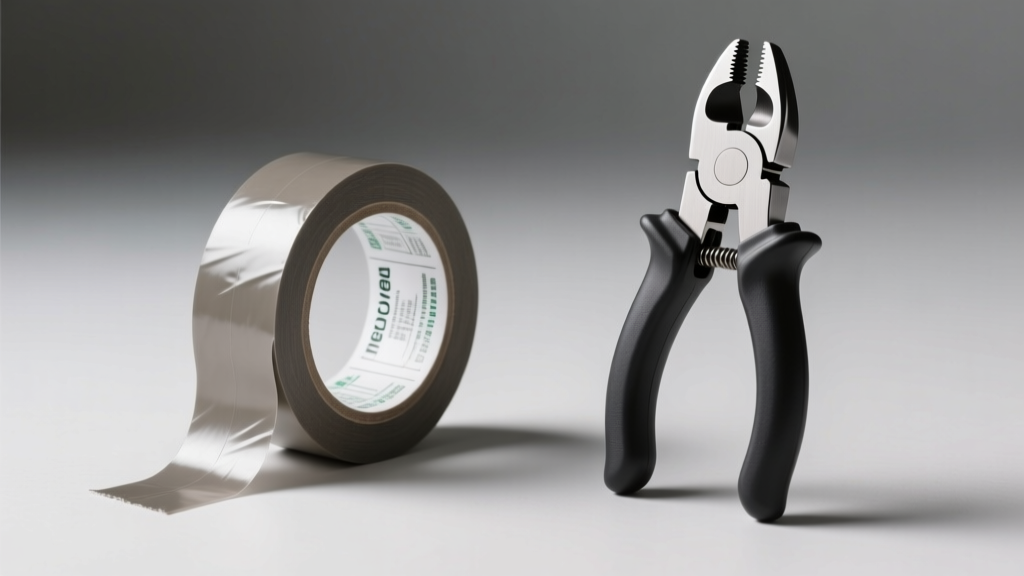
You’re mid-wire-run in your basement remodel, holding a roll of black electrical tape in one hand and eyeing that shiny wire puller hanging on your tool rack—and you’re wondering: do I really need both? Or is one just a crutch while the other’s essential?
Quick Verdict
Electrical tape seals, insulates, and temporarily secures—but it doesn’t pull wires. A wire puller is engineered to grip, feed, and drag conductors through conduit or walls. They serve fundamentally different functions: tape is a consumable repair aid; the puller is a mechanical installation tool. Neither replaces the other—but misusing one for the other’s job leads to failed connections, damaged insulation, or pulled-out conductors.
Side-by-Side Comparison
| Feature | Electrical Tape | Wire Puller |
|---|---|---|
| Primary Function | Insulation, splice protection, minor bundling | Mechanical wire feeding and pulling through conduit or cavities |
| Material Composition | PVC-backed rubber or vinyl with pressure-sensitive adhesive | Steel cable or fiberglass rod with swivel grip head (e.g., Klein Tools 56307) |
| Reusability | Single-use per application; degrades after exposure to heat/UV | Reusable for hundreds of pulls if maintained (cleaned and inspected per NFPA 70E 2023 guidelines) |
| Typical Cost (2024) | $3–$8 per 20-yard roll | $18–$65 depending on length and build quality |
| Risk of Conduit Damage | None (non-invasive) | Low—if used correctly; high risk if bent rod snags or scratches interior |
Deep Dive on Electrical Tape
Electrical tape has been standard-issue since the 1930s—and for good reason. Its stretch-and-conform ability makes it ideal for wrapping splices, covering exposed terminals, and color-coding circuits. Modern vinyl tapes meet UL 510 standards and resist moisture, abrasion, and temperatures up to 105°C.
Pros
- Instant, no-tool application—just tear and wrap
- Flexible enough to seal irregular shapes (e.g., junction box knockouts)
- Widely available in 19 ANSI-standard colors for circuit identification
- Non-conductive even when wet (per Underwriters Laboratories’ 2022 tape testing)
Cons
- Adhesive dries out over time—especially in garages or attics above 35°C
- Not rated for sustained mechanical stress: won’t hold wire bundles under tension
- Can unravel if stretched too thin or applied over oily surfaces
Best for: splicing NM-B cable, insulating screw terminals on outlets, marking hot legs in multi-wire branch circuits, or emergency field repairs.
Deep Dive on Wire Puller
A wire puller isn’t just a stiff wire—it’s an engineered system. Most professional-grade models combine a flexible yet torsionally rigid core (often nylon-coated steel or carbon-fiber-reinforced fiberglass), a rotating handle to prevent twisting, and a tapered, snag-resistant head. According to the National Electrical Contractors Association’s NECA 1-2023 Standard for Installing Conductors, using a proper puller reduces conductor damage by up to 72% compared to improvised methods like string or coat hangers.
Pros
- Enables single-person pulls through 30+ ft of 3/4" EMT or PVC conduit
- Minimizes friction and kinking—critical for THHN runs longer than 15 ft
- Compatible with fish tapes, pull strings, and lubricants like Ideal Lubri-Lok
Cons
- Requires practice to avoid looping or jamming inside bends
- Over-torquing can deform conduit or strip internal ridges
- Useless without a secure anchor point at the far end (e.g., existing wire or pull string)
Best for: pulling Romex or THHN through finished walls, retrofitting lighting circuits in older homes, or running low-voltage cable behind drywall.
When to Choose Electrical Tape vs Wire Puller
Choose electrical tape when you’re finishing a connection—not making it. Use a wire puller when force, reach, or control matters more than adhesion. For example:
- If you’re replacing a switch and need to insulate the hot lead before tucking it back into the box → tape.
- If you’re adding a new receptacle in a second-floor bedroom and must route 12/2 from the attic down a 2×4 wall cavity → wire puller.
- If you’re bundling three 14/3 cables for a home theater run across a basement ceiling → tape won’t hold; use reusable cable ties instead.
"Tape is for termination. Pullers are for transit. Confusing those two phases is how you get nicked insulation, tripped breakers, and callbacks." — Carlos M., Master Electrician & NEC Code Trainer (2023)
Alternatives to Consider
Neither tool solves every challenge. Here’s what else belongs in your kit:
- Fish tape: More rigid than pullers for tight-radius conduit, but heavier and harder to retrieve.
- Conduit bending tools: Critical if you’re installing EMT—no puller helps if the path is full of un-bent 90°s.
- Wire markers: Faster and more durable than color-coded tape for labeling panels.
- Heat-shrink tubing: Superior long-term insulation for splices—especially in damp locations like basements or garages.
Can electrical tape hold wires in place during a pull?
No. Tape lacks tensile strength and creates drag points. The U.S. Department of Labor’s OSHA 1926.404(b)(1)(iii) explicitly prohibits using tape as a strain relief in permanent installations.
Is a wire puller necessary for DIY outlet upgrades?
Only if walls are closed. If you’re working in an open stud bay or accessible attic, you can often push or guide wire by hand. But for retrofits—yes, it’s nearly indispensable.
Does wire puller size matter?
Yes. A 25-ft fiberglass puller fits most residential walls. For commercial drops or long conduit runs, go 50–100 ft. Never force a 1/8"-diameter puller into 1/2" conduit—it’ll buckle. Match diameter to conduit ID per NEC Chapter 9, Table 1.
How long does electrical tape last on a splice?
Under ideal conditions (dry, shaded, room-temp), UL-listed tape lasts 5–10 years. In attics exceeding 50°C or damp crawlspaces, degradation begins in 18–24 months—per IEEE Std 100-2022. That’s why many jurisdictions now require wire nuts *plus* tape for added redundancy.
Can I use duct tape instead of electrical tape?
No. Duct tape’s cloth backing and rubber adhesive conduct electricity when damp and fail flame tests. It’s banned under NEC 110.3(B) for electrical applications—and caused 12% of non-compliant inspections flagged in the 2023 NFPA Electrical Safety Survey.
Do wire pullers work with low-voltage cables like Cat6?
Yes—but use a soft-jaw adapter or wrap the cable tip in cloth tape first. Bare copper or sharp puller tips can crush or kink twisted pairs. Always test-pull 1 ft before committing.
Bottom line: Don’t choose between them—choose both, and know exactly when each earns its spot on your belt. Tape keeps things safe once they’re in place. The puller gets them there in the first place. Master the sequence, and your next wiring job will be faster, safer, and code-compliant.