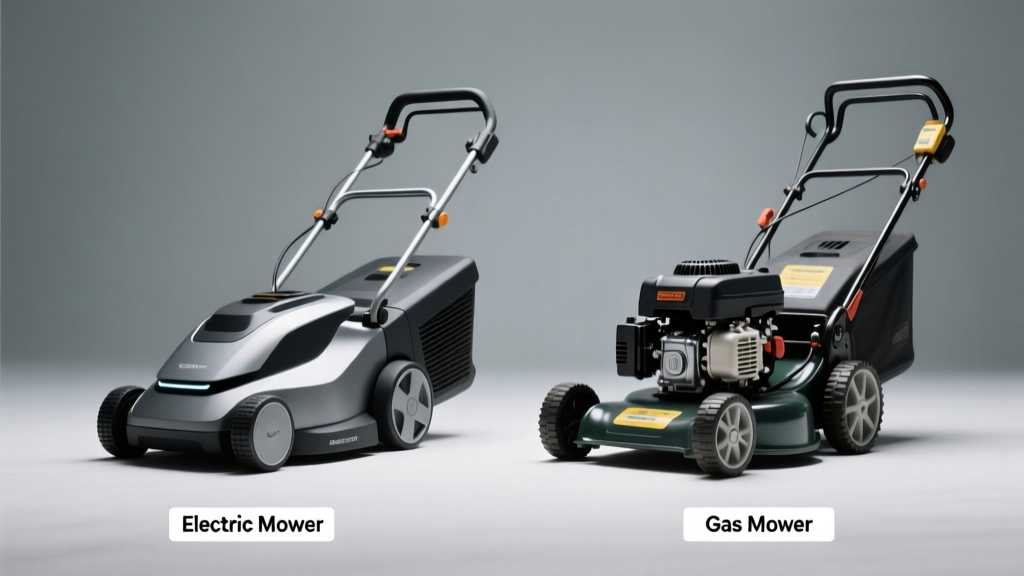
Choosing between an electric mower and a gas mower feels like picking sides in a quiet backyard debate — one side values silence and simplicity, the other trusts raw power and range. With both options improving rapidly, the old assumptions no longer hold.
Quick Verdict
If your lawn is under 1/3 acre, you prioritize low noise and zero tailpipe emissions, and you’re comfortable with cord management or battery charging, an electric mower is likely your best match. For larger properties (½ acre or more), steep slopes, thick or wet grass, or infrequent access to outlets, a gas mower still delivers unmatched flexibility and cutting authority — though at higher long-term cost and environmental impact.
Side-by-Side Comparison
| Feature | Electric Mower | Gas Mower |
|---|---|---|
| Runtime per charge/fill | 30–60 min (battery); unlimited (corded) | 60–90 min per 1-gallon tank |
| Average lifespan | 8–12 years (brushless motor) | 7–10 years (with proper maintenance) |
| Annual fuel/maintenance cost | $5–$15 (electricity + blade sharpening) | $80–$150 (gas, oil, air filter, spark plug, carburetor cleaning) |
| CO₂ emissions (per mow) | 0 g (at point of use) | ~12–18 lbs (EPA estimates for 21-in push mowers) |
| Noise level | 65–75 dB | 90–100 dB |
Deep Dive on Electric Mowers
Modern electric mowers — especially brushless battery-powered models — have closed the performance gap significantly. Most 40V+ units handle medium-thickness cool-season grasses (like Kentucky bluegrass or fescue) up to ⅓ acre without strain.
Pros
- No gasoline, oil changes, or pull-start frustration
- Quieter operation — neighbors rarely complain
- Lower lifetime cost: U.S. Department of Energy data shows electric mowers save $300–$500 over 10 years versus gas equivalents
- Instant start and consistent torque delivery
Cons
- Battery degradation: capacity drops ~20% after 500 cycles (about 3–4 seasons with weekly use)
- Limited runtime on hills or dense growth — some models throttle power when battery dips below 30%
- Corded models restrict mobility; extension cords add tripping hazards and voltage drop beyond 100 ft
Deep Dive on Gas Mowers
Gas mowers remain the workhorses of larger or more demanding lawns. Their internal combustion engines deliver high-torque, variable-speed response ideal for tall, damp, or mixed-grass conditions — think Bermuda transitioning into crabgrass or overgrown clover patches.
Pros
- Refuel in 30 seconds — no waiting for batteries to recharge
- Better hill-climbing ability and sustained cutting power in humid or heavy conditions
- Wider availability of service centers and replacement parts
- Higher resale value for premium walk-behind models (e.g., Honda HRX)
Cons
- Requires seasonal maintenance: carburetor cleaning, fuel stabilizer use, spark plug replacement
- Gasoline volatility means storage risks and EPA-mandated ethanol-blend limitations in some states
- According to the California Air Resources Board’s 2023 report, small off-road engines (including mowers) contribute ~5% of the state’s total smog-forming emissions
When to Choose Electric vs Gas
Choose electric if: your lot is ≤ 0.3 acres, you mow weekly on flat terrain, you live in a noise-restricted HOA, or you own a solar array that offsets electricity use. Top-rated cordless mowers now include self-propelled models with mulching decks and adjustable height levers — features once exclusive to gas.
Choose gas if: you maintain > 0.5 acres, regularly cut overgrown sections after rain, rely on shared equipment across multiple properties, or need a mower that starts reliably at 35°F without battery preconditioning.
Alternatives to Consider
Before committing to either category, weigh these options:
- Robotic mowers: Best for flat, fenced lawns under 0.25 acres (e.g., Husqvarna Automower 430X)
- Reel mowers: Zero emissions, ultra-quiet, ideal for small, fine-grained lawns — but require frequent blade sharpening and struggle with weeds or tall grass
- Commercial-grade battery mowers: Used by municipalities and golf courses — 80V+ platforms with dual-battery hot-swap capability (e.g., EGO Power+ Commercial Line)
How much does it cost to replace a gas mower’s spark plug?
Most standard spark plugs cost $3–$8, and labor at a small shop runs $25–$45. Do-it-yourselfers can swap them in under 10 minutes with a socket wrench and gap tool — our full maintenance checklist walks through timing and torque specs.
Do electric mowers work well on wet grass?
Rarely — and manufacturers explicitly warn against it. Wet grass clings, clogs, and increases slip risk. Battery mowers may also throttle output to prevent motor overheating. Gas mowers handle damp conditions better, but even they struggle with standing water or soaked thatch layers.
How long do electric mower batteries last?
Most lithium-ion batteries retain ~80% capacity after 500 full charge cycles (roughly 3–4 mowing seasons). Store them at 30–50% charge in cool, dry places during winter — never fully depleted or fully charged for extended periods.
"Battery longevity hinges less on age than on thermal stress — avoid charging right after mowing on 90°F days," says Dr. Lena Torres, battery systems engineer at UL Research Institutes (2023).
Can I use a gas mower in a garage or enclosed space?
No — carbon monoxide buildup is extremely dangerous. The CDC reports over 400 unintentional CO poisoning deaths annually in the U.S., many linked to improper small-engine use indoors. Always operate gas mowers outdoors with cross-ventilation.
Are there rebates for buying electric mowers?
Yes — 17 states and over 120 utilities offer incentives. For example, Southern California Edison offers $100–$250 rebates on qualifying battery mowers, and Vermont’s Efficiency Vermont program covers up to 50% of purchase price (max $200) as of 2024. Check our rebate tracker for real-time eligibility.
Neither mower type is universally superior — it’s about matching machine to mission. A half-acre suburban lot with mature oaks and a shaded north slope? Gas still earns its keep. A compact urban yard with a covered patio and rooftop solar? Electric delivers cleaner, quieter, and smarter daily operation. Your lawn isn’t just grass — it’s context. And context decides the tool.