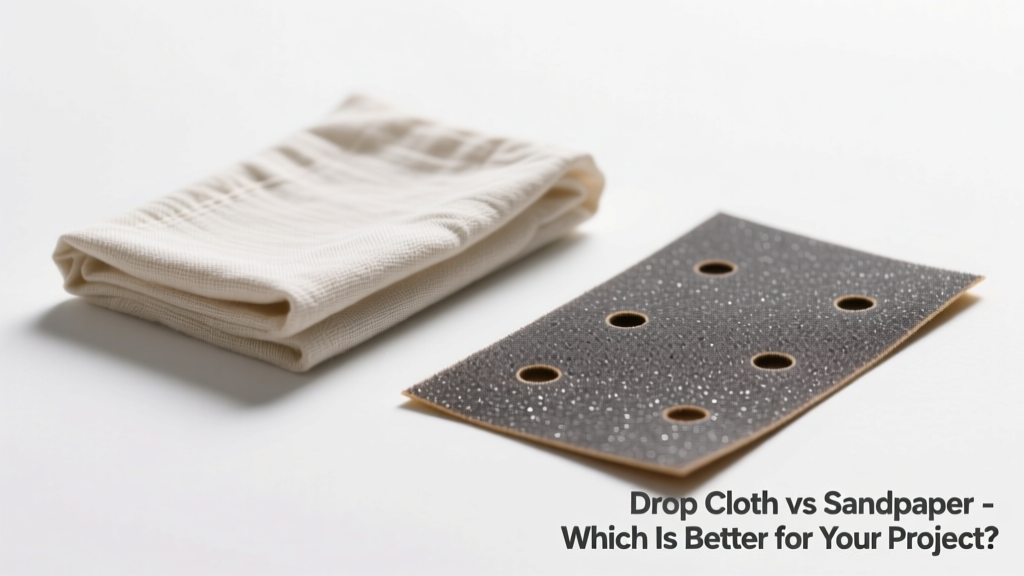
You’re prepping for a home project and see both drop cloth and sandpaper in your cart — or worse, you grab one thinking it’ll do the job of the other. That’s how drywall dust ends up in your coffee maker or your sanded floor gets scratched by a stray staple. They serve entirely different functions, yet confusion persists.
Quick Verdict
Drop cloth and sandpaper aren’t competitors — they’re teammates with non-overlapping jobs. A drop cloth protects surfaces from mess; sandpaper modifies surfaces through abrasion. Using sandpaper as a drop cloth won’t catch paint splatter (it’ll just shred), and a canvas drop cloth won’t smooth wood grain. Choose based on purpose, not preference.
Side-by-Side Comparison
| Feature | Drop Cloth | Sandpaper |
|---|---|---|
| Primary function | Surface protection | Surface abrasion & smoothing |
| Material composition | Cotton duck, polyethylene, or canvas | Backing (paper, film, or cloth) + abrasive mineral (aluminum oxide, silicon carbide) |
| Reusability | Reusable (canvas) or single-use (poly) | Single-use per grit; degrades with pressure and heat |
| Average lifespan (per use) | Hours to days (depends on foot traffic and spills) | 5–20 minutes of active sanding before loading or tearing |
| Cost per unit (typical) | $8–$45 (10' × 12' canvas: $32) | $3–$18 (100-sheet pack, medium grit: $7) |
Deep Dive on Drop Cloth
Drop cloths exist to intercept drips, dust, and debris before they land where they shouldn’t. Canvas drop cloths are heavy, breathable, and grip floors well — ideal under ladders or near wet paint trays. Polyethylene versions are cheaper and waterproof but slip easily and tear at seams.
Pros
- Blocks overspray, sawdust, and wet paint from penetrating subfloors or baseboards
- Canvas types absorb minor spills without pooling (unlike plastic)
- Reusable for months if cleaned and stored flat — reduces long-term material cost
Cons
- Does zero work on surface texture — can’t remove gloss, level filler, or smooth edges
- Poly versions generate static that attracts dust, defeating their purpose during sanding prep
- Edges curl when taped, creating tripping hazards and gaps for debris
According to the National Association of the Remodeling Industry’s 2022 Job Site Safety Report, 68% of accidental finish damage occurred when workers substituted plastic sheeting for proper canvas drop cloths — leading to paint bleed-through and adhesive residue on hardwood.
Deep Dive on Sandpaper
Sandpaper is a precision tool calibrated by grit number: lower numbers (e.g., 40–80) cut aggressively; higher numbers (180–320) refine. Its job isn’t containment — it’s controlled removal. Whether you’re leveling spackle or prepping metal for primer, sandpaper changes the substrate itself.
Pros
- Grit specificity lets you match abrasion to task — e.g., 120-grit for drywall skim coats, 220-grit before staining pine
- Flexible backing (especially hook-and-loop discs) enables orbital sander compatibility and consistent pressure
- Available in shapes (sheets, belts, sponges, discs) for corners, curves, and large flat areas
Cons
- No protective function — generates fine particulate that spreads without containment
- Wears quickly on hard surfaces like cured epoxy or MDF edges, requiring frequent replacement
- Can burn wood or melt plastic if used too aggressively or without cooling intervals
"Sandpaper doesn’t care about your timeline — it only cares about friction and heat. Stop every 90 seconds on softwoods to check for loading and heat buildup." — Mike R., certified IICRC surface prep instructor (2023)
When to Choose Drop Cloth vs Sandpaper
Reach for a drop cloth when: you’re cutting tile near baseboard trim, spraying ceiling texture, or staining cabinets with open doors. Use sandpaper when: drywall mud needs feathering, a door binds in its frame, or you’re removing oxidation from aluminum window frames.
- Painting a room? Drop cloth first — then sandpaper only for touch-ups on scuffed trim
- Refinishing hardwood floors? Sandpaper is mandatory; drop cloth goes *under* the sander’s dust port and around doorways
- Installing backsplash tile? Drop cloth protects countertops; sandpaper may be needed only to deburr cut ceramic edges
Alternatives to Consider
Neither tool solves every problem — sometimes you need hybrids or supplements.
- Painter’s tape for crisp edges where drop cloths can’t seal
- Sanding blocks for hand-sanding control without paper slippage
- Plastic sheeting for total moisture barrier (e.g., bathroom grout sealing), though less durable than canvas
- Microfiber cloths — useful for final dust removal *after* sanding, but never as substitutes for either tool
Can I use sandpaper to clean a drop cloth?
No — sandpaper will shred fabric fibers and embed abrasive particles into the weave, making the cloth unsafe for future use near finished surfaces. Spot-clean canvas with mild detergent and air-dry.
Do I need both for a cabinet refinishing project?
Yes. Lay drop cloth under cabinets to catch stripper drips and sanding dust. Then use 150-grit sandpaper to remove old finish, followed by 220-grit before priming. Skipping either invites rework.
Is there a reusable sanding alternative?
Yes — non-woven abrasive pads (e.g., Scotch-Brite Roloc discs) last 3–5× longer than paper on contoured surfaces and can be rinsed and reused until fraying begins. They’re not drop cloths, though — still require surface protection underneath.
Why does my drop cloth leave lint on freshly painted walls?
Low-grade poly drop cloths shed microplastics, especially when dragged. Upgrade to 10-oz canvas or felt-backed vinyl — both lint-free and static-resistant. Also, avoid walking on drop cloths with dusty boots right after sanding.
Can I sand over a drop cloth?
Never. Sanding directly on canvas or plastic creates dangerous heat buildup, melts backing layers, and launches abrasive shards into the air. Always remove or fully cover drop cloths before power-sanding nearby.
Confusing these tools wastes time, money, and finishes. Respect the drop cloth’s role as guardian — and sandpaper’s as sculptor. Use them in sequence, not substitution. For more on prep workflows, see our guides on drywall sanding tips and painting prep checklist.