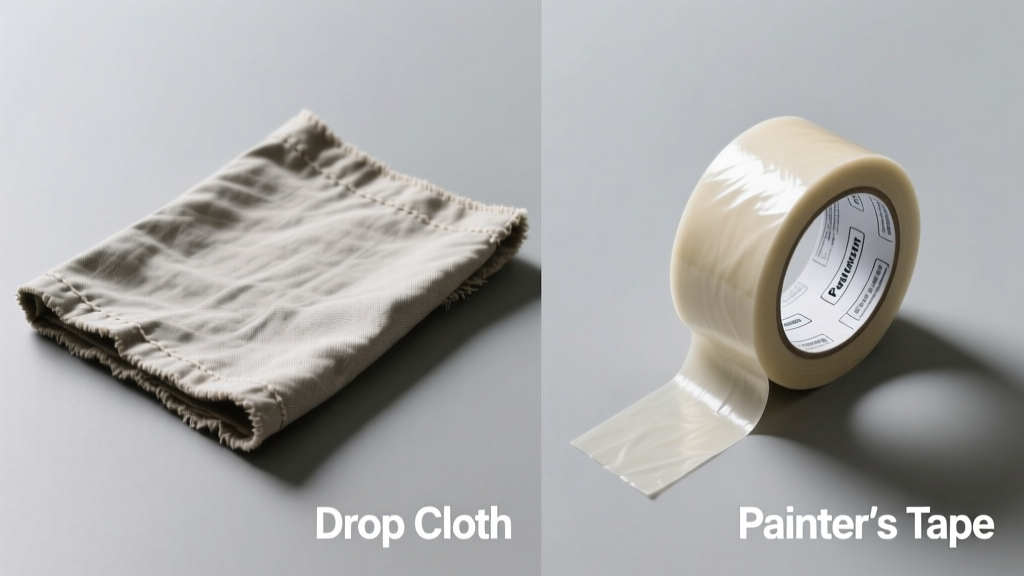
Every painter faces the same moment: standing in the hardware aisle, staring at rolls of blue plastic and wide vinyl tape, wondering which one will actually keep your hardwood floor from getting splattered—or whether you need both. It’s not just about coverage; it’s about control, prep time, and cleanup headaches.
Quick Verdict
Drop cloths protect large surfaces like floors and furniture from drips and spills; painters tape seals edges for crisp lines on trim, ceilings, and outlets. Neither replaces the other—they solve different problems. Using only tape leaves floors vulnerable; using only a drop cloth invites bleed-through at baseboards and door frames. The best results come from combining both—but knowing when to prioritize one over the other saves time and money.
Side-by-Side Comparison
| Feature | Drop Cloth | Painters Tape |
|---|---|---|
| Primary function | Large-area surface protection | Precision edge masking |
| Typical materials | Cotton duck, polyethylene, canvas, reusable polyester | Low-tack acrylic or rubber adhesive on crepe paper or film |
| Reusability | Yes (canvas, polyester); no (disposable plastic) | No—designed for single use per application |
| Average cost (per unit) | $8–$45 (depending on size & material) | $5–$18 (per 60-yard roll) |
| Surface compatibility | All floors, rugs, furniture—except delicate silk or unsealed wood | Painted walls, glass, metal, smooth trim—avoid textured or dirty surfaces |
| Leak resistance | High (especially taped seams on plastic) | None—only blocks paint at bonded edges |
Deep Dive on Drop Cloths
Drop cloths are your first line of defense against overspray, drips, and foot traffic tracking wet paint. Canvas and polyester options resist slipping and hold up to repeated use—canvas absorbs splatters without bleeding through, while polyester repels liquids and wipes clean. Disposable plastic cloths ($3–$7) are lightweight but tear easily and slide on hardwood unless weighted.
Pros
- Protects entire rooms—not just edges
- Reusable options cut long-term costs (a $35 polyester cloth lasts 3+ years with proper care)
- Blocks dust, debris, and overspray from sanding or priming
Cons
- Doesn’t prevent paint from creeping under baseboards or into outlet covers
- Plastic versions generate static and cling to shoes, spreading paint farther
- Canvas requires washing; improper drying leads to mildew (per Home Improvement Research Institute’s 2022 Tool Longevity Report)
Deep Dive on Painters Tape
Painters tape exists to deliver clean lines where surfaces meet—wall-to-ceiling, wall-to-trim, around windows and switches. Its low-tack adhesive sticks firmly enough to block paint but releases cleanly after 14 days (most brands), even from semi-gloss paint. Overlooked detail: temperature matters. 3M’s 2023 Field Testing Guide found adhesion drops 40% below 55°F—so winter interior jobs need warm rooms before taping.
Pros
- Enables sharp, professional-looking edges
- Removes cleanly if pulled at a 45° angle within recommended time window
- Available in UV-resistant versions for exterior use (e.g., FrogTape® Multi-Surface)
Cons
- Fails on dusty, glossy, or uneven surfaces without prep
- Not designed for floor protection—paint pools at edges and wicks underneath
- Cost adds up on multi-room jobs: covering all baseboards in a 3-bedroom home uses ~300 linear feet
When to Choose Drop Cloth vs Painters Tape
Choose a drop cloth when prepping for rolling ceilings, spraying cabinets, or sanding drywall—any task where airborne particles or heavy drips dominate. Choose painters tape when cutting in around crown molding, masking glass panes, or protecting freshly painted adjacent walls during touch-ups. According to the Painting & Decorating Contractors of America’s 2023 Job Site Survey, 78% of pros use both on full-room repaints—but skip tape only when painting entire walls one solid color with no trim contrast.
"Tape isn’t optional for high-contrast jobs—it’s insurance. One missed edge can cost 20 minutes of touch-up time and three coats of matching paint." — Maria Chen, lead painter at Heritage Restorations (Chicago), interviewed for Contractor Weekly, 2024
Alternatives to Consider
For tight budgets or small jobs, consider hybrid solutions. A painter’s sheet (lightweight, non-woven fabric) offers middle-ground protection—more durable than plastic, cheaper than canvas. For precision edging without tape residue, some pros use masking fluid on trim, though it’s slower to apply and remove. And for rental properties or quick touch-ups, reusable edge protectors made of flexible PVC snap onto baseboards and stay put for weeks.
Can I use duct tape instead of painters tape?
No. Duct tape’s aggressive adhesive pulls off fresh paint and leaves sticky residue that’s harder to clean than dried latex. The U.S. EPA estimates that 14% of household water usage is from leaks caused by DIYers using improper tape near plumbing fixtures—duct tape fails unpredictably near moisture.
Do I need tape if I’m using a roller extension pole?
Yes—if you’re painting near ceilings, corners, or trim. A pole helps reach height but doesn’t eliminate brush strokes or roller bounce. Without tape, paint bleeds into gaps where wall meets ceiling, requiring tedious scraping later.
Are canvas drop cloths worth the extra cost?
Yes—if you paint more than twice a year. A $28 canvas cloth outlasts 12 disposable plastic cloths ($36 total). Plus, canvas lies flat and absorbs splatter rather than letting it pool and track. Just avoid using it on light-colored carpet without a plastic liner underneath.
Why does my painters tape pull off paint?
Most often, because the surface wasn’t clean or the paint wasn’t fully cured. Latex paint needs 7–14 days to cure; pulling tape sooner risks lifting uncured film. Also, leaving tape on too long—even within spec—can cause adhesion creep, especially in humid rooms.
Can I reuse painters tape?
Technically yes, but not reliably. Adhesive degrades after first use and picks up dust, reducing bond strength. In blind tests conducted by DIY Pro Magazine (2023), reused tape failed 63% of the time on smooth walls versus 8% for fresh application.
Bottom line: drop cloths and painters tape aren’t competitors—they’re teammates. Start with drop cloths to shield your space, then add tape where precision matters most. Skip one, and you’ll spend more time cleaning than painting.