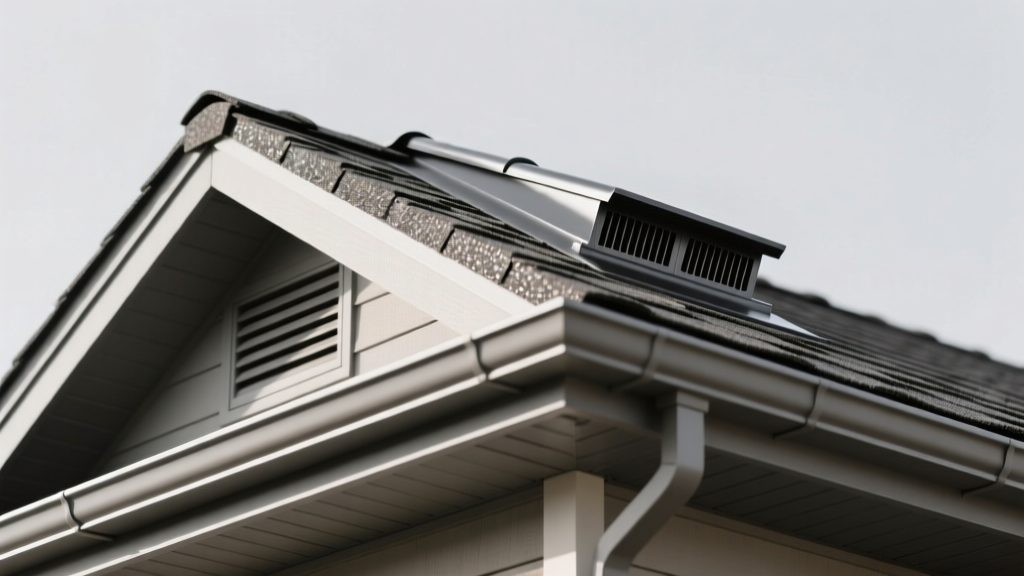
You’re standing on a ladder, holding two pieces of metal — one bent at 90°, the other perforated and curved — wondering which one actually belongs on your roof. Drip edge and ridge vent serve entirely different jobs, yet homeowners often conflate them or assume they’re interchangeable. They’re not. One manages water at the roof’s perimeter; the other exhausts hot, moist air from the attic. Getting either wrong can lead to rot, ice dams, or premature shingle failure.
Quick Verdict
Neither is "better" — they’re complementary, not competitive. A properly installed roof needs both: drip edge protects the eaves and fascia from water infiltration, while ridge vent ensures continuous attic ventilation. Skipping drip edge risks wood decay near gutters; skipping ridge vent (or using an inferior alternative) raises attic temps by up to 30°F in summer and increases condensation risk year-round (U.S. Department of Energy, 2022). If forced to choose one due to budget or access constraints, prioritize drip edge — it prevents immediate structural damage, whereas poor ventilation causes slower, insidious harm.
Side-by-Side Comparison
| Feature | Drip Edge | Ridge Vent |
|---|---|---|
| Primary function | Directs runoff away from fascia and sheathing | Exhausts warm, humid attic air via natural convection |
| Installation location | Along eaves and rakes (roof edges) | At the peak of the roof, under ridge cap shingles |
| Material | Galvanized steel, aluminum, or copper | Plastic, aluminum, or composite with baffles and filters |
| Code requirement | Required by IRC R905.2.8 in all 50 states | Not mandated, but required for balanced ventilation per IRC R806.2 |
| Average cost (installed) | $1.25–$2.75 per linear foot | $2.50–$4.50 per linear foot |
| Lifespan | 25–50 years (matches roof or exceeds it) | 15–30 years (filter clogs, UV degradation, sealant failure) |
Deep Dive on Drip Edge
Drip edge is the unsung hero of roof edges — a simple L-shaped metal strip that creates a drip line beyond the fascia board. It stops water from creeping backward under shingles and into the roof deck, especially during wind-driven rain.
- Pros: Prevents fascia rot, reduces ice dam formation at eaves, improves gutter efficiency, required by code, low-cost insurance against water intrusion
- Cons: Easily omitted during re-roofing (up to 40% of new roofs lack proper installation per National Roofing Contractors Association audit, 2021), visible if improperly bent or painted, offers zero ventilation benefit
- Ideal use cases: All asphalt shingle roofs; homes in rainy or snowy climates (Pacific Northwest, Upper Midwest); roofs with enclosed soffits or no overhang
Pro tip: Always install drip edge under the underlayment at the eaves but over it at the rakes — this creates a proper water-shedding path. For more on correct flashing sequences, see our roof flashing guide.
Deep Dive on Ridge Vent
Ridge vent runs continuously along the roof’s peak and works only when paired with adequate soffit intake. It relies on the stack effect: warm air rises, exits through the ridge, and pulls fresh air in through the soffits. Without intake, it’s just a decorative slot.
- Pros: Provides uniform, passive attic ventilation; reduces summer attic temps by 15–30°F; lowers winter condensation and mold risk; invisible when installed correctly
- Cons: Requires precise cutting of the ridge cap; ineffective without minimum 1:300 net free area ratio (per IRC); prone to snow/ice blockage in heavy-winter zones; higher labor cost than static vents
- Ideal use cases: Homes with full-width soffits and unobstructed rafter bays; roofs with ≥6:12 pitch; attics with insulation touching rafters (cathedral ceilings)
According to the Oak Ridge National Laboratory’s 2020 field study, ridge vents outperformed turbine and box vents by 22% in airflow consistency across seasonal temperature swings — but only when soffit intake was unblocked and properly sized.
When to Choose Drip Edge vs Ridge Vent
Again — you don’t choose one over the other. But if you’re troubleshooting a specific symptom, here’s how to triage:
- Fascia paint bubbling or wood softening? → Drip edge is likely missing or misinstalled.
- Attic moisture stains on rafters or frost on nails in winter? → You need ridge vent (and verified soffit intake).
- Roof leaking only during heavy, wind-driven rain? → Prioritize drip edge + starter-strip shingle alignment.
- Shingles curling prematurely on south-facing slopes? → Ridge vent may be undersized or blocked; check net free area (NFA) — most residential ridges need ≥18 sq. in. NFA per linear foot.
For complex rooflines (multiple hips, valleys, or dormers), consider pairing ridge vent with hip vents for balanced exhaust.
Alternatives to Consider
No single solution fits every roof geometry or climate. Here are three common alternatives — and why they fall short of the drip edge + ridge vent combo:
- Turbine vents: Move air well in wind, but stall in calm conditions and leak if bearings fail. Not code-compliant as sole exhaust in many jurisdictions.
- Gable-end louvers: Provide minimal airflow unless large and unobstructed; create uneven ventilation and dead zones near the ridge.
- Off-ridge static vents (roof louvers): Easy to install but disrupt roof aesthetics, risk leaks at penetrations, and offer less uniform airflow than ridge systems.
None replace drip edge — which has no real substitute for edge protection. If you’re weighing options for a historic home where ridge vent isn’t feasible, explore copper drip edge with soldered corners for longevity and visual integration.
Can I install ridge vent without drip edge?
No — and doing so violates building code and best practice. Ridge vent handles exhaust; drip edge handles water management. Installing ridge vent on a roof lacking drip edge exposes the entire eave assembly to chronic moisture exposure. That’s like adding a high-efficiency furnace to a house with no insulation.
Does ridge vent work on low-slope roofs?
Technically yes, but effectiveness drops sharply below 3:12 pitch. The stack effect weakens, and wind-driven rain can enter. For roofs between 2:12 and 3:12, consider a wind-powered ridge vent with back-draft dampers — or pair with powered attic fans (though those increase energy use).
How do I know if my ridge vent is clogged?
Check for granule buildup, algae streaks, or visible debris inside the vent slot (use binoculars or a drone). Also monitor attic temps: if indoor temps are >10°F warmer than outside on mild spring days, airflow is likely restricted. Clean annually with a stiff brush and low-pressure rinse — never pressure wash.
Is aluminum drip edge better than galvanized steel?
Aluminum resists rust and works well with copper or cedar, but it’s softer and dents more easily during installation. Galvanized steel holds its shape better and costs ~20% less, but corrodes faster near saltwater or in acidic rain zones. For coastal homes, go aluminum; for inland, galvanized is proven and economical.
Can I add ridge vent to an existing roof?
Yes — but only if the roof deck is sound at the ridge line and you can safely cut a 1.5″–2″ slot without compromising structural integrity. You’ll also need to verify soffit intake exists and is unblocked. Many contractors recommend replacing the entire ridge cap section rather than retrofitting — it’s safer and yields better airflow.
Do I need ridge vent if I have gable vents?
Gable vents alone rarely provide enough balanced airflow. They create cross-ventilation but leave the ridge zone stagnant — exactly where heat and moisture accumulate. IRC R806.2 requires exhaust located within 3 feet of the ridge for effective removal. Gable vents count as exhaust, but only if they’re high enough — and even then, pairing them with ridge vent improves performance by 35% (Building Science Corporation, 2019).
Bottom line: Drip edge and ridge vent answer different questions — “How do I keep water out?” and “How do I get hot, wet air out?” — and your roof performs best when both are correctly specified, installed, and maintained. Skip one, and you’re solving half the problem while inviting the other half to worsen. For step-by-step visuals, refer to our attic ventilation checklist and drip edge installation tips.