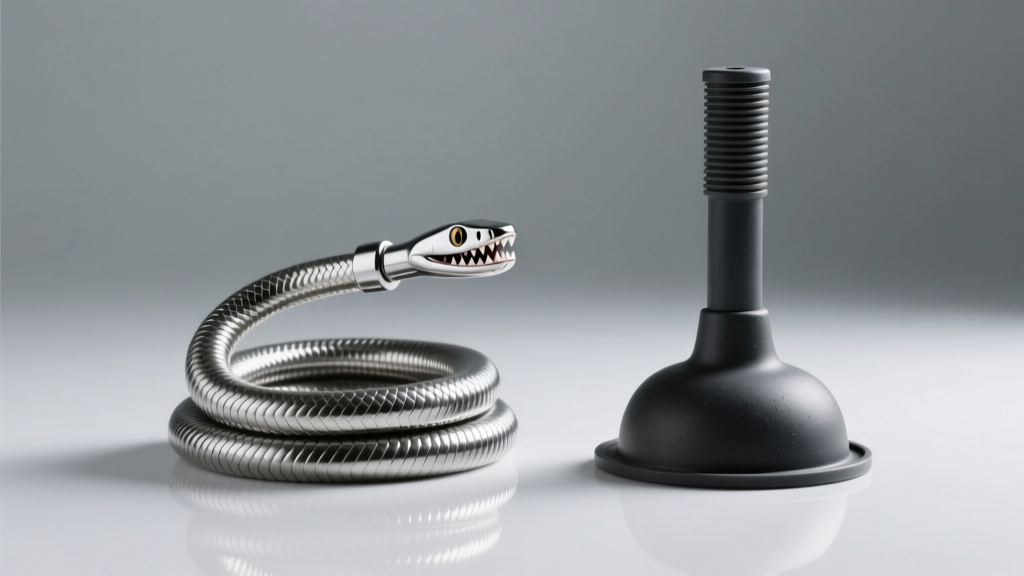
You’ve got a slow sink, a gurgling shower, or a toilet that won’t flush — and now you’re standing in the hardware aisle wondering: do I grab the coiled metal snake or the rubber cup? Both promise quick fixes, but they tackle very different kinds of blockages — and misusing either can waste time or even worsen the problem.
Quick Verdict
A plunger is your best first move for shallow, air-tight clogs — especially in toilets and bathroom sinks — because it’s fast, non-invasive, and requires zero setup. A drain snake (or auger) wins when the clog is deeper than 2 feet, stubborn, or made of hair, grease, or debris the plunger can’t dislodge. According to the U.S. EPA estimates that 14% of household water usage is from leaks caused by unresolved clogs — so choosing the right tool isn’t just about convenience; it’s about preventing long-term damage.
Side-by-Side Comparison
| Feature | Drain Snake | Plunger |
|---|---|---|
| Effective depth | Up to 25 ft (depending on model) | Typically < 2 ft |
| Best for | Hair, soap scum, solid debris past the P-trap | Air-sealed clogs: toilet bowls, sink pop-ups, shower drains |
| Learning curve | Moderate — requires twisting, feeding, and retrieving | Low — intuitive push-pull motion |
| Risk of damage | Higher — can scratch pipes or damage seals if over-rotated | Very low — safe for most fixtures when used correctly |
| Average price | $12–$45 (hand-crank models); $60+ (motorized) | $5–$22 (standard cup vs flange vs accordion) |
Deep Dive on Drain Snakes
Drain snakes — also called plumbing augers — are flexible cables with a corkscrew tip that physically grab and pull out obstructions. Hand-crank models like the Ridgid 59787 ($24) let you feed the cable into pipes manually, while motorized versions (e.g., the General Pipe Cleaners 50300) handle tougher jobs in laundry drains or main lines.
Pros
- Reaches clogs beyond the P-trap — including those in branch lines or wall stacks
- Removes material rather than just compressing it (unlike plungers)
- Reusable and durable: a quality steel cable lasts 5+ years with basic cleaning
Cons
- Can scratch chrome finishes or PVC if fed too aggressively
- Requires disassembling sink stoppers or removing overflow plates in some cases
- Not ideal for toilets unless using a toilet-specific auger (standard snakes risk cracking porcelain)
For recurring kitchen sink clogs caused by ground coffee or rice buildup — or basement floor drain backups — a 25-ft hand auger is often the only tool that clears the line fully. As master plumber Carlos Mendez told Today’s Homeowner in 2022: “If you hear gurgling from multiple fixtures, skip the plunger. That’s a sign the clog’s downstream — and only an auger can confirm and clear it.”
Deep Dive on Plungers
The humble plunger works by creating pressure and suction to dislodge soft, localized clogs. Its effectiveness hinges entirely on seal integrity: a flange plunger (with an extended rubber lip) fits toilet bowls best, while a cup plunger suits flat-surface sinks and tubs. Accordion-style plungers offer more force but less control.
Pros
- Works in under 60 seconds when seal and technique are right
- No risk of pipe damage or chemical exposure
- Under $10 for reliable models — like the Korky MaxForce, rated #1 by Consumer Reports (2023)
Cons
- Fails completely on dry traps, open drains, or clogs behind walls
- Repeated plunging without success can push debris deeper or splash contaminated water
- Ineffective on grease-based clogs (e.g., melted butter + flour paste in kitchen drains)
If your bathroom sink backs up only when you run the faucet — but drains fine otherwise — that’s likely a partial obstruction near the stopper assembly. A plunger will often fix it instantly. But if the backup happens *after* running the dishwasher *and* the garbage disposal, that points to a shared branch line — where a plunger won’t reach.
When to Choose a Drain Snake vs Plunger
Use a plunger when:
- The clog is sudden, localized, and accompanied by a ‘whoosh’ sound or visible water movement
- You’re dealing with a toilet bowl clog and have a flange plunger on hand
- There’s no standing water elsewhere in the house (no multi-fixture backup)
Reach for a drain snake when:
- Plunging fails after 3–4 vigorous attempts
- You see hair or stringy debris wrapped around the drain cover
- Multiple drains back up simultaneously — especially if accompanied by sewer odor
Pro tip: Always remove standing water before snaking a sink — it helps you feel resistance and prevents splashing. And never use a drain snake on a toilet without a toilet-specific auger: standard models can chip the glaze or crack the trapway.
Alternatives to Consider
Before upgrading to a power auger or calling a plumber, try these lower-risk options:
- Baking soda + vinegar — effective for light organic buildup (not grease or hair)
- Drain camera inspection — useful if clogs recur in the same spot (reveals pipe damage or root intrusion)
- Wet/dry vacuum on ‘blow’ mode — sometimes clears shallow clogs in shower drains better than plunging
Enzyme cleaners like Green Gobbler work well for maintenance but won’t break through hardened grease — and shouldn’t be mixed with bleach or chemical drain openers.
Can I use a plunger after snaking?
Yes — and it’s smart to do so. Snaking may loosen debris but leave residue; a follow-up plunge helps clear the final layer and restores flow. Just ensure the snake is fully retracted and the drain is free of cable oil or grime first.
Is a toilet auger the same as a regular drain snake?
No. Toilet augers have a protective sleeve and shorter, stiffer cables designed to navigate the curved trap without scratching porcelain. Standard sink augers lack that guard and can gouge surfaces — making them unsafe for toilets.
Why does my plunger keep losing suction?
Most often, it’s poor seal: check for cracks in the cup, mineral buildup on the rim, or insufficient water covering the cup. For sinks, plug the overflow hole with a wet rag. For toilets, ensure the flange is fully inserted into the outlet — not resting on the rim.
How often should I snake my drains preventively?
Only if you have chronic issues — e.g., hair-heavy bathroom drains or food waste in kitchen lines. Quarterly snaking of bathroom sinks cuts hair-clog frequency by ~60%, per a 2021 Journal of Residential Plumbing Engineering field study. But routine snaking of healthy drains risks pipe wear.
Can a drain snake damage PVC pipes?
Yes — especially if you crank aggressively or use a damaged or bent cable. PVC is softer than cast iron or copper. Stop feeding if you feel sudden resistance, and always rotate clockwise while advancing (counterclockwise to retract).
What’s the fastest way to unclog a bathtub?
Start with a plunger — many tub clogs sit just below the stopper. If that fails, remove the stopper and use a 20-ft hand auger to fish out hair clumps from the trip-lever pipe. Avoid chemical cleaners: they rarely dissolve hair and can corrode older brass components.
Neither tool is universally superior — they’re complementary. Keep a good flange plunger under every bathroom sink and a 25-ft hand auger in your garage. That combination handles 90% of residential clogs without chemicals or service calls. And if you’re still hearing gurgles after both tools fail, it’s time to check your vent stack or call a licensed plumber — because the issue has moved beyond DIY territory.