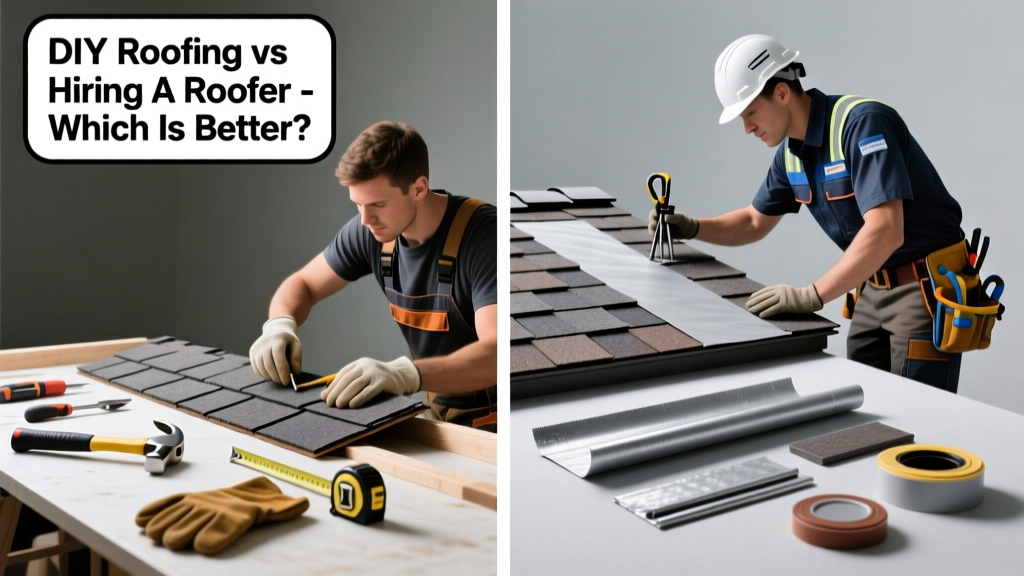
Replacing or repairing a roof is one of the most consequential home improvement decisions you’ll make — and it’s rarely urgent until it’s urgent. You’re weighing sweat equity against peace of mind, savings against safety, and short-term effort against decades of performance. There’s no universal answer, but there are clear trade-offs grounded in real-world outcomes.
Quick Verdict
Hiring a licensed roofer is better for most homeowners — especially for steep, large, or code-regulated roofs — because of liability coverage, warranty enforcement, and compliance with local building codes. DIY roofing can work for small, low-slope repairs (like patching a 4×6 ft flat roof section) if you have carpentry experience, ladder safety training, and at least two helpers. According to the National Roofing Contractors Association’s 2023 Safety Report, 37% of non-professional roof incidents involved falls from heights under 12 feet — meaning even ‘simple’ jobs carry outsized risk.
Side-by-Side Comparison
| Feature | DIY Roofing | Hiring a Roofer |
|---|---|---|
| Average labor cost | $0 (your time + tools) | $2.50–$5.50/sq. ft. (varies by region & material) |
| Material markup | Wholesale or retail (no contractor discount) | 12–25% below retail (bulk supplier access) |
| Workmanship warranty | None (unless manufacturer covers materials only) | 5–15 years (often transferable) |
| Permit handling | You file & schedule inspections (CA, NY, FL require permits for >100 sq. ft.) | Contractor handles all permitting & inspections |
| Insurance coverage | No liability or workers’ comp (you’re fully exposed) | General liability + workers’ comp included |
| Timeline (typical 1,800 sq. ft. asphalt re-roof) | 6–12 days (weekends only, weather-dependent) | 2–4 days (crew works full days, rain delays managed) |
Deep Dive on DIY Roofing
DIY roofing appeals to hands-on homeowners who’ve successfully tackled deck builds, drywall, or HVAC ductwork — not just weekend warriors with a drill and YouTube tutorial. It demands physical stamina, spatial reasoning, and tolerance for unpredictability.
Pros of DIY Roofing
- Upfront cost savings: Avoid $4,000–$9,000 in labor for a midsize roof (U.S. Census Bureau 2022 construction wage data)
- Full control over material selection and scheduling
- Satisfaction of completing a high-impact project yourself
Cons of DIY Roofing
- No recourse if shingles fail early due to improper nailing or underlayment gaps
- Voided manufacturer warranties on many premium products (e.g., GAF requires certified installers for Golden Pledge coverage)
- Home insurance may deny water damage claims if improper installation is cited as cause
DIY makes sense only for minor repairs (e.g., replacing 3–5 damaged shingles on an otherwise sound roof), low-slope garage roofs under 200 sq. ft., or historic homes where matching salvaged materials is easier than sourcing modern equivalents. Roof leak repair DIY is often safer and more realistic than full replacement.
Deep Dive on Hiring a Roofer
A qualified roofer brings calibrated tools, trained crews, and documented processes — plus accountability when things go sideways. But not all contractors deliver equal value. The key is vetting: check their license status via your state’s contractor board (e.g., CSLB in California), verify active general liability insurance, and ask for at least three local references from jobs completed in the last 12 months.
Pros of Hiring a Roofer
- Access to extended warranties (e.g., CertainTeed’s 50-year warranty requires Master Shingle Applicator certification)
- Permit coordination and inspection pass rates above 92% (NRCA 2023 Benchmark Survey)
- Efficient debris removal and job-site cleanup — no dumpster rental logistics
Cons of Hiring a Roofer
- Higher upfront cost — though financing options like roofing loans can ease cash flow
- Variability in crew experience (subcontracted labor isn’t always disclosed)
- Potential for upsells on ventilation or decking that may not be needed
Professional installation is essential for metal, tile, slate, or cool-roof systems — materials that demand specialized fastening, flashing, and expansion allowances. Even asphalt shingle roofs benefit from proper starter strip placement and nail depth calibration, which affects wind uplift resistance.
When to Choose DIY vs Hiring a Roofer
Choose DIY only if all of these apply: your roof pitch is ≤ 4:12; total area is under 150 sq. ft.; you’ve replaced shingles before without leaks; you own a OSHA-compliant ladder stabilizer and fall-arrest harness; and your municipality doesn’t require permits for the scope. Otherwise, hire a pro — especially if your roof has multiple layers (most codes cap at two), skylights, chimneys, or ice dam history.
"A properly installed roof should outlive the house. A poorly installed one — whether DIY or rushed pro work — will cost 3× more over 20 years in repairs, energy loss, and premature replacement." — Dr. Lena Cho, Building Science Advisor, Building America Solution Center (2022)
Alternatives to Consider
Neither extreme fits every situation. Consider hybrid approaches:
- Hire a roofer for tear-off and decking inspection, then DIY the shingle lay (if permitted and safe)
- Use a roofing subscription service like Roofr or Big Roof for free estimates and verified contractor matching
- Apply for a home improvement grant — some municipal programs cover up to 50% of roof replacement for low-income seniors (e.g., HUD’s HOME Investment Partnerships Program)
Can I replace my own roof and still get a warranty?
No — most major manufacturers (Owens Corning, IKO, TAMKO) void full system warranties if installation isn’t performed by a certified contractor. Material-only warranties (typically 15–25 years) may remain, but they exclude labor, tear-off, or consequential damage.
How much does a roofer charge per square?
A ‘square’ equals 100 sq. ft. In 2024, average U.S. rates range from $380–$650 per square for asphalt shingles, depending on roof complexity and regional labor costs. Steep-pitch, multi-level, or cedar-shake roofs push that to $800–$1,200/square. Always get line-item quotes — avoid lump-sum bids that hide scope creep.
Is DIY roofing safe for seniors or people with mobility issues?
No. The CDC reports adults over 65 account for 42% of fatal ladder falls — and roofing adds uneven surfaces, heat stress, and tool-carrying hazards. Even ground-level prep (dragging bundles, cutting shingles) strains knees and backs. Safer alternatives include flat roof repair options using liquid-applied membranes or hiring a specialist for partial sections.
What’s the biggest mistake DIY roofers make?
Skipping proper underlayment or using staples instead of corrosion-resistant nails. According to the Asphalt Roofing Manufacturers Association (ARMA, 2023), 68% of early shingle failures traced to improper fastening — including nail heads driven too deep (breaking shingle seals) or too shallow (allowing wind lift).
Do I need a permit for DIY roofing?
Yes — in 47 states, any roof replacement (not just repairs) requires a building permit, especially if structural decking is replaced or modified. Fines for unpermitted work range from $500–$5,000, and it can block future home sales or insurance claims. Check your county’s website — e.g., Miami-Dade County mandates wind-certified fastening schedules for all re-roofs.
How do I verify a roofer’s license and insurance?
Visit your state’s contractor licensing board site (e.g., cslb.ca.gov for California) and enter their license number. Then request a Certificate of Insurance (COI) directly from their insurer — don’t accept a photo or PDF alone. Confirm it lists ‘general liability’ and ‘workers’ compensation,’ with limits ≥ $500,000 per occurrence.
If your roof has active leaks, missing shingles, or granule loss across more than 25% of its surface, delay the decision-making and prioritize temporary mitigation — like tarping or emergency patching — while you gather quotes or assess skills. Either path demands honesty about your capacity, not just your ambition. Because unlike a botched paint job, a failed roof doesn’t wait for next season to show its flaws.