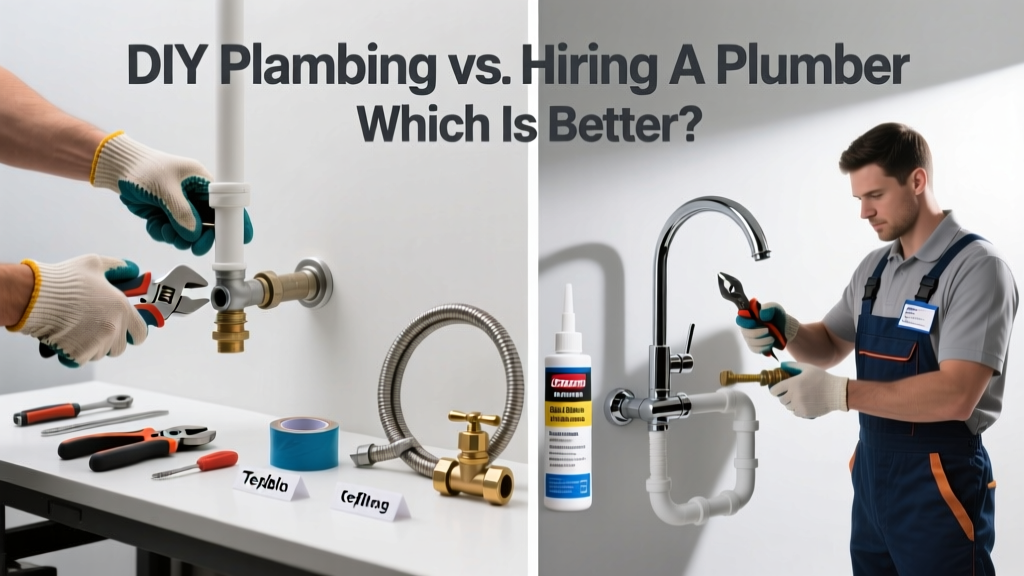
Faced with a dripping faucet, a clogged shower drain, or a running toilet, many homeowners pause: 'Can I fix this myself—or should I call a pro?' It’s not just about saving money; it’s about safety, code compliance, and long-term reliability.
Quick Verdict
For simple, low-risk repairs—like replacing a washer or unclogging a sink—DIY plumbing can save $75–$150 per job and build useful skills. But for anything involving gas lines, water heaters, sewer lines, or permits (e.g., adding a bathroom), hiring a licensed plumber is safer, faster, and often cheaper in the long run. According to the Insurance Institute for Business & Home Safety's 2023 report, 68% of water damage claims linked to DIY plumbing errors involved improper pipe connections or failed solder joints.
Side-by-Side Comparison
| Feature | DIY Plumbing | Hiring a Plumber |
|---|---|---|
| Average cost (typical repair) | $0–$40 (parts only) | $125–$350 (labor + parts) |
| Time investment | 2–8 hours (research + execution) | 30–90 minutes (on-site) |
| Licensing & insurance | Not required (but no legal protection) | Licensed, bonded, insured (required in most states) |
| Warranty on work | None (unless part manufacturer covers it) | Typically 1–2 years labor warranty |
| Risk of code violations | High—especially for permits or concealed work | Low—pros verify local plumbing codes |
Deep Dive on DIY Plumbing
DIY plumbing works best when you’re comfortable using basic tools, reading schematics, and troubleshooting step-by-step. Many hardware stores and YouTube channels offer reliable tutorials—but not all sources are equal. Always cross-check advice against your local building code supplement.
Pros of DIY Plumbing
- Immediate control over timing—you fix it when you want
- No service fees or after-hours premiums
- Builds confidence and transferable home-maintenance skills
- Parts-only cost stays under $50 for 80% of minor repairs (Home Depot 2022 Retail Trends Report)
Cons of DIY Plumbing
- No liability coverage if a mistake floods your basement or neighbor’s unit
- Permit-required jobs (e.g., relocating a sink) may void home insurance if done unpermitted
- Hidden issues—like corroded galvanized pipes—often surface mid-project
- Time spent diagnosing a problem can exceed actual repair time
Deep Dive on Hiring a Plumber
A licensed plumber brings diagnostic tools, code knowledge, and accountability. They also carry workers’ comp and general liability insurance—critical if someone gets hurt on your property. Most reputable plumbers offer same-day service for emergencies like burst pipes or gas leaks.
Pros of Hiring a Plumber
- Guaranteed compliance with IPC (International Plumbing Code) and local amendments
- Access to commercial-grade tools (e.g., sewer cameras, pressure testers)
- Warranty on labor—and often parts—covers callbacks at no extra charge
- Can pull permits and schedule municipal inspections
Cons of Hiring a Plumber
- Minimum service fees ($75–$125) apply even for 10-minute fixes
- Scheduling delays during peak seasons (e.g., winter pipe bursts)
- Variable pricing—some charge by the hour, others flat-rate (always ask before work begins)
- Less hands-on learning for future maintenance
When to Choose DIY vs Hiring a Plumber
Use this decision tree for common scenarios:
- Drip from a single-handle faucet? → DIY (replace cartridge; takes ~20 minutes)
- Toilet won’t stop running? → DIY (adjust flapper or fill valve)
- Slow drain in one sink? → DIY (try a plunger or baking soda/vinegar first)
- Water heater leaking at the base? → Hire a plumber (likely tank failure; risk of scalding or electrical hazard)
- Whole-house low pressure? → Hire a plumber (could indicate main line corrosion or pressure regulator failure)
- Must add a new bathroom or move a fixture? → Hire a plumber (requires permit, rough-in, and inspection)
Alternatives to Consider
Before choosing either extreme, consider hybrid options:
- Plumber consultation services: Pay $75–$120 for an on-site diagnosis and written repair plan—then do the work yourself
- Home warranty plans: Cover labor for covered plumbing failures (but exclude wear-and-tear or DIY damage)
- Property manager partnerships: For landlords, bundled maintenance contracts reduce per-repair costs
Is DIY plumbing safe for PVC pipe repairs?
Yes—if you use proper primer and solvent cement, allow full cure time (2+ hours before pressurizing), and avoid gluing near heat sources. But never glue PVC to metal without a proper transition fitting: thermal expansion mismatch causes joint failure. As master plumber Carlos Mendez advises in Modern Residential Plumbing (2021):
"Glue joints aren’t forgiving. One missed step—poor surface prep, wrong cement, or insufficient hold time—means it’ll leak within six months, not six years."
How much does a plumber charge for a simple faucet replacement?
Most charge $125–$220 flat-rate, including removal, installation, shutoff valve check, and cleanup. DIYers spend $15–$45 on parts—but factor in $0–$60 if you need to rent a basin wrench or buy a torque screwdriver.
Can DIY plumbing void my home insurance?
Yes—if unpermitted work causes water damage or leads to injury, insurers may deny claims. State Farm’s 2023 Underwriting Guidelines explicitly list 'unlicensed plumbing modifications' as a common exclusion trigger.
What’s the biggest DIY plumbing mistake people make?
Over-tightening compression fittings. It seems logical—tighter = better seal—but it deforms the ferrule and guarantees leakage. Use a wrench to snug, then hand-tighten only ¼ turn more. A leak test with food coloring in the trap helps catch subtle drips early.
Do plumbers offer discounts for multiple repairs?
Many do—especially for bundled services like 'bathroom refresh' (faucet, showerhead, and toilet tune-up). Ask about package pricing upfront; some shops discount 10–15% for three or more items completed in one visit.
Are there plumbing tasks that are illegal to DIY?
In 42 states, installing or modifying gas lines, water heaters, or sewer laterals requires a license—even for homeowners. California, New York, and Texas enforce strict penalties, including fines up to $5,000 and mandatory rework by a licensed pro.
There’s no universal answer—only context-specific ones. Start small, document your work, know your limits, and remember: a $40 part replaced correctly beats a $400 emergency call. But when in doubt, trust the person who’s seen 200 similar problems, not the tutorial with 2 million views.