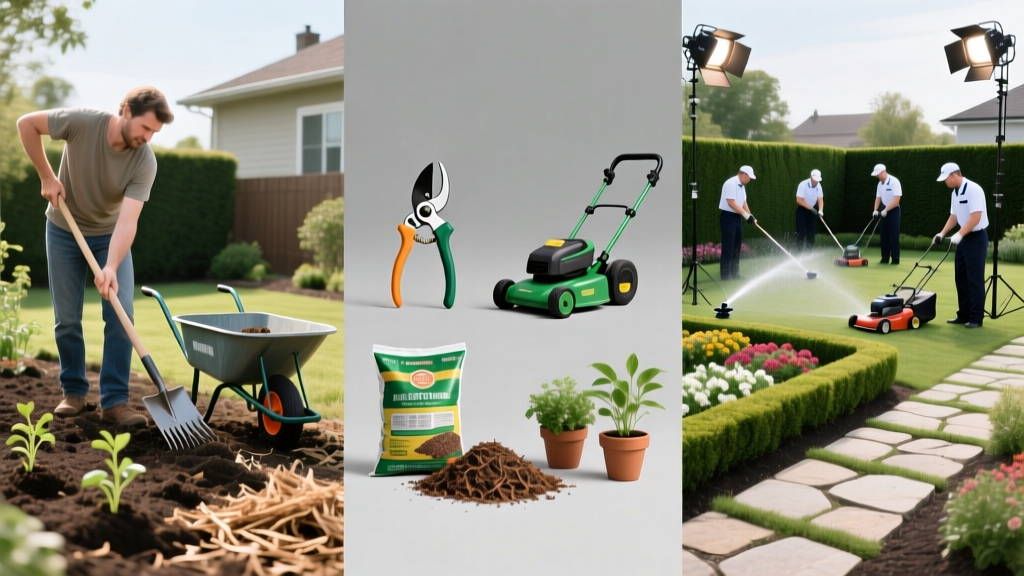
Deciding whether to reshape your backyard yourself or hire someone who does it for a living is rarely just about money—it’s about time, confidence, physical stamina, and how much you value peace of mind when digging near utility lines or installing retaining walls.
Quick Verdict
For small-scale projects—like planting a pollinator garden, laying mulch, or building a simple raised bed—DIY often saves $1,200–$3,500 and builds lasting satisfaction. But for hardscaping (patios, irrigation, drainage), steep slopes, or tight deadlines, hiring a licensed landscaper typically delivers safer, code-compliant results in half the time—and avoids $800+ in rental fees and rework. According to the National Association of Landscape Professionals’ 2023 Industry Report, 68% of homeowners who attempted complex grading or paver installation reported at least one costly error requiring professional correction.
Side-by-Side Comparison
| Feature | DIY Landscaping | Hiring a Landscaper |
|---|---|---|
| Average cost (small yard, 500 sq ft) | $450–$1,800 (materials + tools) | $3,200–$9,500 (labor + materials + markup) |
| Timeline (full project) | 2–12 weeks (weekends only) | 5–18 days (full-time crew) |
| Permit handling | Homeowner responsibility; 73% skip or misfile (IBHS, 2023) | Typically included; pros file with city/county |
| Warranty on work | None (unless vendor offers material warranty) | 1–5 years on labor & materials (varies by firm) |
| Soil testing & drainage analysis | Rarely done; $120–$250 if outsourced | Standard pre-installation step |
Deep Dive on DIY Landscaping
Pros
- Full creative control—you choose every plant, stone, and curve
- No markup: You pay only for materials and tool rentals (e.g., $85/day for a plate compactor)
- Learning payoff: Skills like edging, soil amendment, and drip irrigation setup transfer to future projects
Cons
- Hidden labor: A 10-ft x 12-ft patio takes ~60 hours of physical work—not counting learning curves
- Risk of utility strikes: 400,000+ underground line hits occur annually in the U.S. (Common Ground Alliance, 2023)
- Limited access to commercial-grade plants (e.g., 15-gallon trees) and bulk mulch delivery
DIY shines for low-risk, high-reward tasks: installing native shrubs, building a compost bin, or refreshing flower beds. It’s ideal if you have weekends free, basic hand-tool proficiency, and can source local soil test kits from your soil testing kits guide.
Deep Dive on Hiring a Landscaper
Pros
- Speed and scale: Crews install 400 sq ft of pavers in a single day—same job takes most DIYers 10+ days
- Liability coverage: Reputable firms carry $1M+ general liability insurance (verify via certificate)
- Access to trade discounts: 20–35% off premium turf, boulders, and automated irrigation systems
Cons
- Less granular input: Some firms use templated designs unless you hire a landscape architect separately ($150–$250/hr)
- Payment structure risks: 30% upfront deposits are standard—but never pay 100% before work begins
- Variability in quality: BBB data shows 22% of landscaping complaints involve missed deadlines or unpermitted work
Professional help pays off when your yard has poor drainage, mature tree roots interfering with hardscape, or HOA-mandated design standards. Always request proof of licensing (check your state’s landscape contractor board) and ask for photos of similar jobs in your neighborhood—like this front-yard landscaping ideas gallery.
When to Choose DIY vs Hiring
Choose DIY if:
- You’re comfortable reading contour maps and using a transit level or laser level
- Your project avoids excavation deeper than 12 inches or electrical/water line proximity
- You’ve successfully completed two or more home-improvement projects over 20 hours each
Choose a pro if:
- You need permits for retaining walls over 3 ft tall or stormwater management features
- Your soil test reveals clay content >40% or pH <5.2—requiring expert amendment strategy
- You’re selling your home within 12 months and want ROI-optimized curb appeal (NAR estimates 12–15% value lift from professional front-yard upgrades)
Alternatives to Consider
Hybrid approaches often deliver the best balance:
- Design-only hire: Pay a landscape architect ($2,500–$5,000) for plans and specs, then execute yourself or with a handyman
- Task-based contracting: Hire a pro only for heavy lifting (excavation, paver base, irrigation) and do planting/mulching yourself
- Community resources: Many municipalities offer free site assessments or subsidized rain garden installations—check your rain garden plans page
How much does a landscaper charge per hour?
Hourly rates vary widely: $45–$75 for labor-only crews, $85–$140/hr for firms offering design-build services. Most reputable contractors prefer fixed-price bids—ask for line-item breakdowns covering soil prep, plant replacement guarantees, and cleanup.
Can I get insurance coverage for DIY landscaping damage?
Standard homeowners policies rarely cover DIY landscaping mistakes—like improper grading that causes foundation erosion or accidental utility cuts. Some insurers offer optional endorsements for outdoor improvements, but coverage caps are typically under $5,000 and exclude earth-moving errors.
What permits do I really need for a backyard project?
Retaining walls over 3 ft, decks over 30 inches, and any irrigation tied to municipal water require permits in 47 states. Even gravel pathways may need approval if they alter stormwater flow. The Insurance Institute for Business & Home Safety’s 2023 report found that 61% of unpermitted hardscape projects failed inspection during home resale—delaying closings by 11+ days on average.
How long does good landscaping last?
Well-installed hardscape lasts 20–30 years; poorly compacted base layers fail in under 5. Perennials planted with proper root-zone prep thrive 5–12 years; those installed in unamended clay often die within 18 months. As landscape contractor Maria Chen told Garden Design Magazine (2022): “The difference between a $2,000 and $8,000 patio isn’t the pavers—it’s the 8 inches of engineered base, geotextile fabric, and laser-leveled sand setting bed.”
Is landscaping tax deductible?
Only if used exclusively for business (e.g., home office visibility, rental property curb appeal). IRS Publication 530 (2023) clarifies that residential landscaping is a personal expense—even if it increases home value.
Do landscapers offer seasonal maintenance packages?
Yes—most full-service firms bundle pruning, mulch refresh, irrigation checks, and seasonal color changes. Expect $75–$220/month depending on yard size and service frequency. Compare those costs against your own time: At $25/hr, 3 hours/month of upkeep equals $75—making DIY maintenance financially rational for many.
There’s no universal “better” choice—only the right match for your yard’s conditions, your calendar, and what kind of pride you take in the process. A sloped, rocky lot with clay soil and a June wedding invites professional help. A flat, sandy plot where you’ve already built a shed and repaired gutters? That’s prime DIY territory. Start small, document everything, and don’t hesitate to bring in backup when the auger hits bedrock—or your back hits its limit.