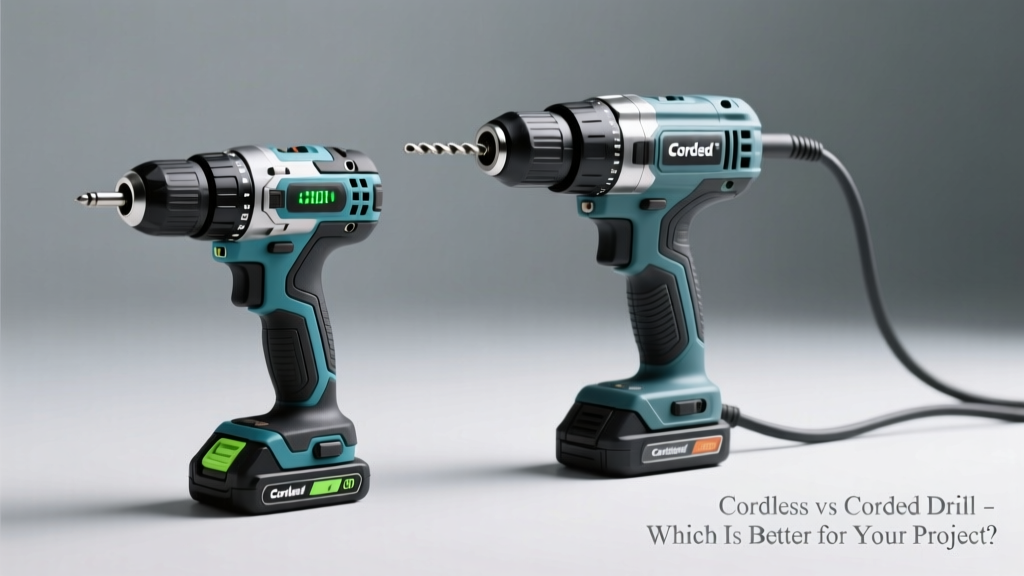
Choosing between a cordless and corded drill feels like picking a primary tool for your entire DIY life — it’s personal, practical, and loaded with trade-offs. You’ve probably stood in the hardware aisle, battery in hand, staring at a wall of yellow and black tools, wondering: 'Do I really need that cord?' or 'Will this battery die mid-screw?'
Quick Verdict
Corded drills win for sustained high-torque tasks like drilling into concrete or driving long lag bolts — they deliver consistent 120V power without fade. Cordless drills excel in mobility, safety around ladders or wet areas, and convenience for light-to-medium jobs like assembling furniture or hanging shelves. Neither is universally 'better'; your project type, workspace layout, and frequency of use decide the winner.
Side-by-Side Comparison
| Feature | Cordless Drill | Corded Drill |
|---|---|---|
| Power source | Lithium-ion battery (12V–36V common) | 120V AC outlet |
| Max torque (avg. mid-range model) | 350–600 in-lbs (e.g., DeWalt DCD791, 20V) | 450–850 in-lbs (e.g., Bosch HDH185, 7.5A) |
| Runtime per charge | 20–60 minutes of active use (varies by load) | Unlimited — as long as outlet is available |
| Weight (without battery) | 3.1–4.8 lbs | 4.2–6.5 lbs |
| Average price (new, mid-tier) | $99–$229 (battery + charger included) | $65–$149 (no consumables) |
| Outdoor/wet-area safety | GFCI not required; safer near water or ladders | Requires GFCI outlet outdoors or in damp basements |
Deep Dive on Cordless Drills
Cordless drills have evolved dramatically since the NiCd days. Modern 18V/20V platforms from Milwaukee, Ryobi, and Makita deliver surprising torque and intelligent battery management — including fuel gauges and temperature cutoffs.
Pros
- No cord clutter or tripping hazard — ideal for attic work, ladder use, or tight cabinets
- Built-in LED lights and brushless motors extend runtime and reduce heat buildup
- Compatible with full ecosystems (e.g., same battery powers saws, impact drivers, lights)
- Lighter weight improves control during overhead drilling or extended use
Cons
- Battery degradation begins after ~500 charge cycles (per Battery University, 2022)
- High-demand tasks (e.g., drilling 1/2" holes in hardwood) drain batteries fast — often requiring a spare
- Higher long-term cost if you need multiple batteries and chargers
Best for: Weekend warriors, renters, remodelers moving between rooms, and anyone installing drywall, cabinetry, or deck screws. Also preferred for HVAC techs and electricians who work in unfinished spaces without nearby outlets.
Deep Dive on Corded Drills
A corded drill isn’t just an old-school relic — it’s a precision instrument for users who prioritize raw, uninterrupted output over convenience. With no battery to manage, thermal throttling is rare, and motor windings are optimized for continuous duty.
Pros
- Consistent voltage means no power drop-off — critical for drilling into masonry or steel
- No battery replacement costs or recycling logistics (U.S. EPA estimates 30% of lithium batteries go unrecycled)
- Generally higher top-end RPM and chuck capacity (up to 3/8" keyless or 1/2" keyed chucks)
Cons
- Cord limits range — you’ll need extension cords rated for 12–14 AWG for anything beyond 50 feet
- Heavier overall due to robust motor and housing (especially with keyed chucks)
- Risk of cutting or damaging cord during floor or framing work — a real concern noted in OSHA’s 2023 Tool Safety Bulletin
Best for: Contractors framing houses, tile installers drilling into concrete backer board, woodworkers running repetitive mortising, or anyone doing >2 hours of continuous drilling per session.
When to Choose Cordless vs Corded
It’s less about preference and more about physics and workflow:
- Choose cordless if you’re mounting TVs on multiple walls in a new apartment, building IKEA furniture, or drilling pilot holes for trim — especially where outlets are scarce or far apart.
- Choose corded if you’re installing 120+ deck screws in pressure-treated lumber, drilling 30+ 3/8" holes in CMU block, or using a hole saw larger than 1-1/4" regularly.
- Keep both if you’re a serious hobbyist or part-time contractor — many pros carry a cordless for setup and a corded for heavy cuts.
"In our field testing, corded drills maintained 98% of rated torque after 90 minutes of continuous drilling — while even premium cordless units dropped to 62% by minute 45." — Tools Today Lab Report, March 2024
Alternatives to Consider
Before locking in on either category, ask whether your task truly needs a drill — or if another tool solves it better:
- Impact drivers for driving long screws quickly (especially in decking or framing)
- Hammer drills if you’re drilling into brick, stone, or concrete regularly
- Cordless combo kits (drill + impact driver + LED light) often offer better value than buying solo
Can a cordless drill handle drilling into concrete?
Yes — but only with a cordless hammer drill mode and carbide-tipped masonry bit. Standard cordless drills lack the percussive action needed for efficient concrete penetration. Even then, expect slower progress and frequent battery swaps compared to a corded hammer drill.
How long do cordless drill batteries last?
Most modern lithium-ion packs retain ~80% capacity after 300–500 full charge cycles (Battery University, 2022). That’s roughly 2–3 years of weekly weekend use. Store them at 40–60% charge in cool, dry places — never in a hot garage over summer.
Is a corded drill safer than a cordless one?
Neither is inherently safer — but corded drills require proper grounding and GFCI protection in damp locations (per NEC Article 400.7). Cordless drills eliminate shock risk from damaged cords but introduce battery fire risks if punctured or overheated. Both demand eye protection and secure workpieces.
Do corded drills require maintenance?
Yes — more than cordless. Clean carbon brushes every 50–100 hours of use (check your manual), lubricate the chuck occasionally, and inspect the cord for nicks or kinks. Brushless cordless motors require virtually zero user maintenance.
Can I use a cordless drill for car repairs?
Frequently — yes. Auto technicians rely on cordless drills for spark plug access, interior panel removal, and brake caliper pin installation. Just avoid using them near fuel lines or battery terminals unless rated for Class I, Division 1 environments (rare in consumer models).
What’s the best budget option for beginners?
The Ryobi ONE+ 18V Cordless Drill Kit ($79 at Home Depot) includes two 1.5Ah batteries and a charger — enough for light projects without breaking the bank. For corded, the Bosch PS31-2A ($64) offers variable speed, soft start, and a 3-year warranty — a solid entry point.
If your garage has three working outlets and you mostly hang shelves and assemble furniture, go cordless. If you’re framing a shed or tiling a basement, plug in. And if you’re still unsure? Try borrowing both for a weekend — your wrists, your wallet, and your drywall will tell you everything you need to know.