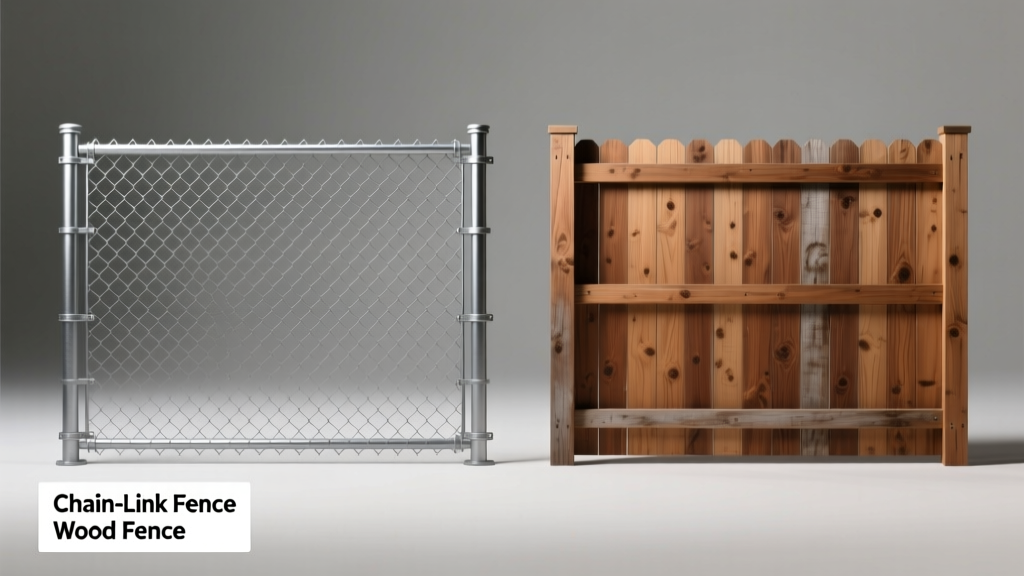
Choosing between a chain link fence and a wood fence isn’t just about looks — it’s about security, maintenance, HOA rules, and how long you plan to stay in your home. Both options solve basic needs like boundary definition and pet containment, but they diverge sharply on privacy, curb appeal, and lifetime value.
Quick Verdict
Chain link wins for affordability, speed of installation, and low-maintenance security — especially for rental properties or backyards where visibility isn’t an issue. Wood fences excel when privacy, aesthetics, or property value matter most, though they demand more upkeep and cost 2–3× more upfront. According to the U.S. Census Bureau’s 2023 American Housing Survey, 37% of single-family homes with fencing use wood, while 22% use chain link — reflecting their distinct roles in residential planning.
Side-by-Side Comparison
| Feature | Chain Link Fence | Wood Fence |
|---|---|---|
| Upfront Cost (per linear foot) | $10–$20 (galvanized, 4–6 ft) | $25–$65 (pressure-treated pine to cedar) |
| Lifespan | 20–30 years (with vinyl coating, proper tensioning) | 15–25 years (cedar/redwood); 10–15 years (untreated pine) |
| Installation Time | 1–3 days for 100 ft | 3–7 days for 100 ft (including post-setting, drying, staining) |
| Privacy Level | None (open mesh) | Full (solid board or shadowbox styles) |
| Maintenance Frequency | Every 5–7 years (tighten hardware, touch up rust) | Every 2–3 years (stain/seal), plus annual inspections for rot or warping) |
| HOA Approval | Often restricted in front yards; commonly allowed in back/side | Widely accepted, but design/material may be regulated |
Deep Dive on Chain Link Fence
Chain link is engineered for function over form. Its woven steel wire mesh — typically 9- or 11-gauge galvanized steel — resists cutting and climbing better than many assume. Vinyl-coated versions add corrosion resistance and come in black, brown, or green, softening the industrial look slightly.
Pros
- Lowest installed cost among permanent fencing options
- Quick to install — posts set in concrete, fabric unrolled and stretched with a come-along tool
- Wind-permeable design reduces lateral load in high-wind zones (critical in coastal or prairie areas)
- Fire-resistant and non-combustible — a plus in wildfire-prone regions per NFPA 1144 (2022)
Cons
- No visual or acoustic privacy — not suitable for pool enclosures requiring ASTM F1951 compliance
- Vulnerable to sagging if posts shift or tension bars loosen over time
- Can appear institutional or temporary without added features like slats or ivy coverage
Best for: Rental properties, dog runs, tennis courts, construction site perimeters, and suburban backyards where neighbors are distant or privacy isn’t prioritized. Check local height ordinances — many municipalities cap chain link at 6 ft in residential zones.
Deep Dive on Wood Fence
Wood offers unmatched versatility in style — from classic picket to modern horizontal cedar, board-on-board, or lattice-topped privacy designs. Species matter: pressure-treated pine is budget-friendly but prone to checking and fading; western red cedar and white oak offer natural rot resistance and rich grain patterns.
Pros
- Provides full visual and noise-blocking privacy
- Boosts perceived property value — Remodeling Magazine’s 2023 Cost vs. Value Report shows wood fence replacement recoups 65.8% at resale
- Customizable height, stain color, gate hardware, and decorative caps
- Biodegradable and renewable — especially when sourced from FSC-certified mills
Cons
- Higher labor cost — skilled carpenters charge $35–$60/hr, and precise post alignment is critical
- Susceptible to moisture damage: The U.S. Forest Service estimates 40% of premature wood fence failure stems from improper post drainage
- Requires resealing every 2–3 years in sun-heavy or rainy climates
Ideal for: Homeowners planning to stay 7+ years, neighborhoods with strict aesthetic guidelines, pool enclosures needing self-latching gates, and properties where curb appeal directly impacts marketability. For longevity, pair with gravel-filled post holes and flashing at the soil line — a tip endorsed by the Western Red Cedar Association’s 2022 Installation Guide.
When to Choose Chain Link vs Wood Fence
Opt for chain link if you need fast, affordable containment for dogs or tools — say, installing a 120-ft backyard perimeter before summer. Choose wood if you’re replacing a rotted fence in a historic district, adding a backyard oasis with a hot tub, or responding to a neighbor’s privacy complaint. Budget constraints also steer decisions: A 150-ft wood fence averages $5,200 installed (HomeAdvisor 2024 data), while the same length in chain link runs $1,800–$2,600.
"Most homeowners underestimate how much wood fence maintenance compounds over time — especially in humid climates. If you won’t stain it yourself, budget for professional service every other year, or consider composite as a middle-ground option." — Sarah Lin, certified fencing contractor and NAHB Remodeling Council member (2023)
Alternatives to Consider
Neither option fits every need. Vinyl fencing mimics wood’s privacy and clean lines with near-zero upkeep but costs ~20% more than mid-tier wood. Aluminum offers modern minimalism and rust-free durability at $28–$42/ft — great for pool decks or contemporary homes. For eco-conscious buyers, bamboo fencing provides rapid renewability and tropical texture, though lifespan rarely exceeds 10 years without UV stabilizers.
Before deciding, review your local permit requirements and consult your HOA’s architectural control committee — some ban chain link entirely, while others mandate specific wood species or stain colors. Also compare quotes that itemize labor vs. materials: one contractor may quote $32/ft for cedar, another $41/ft — the difference often lies in grade selection and gate reinforcement.
How long does a chain link fence last in snowy climates?
In northern regions with freeze-thaw cycles and road salt exposure, galvanized chain link lasts 15–20 years — 5–10 years less than in dry climates. Vinyl-coated versions fare better, but avoid aluminum-tipped tension bars, which corrode faster near de-icing chemicals (per ASTM B117 salt-spray test data, 2021).
Can I stain or paint a chain link fence?
Technically yes, but it’s rarely advised. Paint doesn’t bond well to galvanized metal without acid etching and primer — and even then, chipping occurs within 12–18 months. Vinyl coating is the only durable color option, applied during manufacturing.
Does wood fence installation require footings below frost line?
Yes — in all USDA Hardiness Zones 4 and colder, posts must extend below local frost depth (e.g., 42 inches in Minneapolis, 30 inches in Cincinnati) and be set in concrete with gravel base for drainage. Skipping this causes heaving and misaligned panels.
Are there privacy-enhancing add-ons for chain link?
Absolutely. Vinyl privacy slats slide into the mesh diamonds, blocking 90% of visibility and reducing wind load by ~40%. They cost $3–$6/ft installed and come in 10+ colors. Alternatively, train climbing roses or Boston ivy — but allow 2–3 growing seasons for full coverage.
How do insurance companies view each fence type?
Neither affects premiums directly, but insurers note wood fences near structures can fuel fire spread — some CA insurers now ask for defensible space clearance photos. Chain link poses no fire risk but may raise liability flags if poorly maintained (e.g., exposed sharp ends). Document repairs annually.
What’s the most cost-effective way to upgrade an old chain link fence?
Add 2-ft-high privacy slats + replace rusted top rails and tension bars. That typically costs $5–$8/ft — far less than full replacement — and extends functional life by 8–12 years. Pair with powder-coated gate hinges for smoother operation.
If your priority is quick, lean, and functional — chain link delivers. If you want warmth, seclusion, and lasting character — wood remains hard to beat. Neither is universally ‘better,’ but one is almost certainly better for your lot, lifestyle, and timeline. Download our printable fence comparison chart to weigh trade-offs side-by-side before calling a contractor.