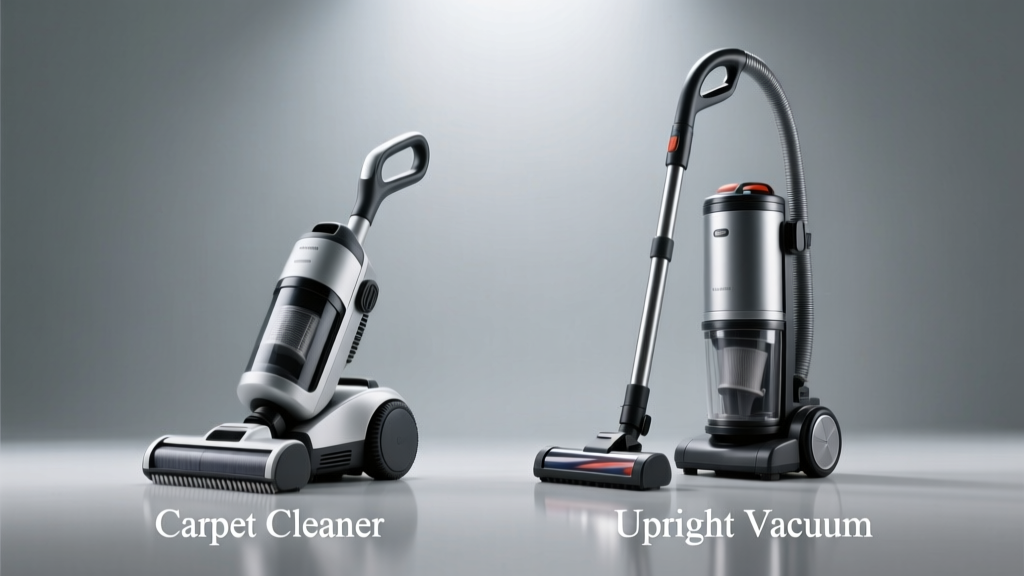
Choosing between a carpet cleaner and an upright vacuum feels like picking between a surgeon and a paramedic: both handle dirt, but they’re built for entirely different jobs. One lifts surface debris daily; the other extracts deep-set grime, stains, and allergens twice a year. Confusing them leads to frustration — or worse, damaged fibers and wasted money.
Quick Verdict
Use an upright vacuum for daily upkeep on low-pile carpets and area rugs; reserve a carpet cleaner for quarterly deep cleans, pet accidents, wine spills, or homes with allergy sufferers. Neither replaces the other — they’re complementary tools in a complete floor care system. According to the Carpet and Rug Institute’s 2022 Maintenance Guidelines, vacuuming 2–3 times weekly extends carpet life by up to 40%, while professional-grade extraction every 12–18 months prevents soil buildup that dulls fibers and traps odors.
Side-by-Side Comparison
| Feature | Carpet Cleaner | Upright Vacuum |
|---|---|---|
| Cleaning method | Hot-water extraction (spray + suction) | Dry suction + rotating brush roll |
| Best for | Stains, odors, embedded grit, allergen removal | Dust, pet hair, crumbs, surface lint |
| Drying time | 6–12 hours (varies by humidity & airflow) | Immediate — no moisture involved |
| Average price (new) | $150–$400 (rental: $35–$60/day) | $120–$550 (cordless models start at $99) |
| Weight & portability | 15–25 lbs; bulkier, often two-tank design | 12–22 lbs; swivel steering, onboard tools |
| Filter type | Reusable foam or mesh filters (requires rinsing) | HEPA or cyclonic; some washable, many disposable |
Deep Dive on Carpet Cleaners
Carpet cleaners — also called steam cleaners or extraction units — force hot water and detergent into carpet fibers, then immediately vacuum the slurry back out. They don’t actually use steam (despite the name); most operate at 120–140°F, well below boiling. Their strength lies in dwell time and extraction power: the Bissell ProHeat 2X Revolution, for example, delivers 15% more suction than its predecessor, per Consumer Reports’ 2023 Appliance Testing Report.
Pros
- Removes up to 95% of embedded pet dander and dust mite allergens (per Allergy UK’s 2021 home appliance review)
- Breaks down organic stains (urine, coffee, red wine) that vacuums leave behind
- Restores pile height and color vibrancy when used annually
Cons
- Requires 6+ hours to fully dry — risky in basements or humid climates
- Over-wetting can cause mold under padding if not extracted thoroughly
- Not safe for wool, silk, or antique rugs without manufacturer approval
Deep Dive on Upright Vacuums
Upright vacuums rely on high-speed brush rolls and sealed suction paths to lift debris from the top third of carpet fibers. Modern models like the Shark Navigator Lift-Away or Miele Complete C3 include motorized pet tools, LED headlights, and sealed HEPA filtration — critical for asthma management. The U.S. EPA estimates that 14% of household water usage is from leaks, but indoor air quality suffers far more from unvacuumed dust: a single gram of carpet dust contains up to 100,000 dust mites and fragments, per a 2022 study published in Indoor Air.
Pros
- Effective on all carpet types — including berber and frieze — when brush height is adjusted
- No drying time or chemical residue; safe for kids and pets immediately after use
- Many include detachable canisters for stairs, upholstery, and car interiors
Cons
- Fails to remove sticky residues or deeply embedded sand (common near entryways)
- Brush rolls can snag long fibers or pull loops in delicate rugs
- Lower-end models lose suction after 6–12 months due to clogged filters or worn belts
When to Choose a Carpet Cleaner vs Upright Vacuum
Choose a carpet cleaner when: you’ve had a pet accident within the last 72 hours; your living room rug looks dull despite weekly vacuuming; or your HVAC filter turns gray after one month (a sign of airborne particulates escaping the carpet). Choose an upright vacuum when: you vacuum high-traffic hallways daily; you own a shedding dog and need quick hair pickup; or you rent and can’t risk moisture damage to subflooring.
"Vacuuming is preventive maintenance. Carpet cleaning is restorative medicine. Skip either, and you’re shortening carpet life by years." — Janice Druyan, certified IICRC Master Textile Cleaner (2023)
Alternatives to Consider
If neither fits your space or budget, consider these middle-ground options:
- Canister vacuums with powerhead attachments — lighter than uprights and better on stairs and bare floors
- Hard-floor cleaners with carpet mode (e.g., Bissell CrossWave) — decent for light surface cleaning on low-pile rugs
- Professional cleaning services — $100–$250 for 3–5 rooms; includes deodorizing and protectant application
- Robot vacuums with carpet boost — ideal for daily maintenance but lack deep-cleaning capability
Can I use a carpet cleaner as my only floor cleaner?
No. Running a carpet cleaner weekly risks over-saturation, fiber breakdown, and mildew. It’s designed for intermittent, targeted use — not daily debris removal. You’ll still need a dry vacuum for routine upkeep.
Do upright vacuums work on hard floors too?
Most modern uprights have a hard-floor setting that disables the brush roll to prevent scratching. However, they’re less effective than canister or stick vacuums on tile or hardwood — especially for fine dust and pet hair clinging to smooth surfaces.
How often should I deep-clean carpets?
The Carpet and Rug Institute recommends every 12–18 months in low-traffic homes, and every 6–12 months in homes with pets, children, or allergy sufferers. High-traffic commercial spaces may require quarterly cleaning.
Is renting a carpet cleaner worth it?
Renting makes sense for one-time needs (move-in/move-out, post-renovation cleanup) or infrequent use. But if you clean carpets twice yearly, buying a mid-tier unit ($220–$320) pays for itself in 2–3 years — plus you avoid rental deposit fees and scheduling hassles.
Will a carpet cleaner remove pet odor permanently?
Only if it reaches the source: urine crystals in padding or subfloor. Surface-only cleaning masks odor temporarily. For persistent smells, pair extraction with an enzymatic pre-treatment (like Nature’s Miracle) and ensure full drying — or consult a pro for padding replacement.
Do I need special detergent for my carpet cleaner?
Yes. Using non-formulated detergents (dish soap, laundry detergent) leaves sticky residue that attracts dirt faster. Stick to low-foaming, pH-neutral formulas — many brands now offer plant-based, fragrance-free options compatible with all major machines.
Bottom line: Your carpet cleaner isn’t your vacuum’s replacement — it’s its partner. Use the upright daily to catch what falls, and the cleaner seasonally to reset what sinks. Together, they keep fibers resilient, air cleaner, and your vacuum’s filter from choking on what should’ve been extracted months ago.