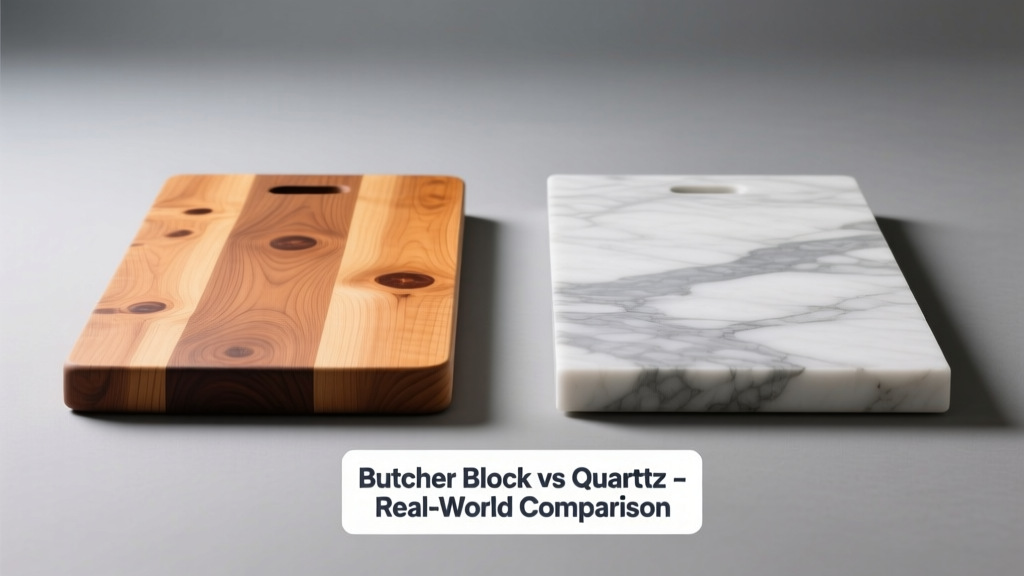
Facing a kitchen remodel? You’re weighing two popular but fundamentally different countertop materials: warm, natural wood versus engineered, ultra-dense stone. Butcher block and quartz each solve real problems — yet they demand opposite care routines and suit very different lifestyles.
Quick Verdict
Quartz wins for low-maintenance durability in high-traffic or moisture-prone kitchens; butcher block excels where food prep is central and aesthetic warmth matters more than zero upkeep. Neither is universally 'better' — the right pick depends on how you cook, clean, and live. According to the National Kitchen & Bath Association’s 2023 Cost vs. Value Report, quartz delivers 78% ROI at resale, while wood countertops average just 54% — a meaningful gap if you plan to sell within 7 years.
Side-by-Side Comparison
| Feature | Butcher Block | Quartz |
|---|---|---|
| Material origin | Solid hardwood (maple, walnut, cherry) | 90–94% ground quartz + polymer resin |
| Average installed cost (per sq ft) | $65–$140 | $85–$160 |
| Heat resistance | Low (scorch risk above 250°F) | Moderate (short-term up to 300°F) |
| Stain resistance | Poor (requires oiling every 4–6 weeks) | Excellent (non-porous surface) |
| Lifespan with proper care | 20–30 years (refinishing extends life) | 25+ years (no refinishing needed) |
Deep Dive on Butcher Block
Butcher block brings tactile authenticity to kitchens — especially islands or dedicated prep zones. Its dense grain absorbs knife impact, protecting blades better than any hard surface. That same softness makes it vulnerable: standing water warps edges, acidic spills etch the surface, and unsealed cuts invite bacteria.
Pros
- Natural antibacterial properties (especially hard maple — per University of Wisconsin-Madison Food Microbiology Lab, 2021)
- Repairable: light scratches and stains sand out; deep gouges refinish with mineral oil
- Warm, organic look that pairs well with farmhouse sinks, open shelving, and matte black fixtures
Cons
- Requires weekly oiling for first month, then every 4–6 weeks long-term
- Not suitable for dishwashers, sinks, or stovetops without robust edge sealing and overhangs
- Expands/shrinks seasonally — gaps may appear near seams in dry winter air
Deep Dive on Quartz
Quartz countertops behave like a solid slab of stone but perform like modern engineering: non-porous, consistent in color, and virtually indestructible under daily use. Brands like Cambria, Silestone, and Caesarstone offer 15-year warranties covering stains, cracks, and fading — a level of assurance no wood product can match.
Pros
- No sealing, no oiling, no refinishing — wipe with mild soap and water
- Resists chips, scratches, and UV fading (critical for sun-drenched breakfast nooks)
- Wide range of veining patterns mimicking marble, granite, or concrete — see our quartz pattern guide
Cons
- Cannot withstand direct contact with hot pans — thermal shock may cause microfractures
- Seams are visible and require professional matching (unlike seamless wood glue-ups)
- Recycled content varies by brand; some contain only 10% post-consumer quartz (per UL Environment’s 2022 Material Health Report)
When to Choose Butcher Block vs Quartz
Choose butcher block if you bake daily, chop herbs constantly, or want a countertop that ages gracefully — like the worn oak island in a farmhouse kitchen. Choose quartz if your household includes young kids, frequent takeout meals, or you prioritize resale value and consistency over character.
"Wood countertops aren’t ‘high maintenance’ — they’re relationship-based. You oil them like you’d water a plant. Quartz is transactional: install it, forget it." — Sarah Lin, certified NKBA designer, interviewed for Kitchen & Bath Business, 2023
Alternatives to Consider
If neither option fully fits, explore these middle-ground choices:
- Concrete: Custom-poured, heat-resistant, and repairable — but requires annual sealing and develops hairline cracks over time
- Laminate: Budget-friendly ($25–$55/sq ft), highly stain-resistant, and available in realistic wood or stone prints — see our laminate comparison
- Soapstone: Naturally non-porous, heat-tolerant, and develops a soft patina — though softer than quartz and prone to dents from heavy pots
Can I mix butcher block and quartz in one kitchen?
Absolutely — and it’s increasingly common. Use quartz for perimeter counters (near sinks and cooktops) and butcher block for the island or breakfast bar. Just ensure seam transitions are professionally routed and sealed to prevent moisture wicking into wood edges.
Does butcher block harbor bacteria more than quartz?
No — when properly maintained, end-grain butcher block kills 99.9% of surface bacteria within 3 minutes (University of Wisconsin-Madison, 2021). Quartz prevents bacterial growth entirely via non-porosity, but doesn’t actively kill microbes. Both are safe for food prep with routine cleaning.
How often do I need to reseal quartz?
You don’t. Quartz is manufactured non-porous. Unlike granite, it needs zero sealing — ever. What people mistake for ‘sealing’ is often just cleaning residue or applying a temporary polish for sheen.
Will my butcher block darken over time?
Yes — and intentionally so. Mineral oil oxidizes the wood, deepening its amber tone. Walnut blocks turn nearly chocolate-brown; maple goes honey-gold. This isn’t damage — it’s patina. Avoid vegetable oils (they go rancid); stick to food-grade mineral oil or walnut oil.
Is quartz eco-friendly?
It depends on the manufacturer. Cambria uses 100% recycled water in production and discloses full ingredient lists (2023 EPD report). Others, like some budget-tier imports, contain higher resin loads and less recycled content. Always ask for an Environmental Product Declaration before ordering.
There’s no universal winner — only the material that aligns with your rhythm. If you savor the ritual of oiling wood and don’t mind sanding a knife mark, butcher block rewards patience. If you crave predictability, hate scrubbing stains, and host weekly dinner parties, quartz removes friction. Your kitchen shouldn’t fight you — it should move with you.