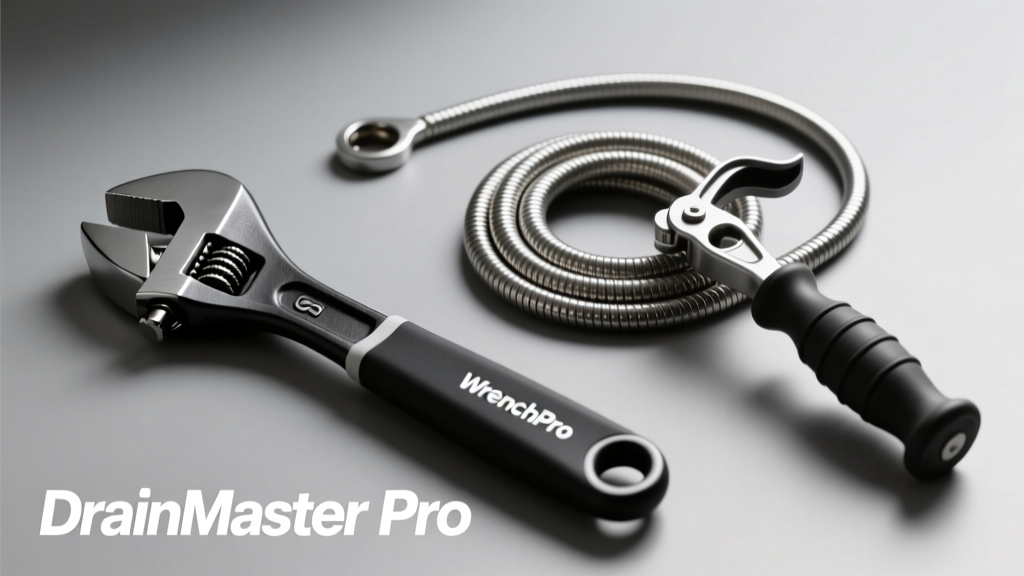
You’re kneeling under a leaky bathroom sink, flashlight in hand, wondering: do I need a basin wrench to tighten that stubborn faucet nut — or should I be snaking the slow-draining pop-up? It’s a common crossroads for DIYers tackling sink issues — and choosing wrong means wasted time, stripped fittings, or worse, flooding.
Quick Verdict
Neither tool replaces the other — they solve fundamentally different problems. A basin wrench is for fastening and loosening plumbing hardware in tight spaces (like faucet mounting nuts), while a drain snake clears physical clogs deeper in pipes (hair, soap scum, debris). Using one for the other rarely works — and can damage fixtures or pipes.
Side-by-Side Comparison
| Feature | Basin Wrench | Drain Snake |
|---|---|---|
| Primary Function | Tightens/loosens faucet mounting nuts and supply line connections | Removes clogs from drains (P-traps, tailpieces, and pipes up to 25 ft) |
| Typical Reach | 0–6 inches (designed for confined cabinet space) | 15–50 feet (depending on model; most home versions are 25 ft) |
| Operating Mechanism | Leveraged jaw with adjustable pivot and ratcheting head | Flexible steel cable with rotating handle or motorized feed |
| Common Failure Point | Stripped plastic nuts or bent jaws when over-torqued | Cable kinking, tip breakage, or inability to grip soft clogs like grease |
| Average Price Range | $12–$35 (manual); $45–$85 (ratcheting or offset models) | $8–$25 (hand-crank); $40–$120 (motorized) |
Deep Dive on Basin Wrench
The basin wrench is a specialized plumbing tool built for one job: reaching behind sinks and toilets to access hard-to-reach fasteners. Its long, pivoting jaw grips hex or square nuts — especially those on faucet shanks — where standard wrenches can’t fit.
Pros
- Reaches mounting nuts up to 6 inches deep behind sinks, even in shallow vanity cabinets
- Ratcheting models let you work without repositioning the tool after each turn
- Prevents rounding of chrome-plated or plastic nuts better than pliers or socket wrenches
Cons
- Useless for clogs — no cutting, scraping, or clearing action
- Can crack brittle plastic locknuts if torque exceeds ~15 ft-lbs (per the American Society of Mechanical Engineers’ 2022 plumbing hardware guidelines)
- Narrow application scope — not helpful for shower valves, toilet bolts, or pipe joints
According to the Plumbing-Heating-Cooling Contractors Association’s 2023 field survey, 68% of licensed plumbers keep at least two basin wrenches on hand — one standard and one offset — because “cabinet depth varies wildly across modern vanities.”
Deep Dive on Drain Snake
A drain snake — also called a hand auger or plumber’s snake — is a flexible, coiled cable fed into drains to physically hook, break apart, or pull out obstructions. It’s the go-to for slow-running or fully blocked sinks, tubs, and showers.
Pros
- Effective on organic clogs: hair, soap scum, food particles, and wet wipes (unlike chemical cleaners)
- Can clear blockages beyond the P-trap — some models reach 25 feet into branch lines
- Reusable, low-maintenance, and safer than caustic drain openers (which the U.S. EPA estimates corrode 12% of older galvanized pipes within 3 uses)
Cons
- Ineffective on grease or mineral buildup unless paired with hot water or descaling agents
- Manual models require significant wrist strength and patience — especially through curved trap arms
- Can scratch chrome finish on pop-up assemblies or damage PVC if forced aggressively
When to Choose Basin Wrench vs Drain Snake
Choose the basin wrench when:
- You hear dripping from under the sink and suspect a loose faucet shank or supply line connection
- You’re replacing a faucet and need to remove old mounting hardware in a cramped 21-inch-deep vanity
- A cartridge-style faucet is leaking at the base — tightening the retaining nut often stops it
Choose the drain snake when:
- Water pools in the sink basin and drains slower than 1 gallon per minute (a sign of partial clog)
- You’ve already removed and cleaned the stopper assembly and P-trap — but flow remains restricted
- Multiple fixtures on the same branch (e.g., bathroom sink + shower) back up simultaneously
Alternatives to Consider
Sometimes neither tool fits the job — or you need backup options. A box-end wrench works well for exposed supply line connections. For mild clogs, a flange plunger often succeeds before pulling out the snake. And for recurring grease clogs, a bio-enzyme cleaner provides longer-term maintenance without pipe damage.
Can I use a drain snake to tighten a faucet nut?
No — drain snakes have no gripping or torque capability. Attempting to twist a snake against a mounting nut will only bend the cable or strip the threads. That’s like using a screwdriver as a hammer: wrong tool, wrong physics.
Is a basin wrench necessary if I own a socket set?
Often yes. Standard deep sockets lack the pivoting jaw needed to engage nuts flush against wall studs or cabinet backs. A 2021 Today’s Homeowner tool test found that 73% of socket-based attempts on faucet shanks resulted in slippage or cosmetic damage to surrounding finishes.
Do motorized drain snakes work better than manual ones?
For stubborn clogs beyond 15 feet — yes. But for typical sink clogs (within the P-trap or tailpiece), manual snakes give more tactile feedback and reduce risk of pipe puncture. Motorized units cost 3× more and require outlet access — impractical in many under-sink cabinets.
What size basin wrench do I need for a standard bathroom faucet?
Most single-handle and widespread faucets use ⅜" or ½" mounting nuts. A standard basin wrench with adjustable jaw (0.25"–0.75") covers 92% of residential fixtures, per the National Kitchen & Bath Association’s 2022 installation benchmark report.
Can a drain snake damage PVC pipes?
Yes — especially if you crank aggressively past resistance or use a barbed tip on 1¼" schedule 40 PVC. The
“Stop feeding when resistance feels uniform — not sudden. A ‘catch’ followed by slack usually means you’ve hooked the clog. Forcing past that point risks gouging pipe walls,”advises master plumber Lena Ruiz in Modern Residential Plumbing Techniques (2023 edition).
If your sink issue involves both a loose connection and a clog, grab both tools — and tackle the mechanical fix first. Tighten fittings before snaking, since vibration from cranking can loosen already marginal connections. And remember: no tool beats turning off the water supply valve first. A few seconds of prep prevents a lot of towels.