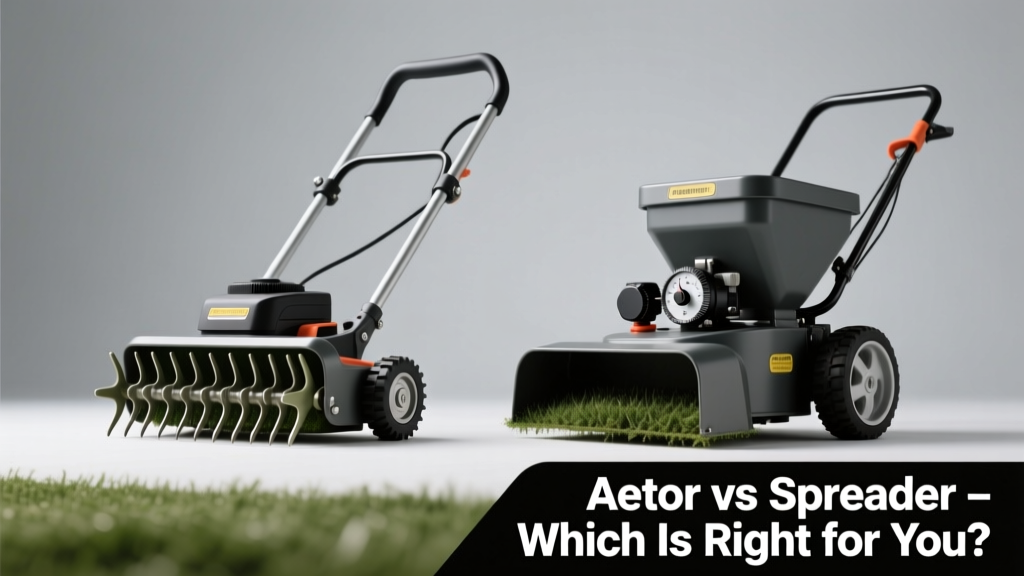
Homeowners staring at a patchy, compacted lawn often wonder: do I need an aerator, a spreader—or both? It’s not just about buying gear; it’s about diagnosing what your soil and grass actually need.
Quick Verdict
An aerator tackles soil compaction and thatch buildup by creating holes—improving air, water, and nutrient flow to roots. A spreader distributes seed, fertilizer, or lime evenly across the surface. They solve different problems: one works *in* the soil, the other works *on* it. Using them together—especially during overseeding—is common practice, but choosing the wrong tool first can waste time and money.
Side-by-Side Comparison
| Feature | Aerator | Spreader |
|---|---|---|
| Primary Function | Creates holes in soil to relieve compaction | Distributes granular material (seed, fertilizer, lime) |
| Soil Contact Required? | Yes—penetrates 1–3 inches deep | No—rides on surface only |
| Typical Cost (rental, per day) | $45–$75 (core aerator) | $25–$40 (broadcast or drop) |
| Time to Cover 5,000 sq ft | 45–75 minutes (including prep) | 15–25 minutes |
| Best Used With | Overseeding, topdressing, post-drought recovery | Fertilizing, pre-emergent herbicide, spring/fall feeding |
Deep Dive on Aerators
Aerators come in three main types: spike (push or powered), slicing (rotating blades), and core (removes soil plugs). Core aerators are widely recommended by turf specialists because they actually remove soil—not just poke holes that quickly close.
- Pros: Improves root oxygenation, reduces runoff, boosts fertilizer uptake by up to 30% (University of Minnesota Extension, 2022), and helps break down thatch over time.
- Cons: Messy (soil plugs left behind), requires moist—but not soggy—soil, and ineffective on heavily clay-heavy or rocky lawns without multiple passes.
- Ideal use cases: Lawns with visible compaction (water pooling, hard surface), those mowed on concrete or asphalt driveways (high foot/vehicle traffic), or before overseeding cool-season grasses like Kentucky bluegrass.
Deep Dive on Spreaders
Spreaders fall into two categories: broadcast (wide, fan-like pattern) and drop (precise, vertical release). Broadcast models cover more ground faster but risk overlap or drift near sidewalks; drop spreaders offer surgical accuracy but take longer.
- Pros: Fast, consistent application; essential for timed-release fertilizers and small-seeded grasses like fine fescue; many models calibrate for specific product rates.
- Cons: Won’t fix underlying soil issues; mis-calibration leads to burn spots or thin coverage; ineffective if applied over compacted or hydrophobic soil.
- Ideal use cases: Routine feeding every 6–8 weeks, applying crabgrass preventer in early spring, or seeding bare patches after aeration or sod removal.
When to Choose Aerator vs Spreader
Choose an aerator first if your lawn feels spongy or bounces back slowly when stepped on—or if rainwater sits for hours. Choose a spreader first if your grass is thin but soil feels soft and drains well, or if you’re following a strict feeding schedule.
"Aeration without seeding is like opening doors but never letting guests in—nutrients get in, but new roots don’t follow." — Dr. Nick Christians, Iowa State University Turfgrass Program, 2021
For most mature lawns in northern climates, aerate once every 1–2 years (spring or fall), then spread seed and starter fertilizer within 48 hours. In southern regions with warm-season grasses, aerate in late spring—just before peak growth—and skip overseeding unless renovating.
Alternatives to Consider
Some tools blur the line between functions:
- Combo aerator/spreader units exist—but sacrifice depth and precision for convenience. Best for small, low-priority lawns under 3,000 sq ft.
- Liquid sprayers deliver fast-acting nutrients but lack the soil penetration or seed-holding capacity of granular spreaders.
- Manual hand-crank spreaders work for tiny areas (<500 sq ft) but aren’t viable for full-lawns.
Can I use a spreader to apply compost?
Yes—but only if it’s finely screened and dry. Coarse or damp compost clogs hoppers and spreads unevenly. For best results, use a compost spinner or topdress by hand after aeration.
Do I need to aerate before every fertilization?
No. Aeration is a soil-health intervention, not a fertilizer prerequisite. The U.S. EPA estimates that 14% of household water usage is from leaks—but far more lawn waste comes from misapplied fertilizer on compacted soil. Aerate only when compaction is confirmed, not on a calendar schedule.
Why does my spreader leave stripes?
That’s usually overlap error or inconsistent walking speed. Calibrate your spreader using the manufacturer’s settings for your product, mark your path with chalk lines, and maintain steady pace—no stopping mid-pass. See our calibration checklist for step-by-step tuning.
Can I aerate a newly seeded lawn?
Avoid it. Wait until new grass reaches 3 inches tall and has been mowed at least twice. Premature aeration tears up shallow roots and displaces seedlings. Instead, lightly rake or use a verticutter to manage light thatch before seeding.
Is renting better than buying?
For most homeowners: yes. A quality core aerator costs $300–$600 and weighs 150+ lbs—hard to store and rarely used more than once yearly. Renting from a local hardware store or rental center includes maintenance and expert advice. Spreaders are cheaper to own ($60–$180), especially if you fertilize quarterly.
What’s the biggest mistake people make with either tool?
Skipping soil prep. Aerating wet clay turns it into mud bricks. Spreading fertilizer on drought-stressed grass causes burn. Always test soil moisture (ball test: squeeze a handful—if it holds shape but crumbles with light pressure, it’s ideal) and check weather forecasts before starting.
If your lawn struggles with both thinning and poor drainage, start with aeration—then follow immediately with seeding and starter fertilizer using a spreader. Neither tool replaces proper mowing height, watering habits, or soil pH management. For long-term success, treat them as complementary parts of a system—not competing solutions.