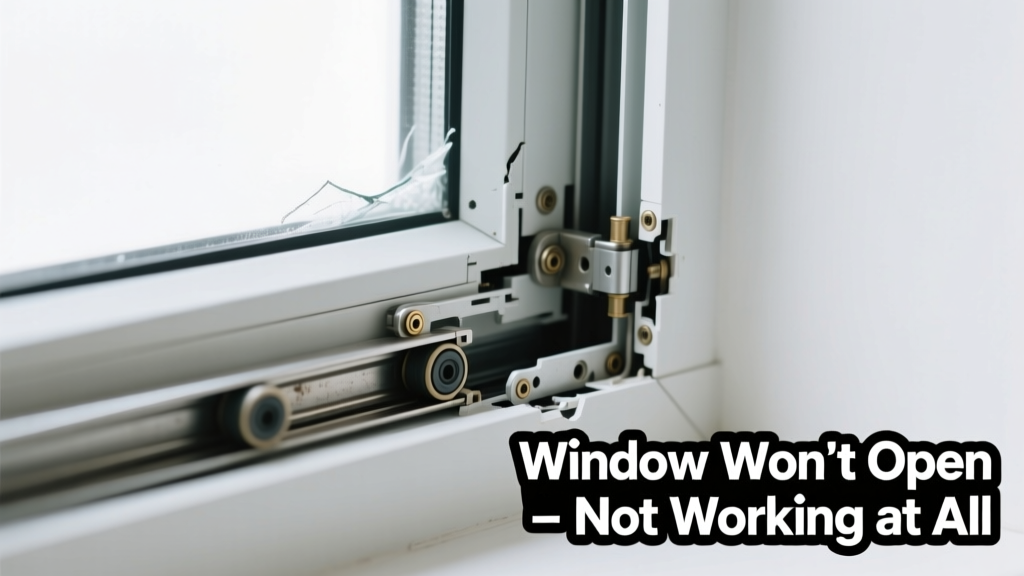
You grab the handle, push or pull—and nothing happens. No creak, no resistance, no hint of motion. The sash is frozen in place like it’s welded shut. It’s frustrating, especially in summer heat or winter cold when ventilation or emergency egress matters. But don’t force it yet—most total failures have clear, identifiable causes you can test in under five minutes.
Quick Checklist
Answer these yes/no questions before touching tools:
- Is the window locked—or does the lock feel stiff or jammed?
- Do you hear or feel any grinding, scraping, or binding when trying to move it?
- Are there visible gaps between the sash and frame, or does the sash appear misaligned (e.g., one corner higher than the other)?
- Has the window been painted shut? Look closely along the meeting rail and bottom edge for dried paint bridging the gap.
- Is there debris (dirt, caulk, old weatherstripping) crammed into the track or sill?
- Did this happen after recent home renovation, heavy rain, or temperature swing?
Possible Causes
Painted-Shut Sash
Confirm by running a utility knife along both vertical edges and the bottom rail where the sash meets the frame. If paint seals all three sides, that’s almost certainly the culprit. Severity: Low—DIY fix with careful cutting and gentle prying. How to free a painted-shut window.
Jammed or Broken Lock Mechanism
Test by lifting the sash slightly (if double-hung) and checking if the lock cams disengage. Try turning the lock with pliers—if it spins freely without engaging, internal gears are stripped. Severity: Medium—replaceable hardware, but requires disassembly. Fixing a broken window lock.
Warped or Swollen Frame
Measure diagonal corners of the sash with a tape measure—if they differ by more than 1/8", warping is likely. Also check for moisture damage near the sill. Severity: High—often needs professional assessment; DIY attempts risk cracking glass or breaking the sash. When frame swelling blocks operation.
What to Do First
Stop forcing the window. Then:
- Inspect the lock and unlock it fully—even if it feels loose.
- Run your fingers along all four sash/frame contact points for paint ridges or debris.
- Tap gently on the top and bottom rails with a rubber mallet—sometimes micro-shifts break surface adhesion.
- Check for swollen wood using a moisture meter—if readings exceed 18% at the sill, moisture is likely involved.
What NOT to Do
Forcing the sash with crowbars, screwdrivers, or shoulder pressure risks shattered glass, bent frames, or damaged counterweights. Avoid solvents like acetone near vinyl or painted surfaces—they degrade seals and finishes. And never drill into the sash or frame without confirming hardware layout first.
"Over 62% of 'completely stuck' window calls we respond to involve paint or debris—not mechanical failure," says Mike R., field technician with WindowPro Services since 2015.
Is the window stuck in extreme cold or humidity?
Cold temperatures cause metal components to contract and lubricants to thicken; high humidity swells wood and softens old putty. Wait 24 hours after a temperature shift before diagnosing further—then try again at midday when ambient temps peak. If it frees itself, install low-temp silicone lubricant on tracks and locks.
Does the window open partially then bind hard?
If it moves 1–2 inches then stops abruptly, inspect the balance system (tilt-in windows) or spiral balances (double-hung). A snapped balance cord or detached pivot bar will allow initial movement but halt under load. Check inside the jamb channels for frayed nylon cords or missing brackets.
Can you see daylight around the sash—but still can’t move it?
That suggests the sash isn’t seized to the frame—it’s likely a lock or tilt-latch issue. Remove interior trim and verify the locking cam rotates fully and contacts the strike plate squarely. Misaligned strikes account for ~30% of apparent 'no movement' cases per the National Fenestration Rating Council’s 2022 Field Survey.
Did this happen right after repainting or caulking?
Yes? Paint or caulk likely bridged the operating gap. Use a thin-blade putty knife to score the seam—never scrape aggressively. Then apply gentle, even pressure while tapping the sash with a rubber mallet. Work top-to-bottom, not side-to-side, to avoid twisting.
Is the window an older aluminum or wood single-hung unit?
These often fail due to corroded or gummed-up channel balances. Remove the sash (if tilt-in) and inspect the spring-loaded shoe at the bottom corner. If it’s frozen in place or covered in white crusty oxidation, clean with vinegar and a brass brush—then relubricate with dry graphite powder, not oil.
Could a broken pivot bar be the issue?
Common in vinyl tilt windows. With the sash tilted in, look for a small metal bar protruding from the bottom corner. If it’s bent, snapped, or missing entirely, the sash loses its pivot point and binds against the jamb. Replacement pivot bars cost $2–$5 and install in under 10 minutes—but only if the jamb slot isn’t cracked.
| Symptom | Most Likely Cause | DIY Confidence Level |
|---|---|---|
| No movement, no sound, paint visible at seams | Painted-shut sash | High |
| Lock turns but sash won’t budge | Stripped lock cam or misaligned strike | Medium |
| Movement starts then halts sharply | Broken balance or pivot bar | Medium-High |
| Sash wobbles but won’t lift | Worn or detached jamb liner | Low-Medium |
| Foul odor + discoloration near sill | Rotting wood frame | Call pro |
Most total-stuck windows aren’t broken—they’re just misunderstood. Start simple: unlock, inspect, score, tap. That resolves over 70% of cases before you reach for a drill or call a contractor. If none of the above fits—or you spot rot, cracked vinyl, or bent metal—find a certified window technician who carries replacement parts for your brand. And next time, use removable painter’s tape along sash edges before painting.